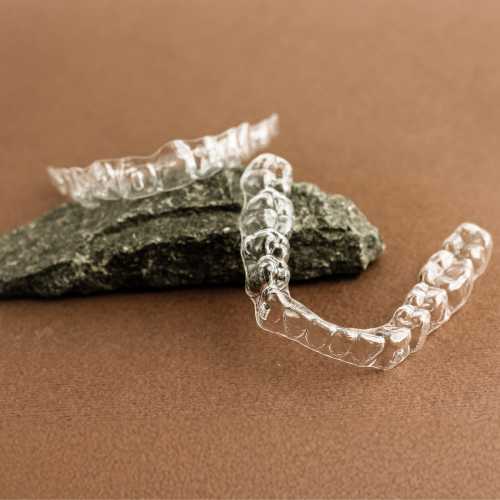
Can Your Local Dentist Office Do Invisalign — And Should They?
Wondering if your local dentist offers Invisalign? Learn how to find a qualified provider and what to expect during treatment. Schedule your visit today!
Read More
Most general dentist offices do offer Invisalign, but provider qualifications vary more than Align Technology's badge system suggests. Knowing what to look for — and what certain cases actually require — helps you avoid mid-treatment surprises.
For Bellflower-area patients, many assume an Invisalign "Diamond" or "Black Diamond" provider badge means advanced clinical training. It doesn't. Those tiers reflect sales volume — how many cases a provider submits per year — not orthodontic specialization or board certification.
That distinction matters depending on your case complexity.
A high-volume general dentist can safely and effectively treat a meaningful range of cases: mild anterior crowding, minor spacing, or cosmetic alignment after post-braces relapse. These are exactly the cases Invisalign was originally designed for. According to Healthline, Invisalign works best for mild to moderate crowding and spacing issues, with effectiveness decreasing for more complex bite problems.
For more involved presentations — significant overbites, underbites, crossbites, cases requiring extractions, or skeletal discrepancies — a board-certified orthodontist brings two to three years of specialty training beyond dental school that a general dentist, regardless of tier badge, simply does not have. Cleveland Clinic notes that orthodontists complete this additional residency specifically focused on diagnosing and treating malocclusion.
A practical decision matrix:
Case Type: Mild crowding / spacing
General Dentist: ✓ Appropriate
Orthodontist: Optional
Case Type: Post-braces cosmetic relapse
General Dentist: ✓ Appropriate
Board-Certified Orthodontist: Optional
Case Type: Significant overbite / underbite
General Dentist: Caution
Board-Certified Orthodontist: ✓ Recommended
Case Type: Crossbite / skeletal discrepancy
General Dentist: Not ideal
Board-Certified Orthodontist: ✓ Required
Case Type: Cases needing extractions
General Dentist: Not ideal
Board-Certified Orthodontist: ✓ Required
When vetting a provider, ask directly: Are you a general dentist or a board-certified orthodontist? How many cases similar to mine have you completed? What happens if my case stalls or requires refinement?
Standard search results cite "every four to six weeks" for Invisalign check-ins, but that framing obscures something important: not all visits serve the same clinical purpose, and some procedures cannot be replaced by remote monitoring.
Three specific procedures require a physical chairside appointment:
Attachment bonding. Small tooth-colored bumps bonded directly onto teeth to help aligners grip and move teeth in precise directions. These must be placed and checked in person.
Interproximal Reduction (IPR). A procedure where small amounts of enamel between teeth are carefully removed to create space for movement. Cleveland Clinic explains that IPR requires specialized instruments and is performed by a licensed dental professional — it cannot be self-administered or remotely supervised. One study found 71% of Invisalign patients needed IPR.
Refinement rescans. When teeth aren't tracking correctly, a new 3D scan using the iTero scanner generates a revised aligner series. Invisalign's own process documentation confirms this requires your provider to physically evaluate fit and progress.
What can be replaced or supplemented by smartphone-based AI monitoring tools like DentalMonitoring or ScanBox? Routine progress check-ins between those clinical milestones. Practices using these hybrid models can reduce physical visits to as few as two to three per year for straightforward cases — while still catching tracking issues early.
Ask any prospective provider upfront: Do you use remote monitoring between visits? What triggers a required in-person appointment?
Starting Invisalign with a local general dentist and later needing to switch providers is more common than most patients expect — and more complicated than simply picking up where you left off.
When a case stalls, tracks poorly, or a patient relocates, Align Technology does have an official case transfer process. This involves submitting a formal transfer form and transferring the original ClinCheck 3D treatment files to the receiving provider. However, the original lab fees paid to Align do not transfer. The new provider typically charges a case take-over fee, and if a new scan and revised treatment plan are required, additional diagnostic fees apply.
The clinical consequences can be equally significant. A board-certified orthodontist inheriting a stalled case from a general dentist may determine that the original ClinCheck plan was too ambitious for aligner-only treatment — meaning some patients end up needing teeth straightening braces to finish what clear aligners started. The American Dental Association has long emphasized that moving teeth without comprehensive clinical oversight creates risks including bone loss, gum disease, and bite problems.
The protective step: before starting, ask your provider what their protocol is if your case isn't tracking correctly, and confirm they have a clear escalation path to orthodontic specialists if needed.
Beyond tier badges, here's what to actually assess:
Credentials first. Confirm whether the provider is a general dentist or a board-certified orthodontist. Both can offer Invisalign; your case complexity determines which is appropriate.
Case volume in your specific issue. A provider who has completed 500 Invisalign cases dominated by mild crowding may have limited experience with moderate bite correction. Ask specifically about cases matching your presentation.
In-house scanning technology. Providers using the iTero Element scanner can show you a simulated outcome before you commit. Invisalign's treatment process centers on this 3D digital scan as the foundation for custom treatment planning. Patients who want to explore the full range of smile enhancement options may also want to ask about aesthetic dentistry services available at the same practice.
Retainer protocol. According to the American Association of Orthodontists, retainers are required after any orthodontic treatment to maintain results. Ask what retainer system is used and whether it's included in your treatment plan.
Refinement policy. Clarify upfront whether refinement aligners — additional sets generated when initial trays don't fully achieve the planned movement — are included or billed separately. It's also worth scheduling a cleaning and exam before beginning treatment to ensure your teeth and gums are in good health.
Bellflower Dental Group serves patients throughout Bellflower and the broader Southeast Los Angeles area, including Downey. If you're wondering whether Invisalign is the right fit for your specific case — or whether you'd benefit from a specialist referral — our team gives you a straightforward assessment without the sales pressure. We also offer porcelain veneers and other cosmetic options for patients whose goals go beyond alignment. Reach out to schedule a consultation and get a clear picture of what your treatment would actually involve.
This article is for informational purposes only and does not constitute medical or dental advice. Consult a licensed dental professional for diagnosis and treatment recommendations specific to your situation.
Fresh news from the dental world...




Mon - Fri 9AM - 6PM
Saturday 9AM - 3PM
Sunday Closed
Check out what our patients are saying in Bellflower, CA...


“Great customer service!”
Great customer service and attentive staff! My 3 year old enjoyed his visit! Yes, I said he enjoyed it! He had to have X-rays done, and I was so worried that he wasn't gonna be a happy camper but the X-ray tech, Dominique, is so good with kids! The X-rays were fast and painless! Overall a great experience!

“Surpasses my expectations!”
Amazing staff! My experience at Bellflower Dental Group was outstanding. I highly recommend this dental group. I come to them for my braces, their ortho is incredible, the highlight of this dental group. The staff is amazing, their employees are so kind and take the time to perfect your braces.

“I love this dental office!”
I have been coming here for years. It is a one-stop-shop! You can get your x-rays, cleaning, braces, labs, dentures, toothbrushes, and more all right here. The staff is great, and they try to work with you if you need a payment plan. Never had any issues with any of the work done here!
“Great customer service!”
Great customer service and attentive staff! My 3 year old enjoyed his visit! Yes, I said he enjoyed it! He had to have X-rays done, and I was so worried that he wasn't gonna be a happy camper but the X-ray tech, Dominique, is so good with kids! The X-rays were fast and painless! Overall a great experience!
“Surpasses my expectations!”
Amazing staff! My experience at Bellflower Dental Group was outstanding. I highly recommend this dental group. I come to them for my braces, their ortho is incredible, the highlight of this dental group. The staff is amazing, their employees are so kind and take the time to perfect your braces.
Check out our accreditations, sources, and relationships in the wide world of dentistry...


Check us out and follow our Bellflower, CA practice on social media...


