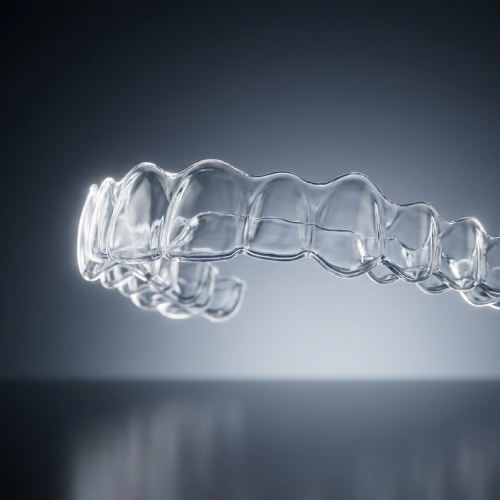
Invisalign Safety Concerns, Speech Changes, and Why Some Patients Quit
Wondering about Invisalign safety concerns, speech changes, or why patients quit? Get the facts from Bellflower Dental Group. Schedule your consult today!
Read More
Invisalign is a well-established orthodontic treatment, but it carries real risks that patients often discover only after starting. Understanding the biomechanical complications, speech challenges, and practical exit realities helps you make a genuinely informed decision before committing.
For Bellflower-area patients, most safety conversations around Invisalign focus on gum irritation or mild discomfort. What gets far less attention is a structural complication tied directly to how aligners physically sit in your mouth.
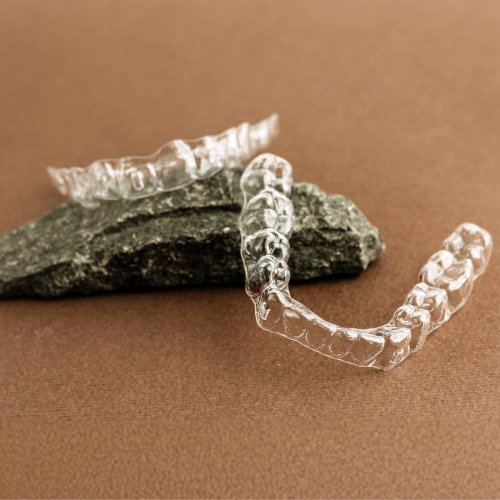
Every set of upper and lower aligners adds roughly 0.75mm of plastic between your teeth. Worn together, that thickness acts as an unintended bite block — continuously elevating your bite and placing downward mechanical pressure on your posterior molars. Over a long treatment, this can cause the back molars to intrude (move upward into the jaw), leaving a gap between upper and lower teeth even when your mouth is fully closed. This is called a posterior open bite.
The early warning sign is subtle: food starts feeling harder to chew efficiently, especially with your back teeth. You may notice you're unconsciously shifting to chewing with your front teeth. If you recognize this pattern, bring it up with your provider immediately — don't wait for a scheduled check-in.
Orthodontists address this in a few ways. One approach involves sectioning the aligner trays in the posterior region, allowing the molars to passively re-erupt without continued intrusive force. Another method uses settling elastics to guide the back teeth back into proper occlusion. Neither fix is instant, which is why early detection matters.
A Healthline overview of Invisalign notes that research on effectiveness has limitations, particularly around complex bite outcomes — making it even more important to have these conversations with a qualified provider before treatment begins.
Most articles claim any lisp from Invisalign resolves within one to two weeks. For many patients, that's accurate. But it's an incomplete picture.
Standard smooth aligners introduce a thin plastic layer that temporarily changes how your tongue contacts your teeth. The most common effect is a mild sibilant lisp — sounds like /s/, /z/, and /sh/ become slightly distorted as air escapes differently. According to Speaks Orthodontics, this typically resolves within days to a couple of weeks as your mouth adapts.
However, patients being treated for deep overbites often receive aligners engineered with lingual palatal bite ramps — small built-up ridges on the inside surface of the upper tray, designed to prevent the lower teeth from biting down too deeply. These ramps occupy the dental-alveolar space where the tongue naturally positions itself to form sibilant sounds. The result is a more persistent and pronounced speech disruption that can last months, not days.
If you have bite ramps, generic advice like "read aloud more" won't cut it. Targeted adaptation requires deliberate tongue repositioning. One effective drill: practice the "butterfly position," where the tongue tip rests lightly on the back of the upper front teeth rather than touching the palate. Repeating /s/ and /z/ sounds in this position retrains the tongue to route airflow around the ramps rather than being blocked by them. Slow, deliberate speech during the adjustment phase also helps reduce air turbulence.
Understanding whether your treatment plan includes bite ramps — and asking your provider upfront — sets far more realistic expectations than the standard reassurance. Patients exploring other alignment options may also want to learn about teeth straightening braces as an alternative approach.
Quitting Invisalign mid-treatment is more common than most providers discuss openly. Real patient accounts highlight a consistent pattern: the decision rarely comes down to a single issue. It's usually an accumulation — unexpected treatment length, bite complications, the psychological weight of constant plastic in the mouth, and as news-medical.net notes, compliance demands that are harder to maintain than anticipated. Patient communities reflect this reality as well, with many sharing their experiences on forums like Reddit's Invisalign community.
For patients who genuinely cannot continue, there is a practical transition path — but it requires immediate action. The composite attachments bonded to your teeth during Invisalign treatment must be removed promptly. Left in place, they can trap plaque and accelerate enamel decalcification. Your provider should de-bond these at the same appointment where you discuss stopping. Scheduling a cleaning and exam at this stage is also a smart way to assess any plaque buildup or early enamel concerns before they progress.
Switching to traditional braces mid-treatment is clinically feasible. An orthodontist will assess the tooth movement already achieved and map the remaining corrections into a fixed appliance plan. The partially shifted case can often shorten the overall braces phase compared to starting from scratch.
Review your original treatment contract carefully and have a direct conversation with your provider. Every practice structures this differently, and clarity upfront prevents disputes later.
Patients who develop gum disease gingivitis during treatment — a real risk when aligner hygiene lapses — may also find that addressing periodontal health becomes a priority before any orthodontic decisions can move forward.
If you're weighing Invisalign — or reconsidering it after starting — the right next step is a real conversation with a provider who can assess your specific case. Bellflower Dental Group serves patients throughout Bellflower and the broader Southeast Los Angeles area, including Downey. We offer a full range of aesthetic dentistry services to help you find the right path forward. We'll walk through your candidacy, flag any risk factors specific to your bite, and give you honest answers about what your treatment timeline actually looks like.
Medical disclaimer: This article is intended for informational purposes only and does not constitute professional dental or medical advice. Always consult a licensed dental provider for guidance specific to your oral health needs.
Fresh news from the dental world...


Mon - Fri 9AM - 6PM
Saturday 9AM - 3PM
Sunday Closed
Check out what our patients are saying in Bellflower, CA...


“Great customer service!”
Great customer service and attentive staff! My 3 year old enjoyed his visit! Yes, I said he enjoyed it! He had to have X-rays done, and I was so worried that he wasn't gonna be a happy camper but the X-ray tech, Dominique, is so good with kids! The X-rays were fast and painless! Overall a great experience!

“Surpasses my expectations!”
Amazing staff! My experience at Bellflower Dental Group was outstanding. I highly recommend this dental group. I come to them for my braces, their ortho is incredible, the highlight of this dental group. The staff is amazing, their employees are so kind and take the time to perfect your braces.

“I love this dental office!”
I have been coming here for years. It is a one-stop-shop! You can get your x-rays, cleaning, braces, labs, dentures, toothbrushes, and more all right here. The staff is great, and they try to work with you if you need a payment plan. Never had any issues with any of the work done here!
“Great customer service!”
Great customer service and attentive staff! My 3 year old enjoyed his visit! Yes, I said he enjoyed it! He had to have X-rays done, and I was so worried that he wasn't gonna be a happy camper but the X-ray tech, Dominique, is so good with kids! The X-rays were fast and painless! Overall a great experience!
“Surpasses my expectations!”
Amazing staff! My experience at Bellflower Dental Group was outstanding. I highly recommend this dental group. I come to them for my braces, their ortho is incredible, the highlight of this dental group. The staff is amazing, their employees are so kind and take the time to perfect your braces.
Check out our accreditations, sources, and relationships in the wide world of dentistry...


Check us out and follow our Bellflower, CA practice on social media...


