Full mouth dental implants and bridges serve similar goals but differ dramatically in long-term outcomes, insurance coverage, and true lifetime value. Understanding how these options compare — beyond the initial procedure — helps Bellflower and Downey residents make confident, informed decisions.
The Hidden Lifetime Math: Why a Bridge Often Involves More Over Time
Most patients compare a single-tooth bridge against a single implant and assume the bridge wins on value. That comparison only holds for Day 1. The fuller picture looks very different.
According to Cleveland Clinic, the average lifespan of a dental bridge is five to fifteen years — after which it typically needs replacement. Each replacement cycle carries the same procedural steps as the original. More critically, a traditional bridge requires grinding down the healthy teeth on either side to serve as anchor crowns. Over time, those compromised abutment teeth become candidates for root canals, secondary crowns, or even extraction — triggering an entirely new chain of restorative work.
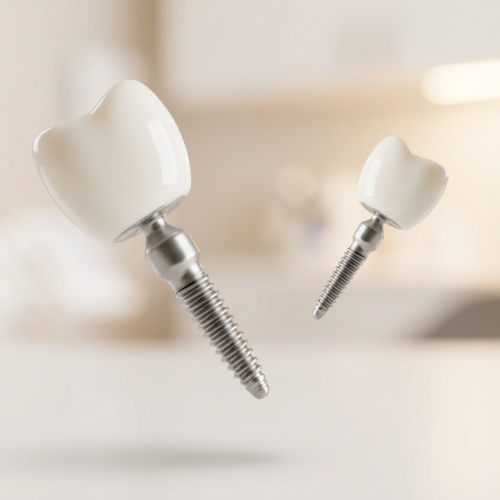
Contrast that with an implant. The titanium post integrates directly with the jawbone through a process called osseointegration, preserving adjacent teeth entirely. A Healthline overview of implant benefits notes that dental implants show survival rates above 94% at fifteen years and do not damage neighboring teeth the way bridges can.
Here's a simplified 20-year picture worth considering:
Scenario: 3-unit bridge
- Year 1–10: Initial bridge placed; abutment teeth shaved
- Year 11–20: Bridge replacement likely needed; possible root canal on anchor teeth
Scenario: Single implant
- Year 1–10: Implant placed; adjacent teeth untouched
- Year 11–20: Implant typically still functional; no cascade risk
The bridge's lower upfront investment can quietly accumulate into a higher cumulative burden — especially when abutment tooth complications require treatment that wouldn't have been necessary otherwise. Bone loss beneath the bridge site also accelerates over time, potentially complicating any future implant placement if the bridge eventually fails.
For patients in Bellflower and Downey considering a single missing tooth, that long-term trajectory matters as much as the initial procedure.
Full Mouth Implant Options: What the Procedure Actually Involves
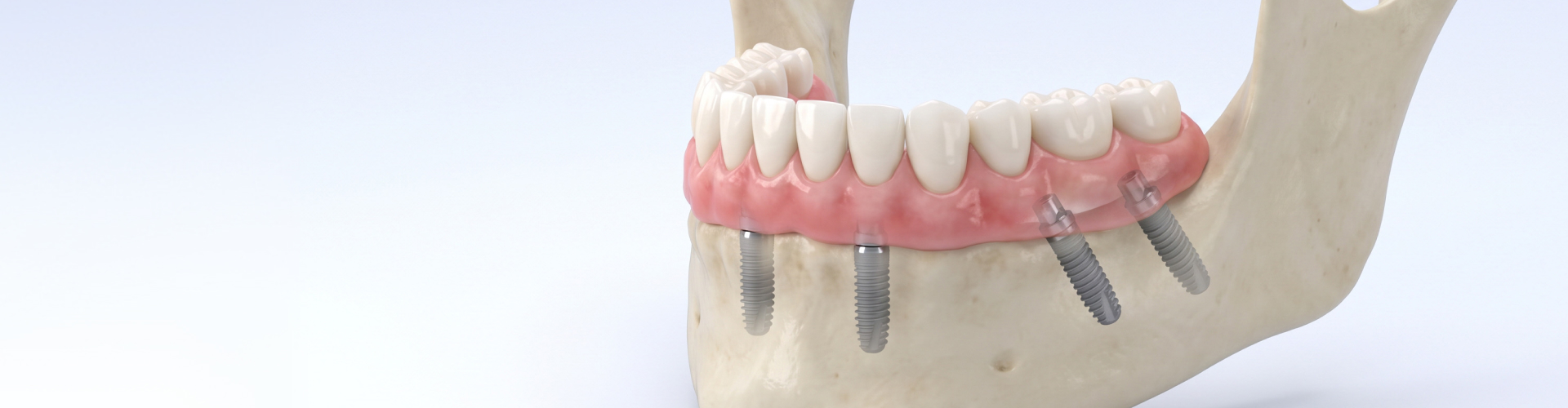
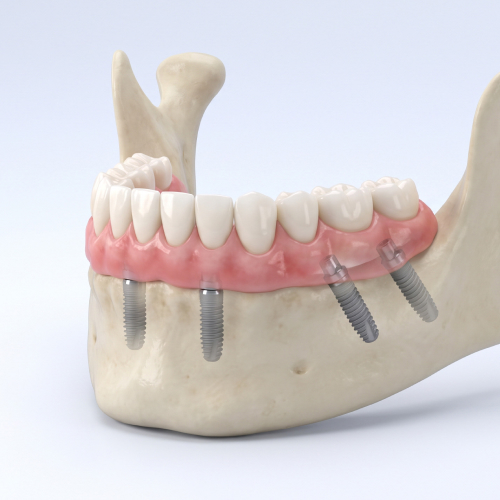
When multiple teeth are failing or missing, full arch restoration becomes the conversation. As clinical literature explains, full mouth rehabilitation broadly includes fixed options like All-on-4 systems — where four implants per arch support a permanently secured bridge — as well as removable snap-in dentures that attach to two to six implants per arch.
The key distinctions patients should understand:
- Fixed full-arch implants (All-on-4 style): Non-removable. The prosthetic is secured directly to the implants and can only be removed by a dentist. Feels and functions closest to natural teeth.
- Snap-in (implant-supported) dentures: Removable by the patient. The denture snaps onto implant attachments. More stable than traditional dentures but not permanently fixed.
- Traditional full dentures: No implants. Held by suction or adhesive. Least stable and associated with ongoing bone resorption.
Several factors shape what a full mouth restoration involves for any given patient: the number of extractions required, whether bone grafting is needed to prepare the jaw, and the prosthetic material chosen (acrylic vs. zirconia). According to WebMD's overview of snap-in dentures, patients who have experienced bone density loss may need a bone graft before implants can be placed — extending both the timeline and the scope of treatment.
A consultation with a qualified implant provider is the only reliable way to understand which pathway applies to your specific anatomy and goals.
Insurance Coverage and the Calendar-Year Strategy Worth Knowing
The short answer: dental insurance sometimes covers implants, but rarely fully. According to the American Association of Oral and Maxillofacial Surgeons (AAOMS), coverage depends on the individual plan, whether the procedure is deemed medically necessary, and the plan's annual benefit limits. Many plans classify implants as cosmetic and exclude them outright — or cover only specific components like the tooth crown or the extraction.
Here's the critical nuance most patients miss: dental plans carry an annual maximum benefit. That cap is often quite low relative to implant costs. Even when a plan states it covers a percentage of major restorative work, the annual ceiling can make that percentage largely theoretical for high-value procedures.
One practical workaround is the calendar-year split strategy. Because dental benefits renew each January 1, a patient who needs an extraction, bone graft, and implant placement can potentially spread the treatment across two benefit years — using one year's maximum for the preparatory work (tooth extraction, grafting) and the following year's renewed maximum for implant placement and crown restoration. This approach effectively doubles the insurance contribution without changing the treatment plan itself.
It requires coordination with your dental provider and some advance planning, but for patients with active coverage, it's a legitimate way to optimize benefits. As Delta Dental notes, requesting a pre-treatment estimate from your insurer before scheduling is the best way to understand what your specific plan will and won't cover.
Patients should also check whether their medical insurance may apply. In cases involving severe bone resorption, documented masticatory dysfunction, or tooth loss from trauma or radiation treatment, medical plans occasionally cover portions of the reconstructive work under different billing codes. This cross-coverage scenario is uncommon but worth raising with both your dental and medical insurers when complex reconstruction is involved. Patients who have delayed treatment due to gum disease gingivitis may also find that some related treatments qualify for medical coverage under similar circumstances.
Ready to Explore Your Options in Bellflower?
Every patient's situation is different — bone density, number of missing teeth, insurance coverage, and long-term goals all shape the right treatment path. Bellflower Dental Group serves patients throughout Bellflower and the greater Southeast Los Angeles area, including Downey, and can walk you through implant and bridge options based on your specific needs. Schedule a cleaning and exam or reach out to schedule a consultation and get a clear picture of what treatment would look like for you.
Medical disclaimer: This article is intended for informational purposes only and does not constitute medical or dental advice. Consult a licensed dental professional for diagnosis and treatment recommendations specific to your situation.