Gum Contouring: What the Procedure Actually Involves (And Who Should Do It)
Wondering how gum contouring works and who can perform it? Learn about the procedure and visit requirements, then schedule your consult with our team today!
Read More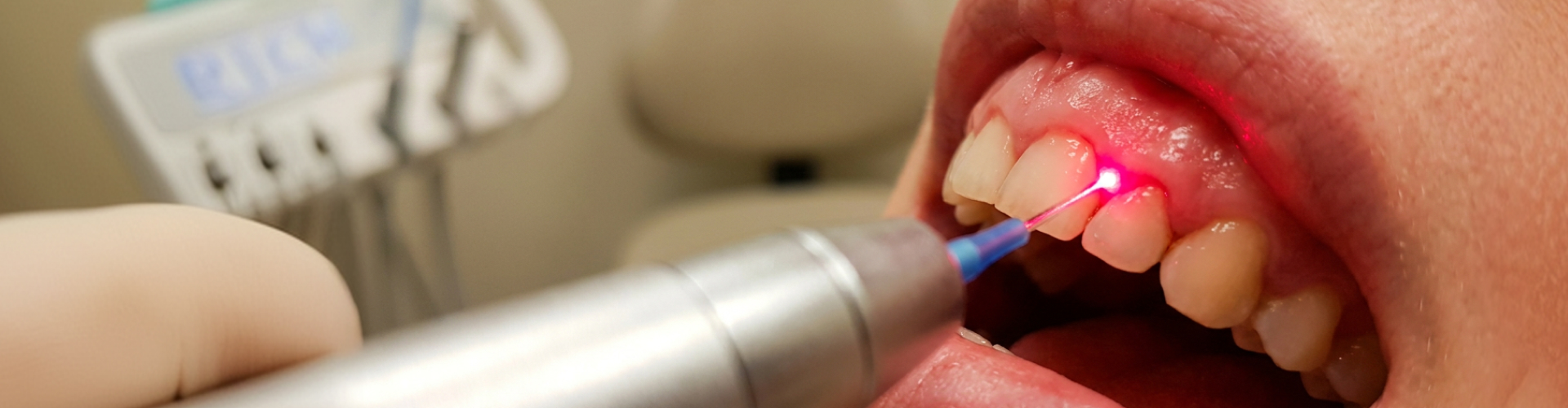
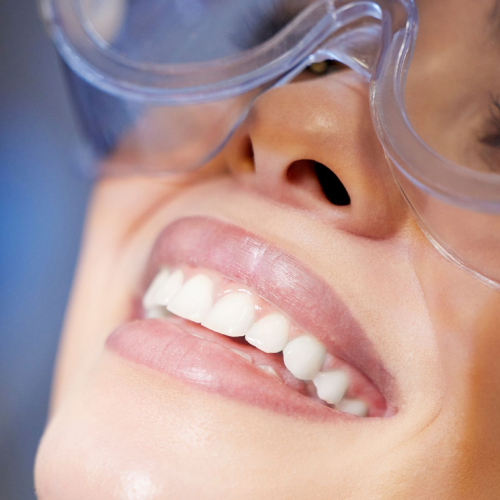
Gum contouring reshapes your gumline to reduce a "gummy smile" or correct unevenness — and it's usually completed in a single visit. But whether you need a general dentist or a periodontist, and how many appointments you'll actually need, depends on a factor most patients never hear about until they're already in the chair.
Most articles on gum contouring describe a straightforward single-appointment procedure. That's accurate — for a specific type of case. Understanding which type you have changes everything about your timeline and recovery.
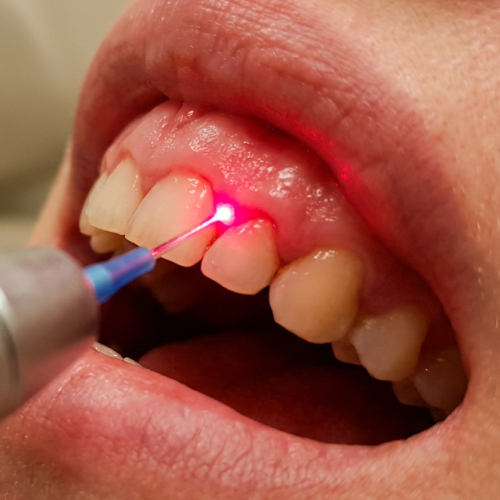
Soft-tissue-only contouring is the simpler scenario. If your excess gum tissue is caused by hyperplastic (overgrown) gum tissue sitting above normal bone levels, a soft-tissue diode laser can remove and reseal that tissue in roughly 45 minutes. Local anesthesia numbs the area, the laser sculpts the gumline with precision, and the heat from the laser simultaneously cauterizes the tissue — meaning minimal bleeding and faster healing. According to Healthline, gum contouring typically takes one to two hours and is completed in a single office visit.
Osseous crown lengthening is the more involved scenario. Some patients have high bone levels positioned too close to the gumline. If excess tissue is removed without addressing the underlying bone, the gums simply grow back — often within weeks. When bone is involved, the procedure requires a surgical flap, careful bone reduction, sutures, and a mandatory tissue-stabilization period of six to twelve weeks. This means two to three visits: the surgical appointment, a suture-removal follow-up, and a final check once tissues have fully settled.
Before any procedure, a provider should perform bone sounding — a simple measurement of the distance between your gumline and the underlying bone. This single data point determines your entire treatment path. If no one mentions it at your consultation, ask directly.
Generic dental content often says "both general dentists and periodontists can perform gum contouring," which is technically true but practically incomplete. The real question is whether your specific case falls within what a general dentist can safely handle.
Here's the clinical dividing line: the biologic width — roughly 3mm of healthy attachment tissue that must remain undisturbed between the base of any reshaped gumline and the underlying bone. Violating this zone causes permanent attachment loss, which can compromise tooth stability.
When a general dentist is appropriate: If bone sounding confirms more than 3mm of clearance above the bone, and the issue is cosmetic asymmetry or mild excess tissue (pseudo-pockets), an in-office diode laser procedure is safe and effective. Many experienced general dentists handle these cases well. Patients who are already keeping up with their cleaning and exam appointments are often well-positioned to discuss contouring options with their provider.
When a periodontist is non-negotiable: If sounding reveals less than 3mm of clearance, reshaping requires micro-surgical bone recontouring. This is specialized territory. Cleveland Clinic notes that providers assess bone levels around each tooth before proceeding — and that without this step, gums may regrow to their original position.
Ask these questions at your consultation:
The answers will tell you quickly whether you're in the right hands for your specific situation.
Many patients in Bellflower and the broader Southeast Los Angeles area pursue gum contouring as part of a smile makeover — often alongside orthodontics or porcelain veneers. Sequencing these treatments correctly matters more than most patients realize.
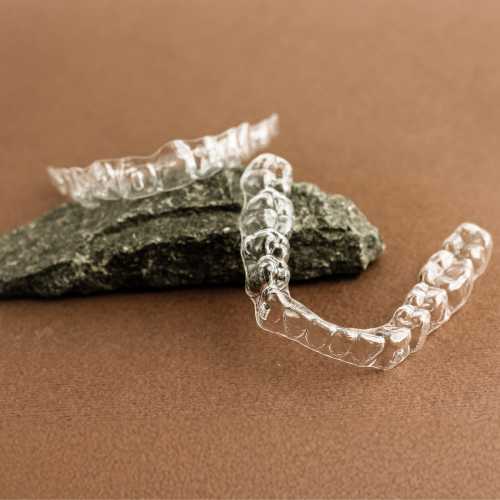
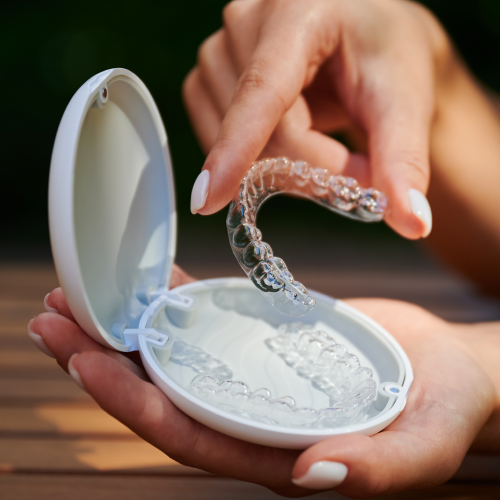
After braces or clear aligners: Orthodontic treatment causes temporary gum inflammation as teeth shift. This swelling can make the gumline appear different than it will once everything settles. Contouring performed too soon may produce a result that looks uneven after inflammation resolves. A waiting period of six to eight weeks after debonding gives tissue time to stabilize before any reshaping is done. Patients exploring Invisalign as part of their smile plan should factor this timeline into their overall treatment sequence.
Before porcelain veneers: If your smile plan includes veneers, gum contouring must happen first — and then you wait. Veneer margins are placed at or just below the gumline, and those margins need to be set against healed, stable tissue. Performing final porcelain impressions before the gumline has fully settled (typically eight to twelve weeks post-contouring) risks exposed margins as the tissue continues to mature. Rushing this step is one of the more common reasons veneer cases require early revision.
WebMD explains that gum contouring is also performed as part of broader periodontal procedures like crown lengthening and pocket reduction — reinforcing that this procedure rarely exists in isolation for patients with more complex treatment plans.
For soft-tissue laser cases, recovery is relatively straightforward. Some soreness is normal for the first few days, manageable with over-the-counter pain relievers. Soft, cool foods are recommended initially — avoid anything crunchy or chewy while the tissue heals. A CareCredit overview of the procedure notes that full healing can take up to a few weeks, though most patients return to normal routines quickly.
For osseous cases, expect a longer recovery window. Sutures need removal, and the tissue-stabilization period means the final result won't be fully visible for several weeks. Patients who have previously dealt with gum disease gingivitis may require additional evaluation before contouring is considered appropriate.
One important detail: gum contouring is permanent. Cleveland Clinic confirms that gum tissue does not regrow after properly performed contouring — which is exactly why getting the technique and provider right the first time matters so much. For patients whose gumline concerns are connected to underlying structural issues, a tooth crown or other restorative work may also be part of the broader treatment plan.
If you're considering gum contouring in Bellflower or the surrounding Southeast Los Angeles area, the first step is a thorough consultation — one that includes bone-level assessment, not just a visual exam. Bellflower Dental Group can evaluate your gumline, explain which procedure fits your case, and help you understand how contouring fits into your broader aesthetic dentistry goals. Reach out to schedule your consultation today.
This article is for informational purposes only and does not constitute medical or dental advice. Individual treatment needs vary. Please consult a qualified dental professional for an evaluation specific to your situation.
Fresh news from the dental world...


Mon - Fri 9AM - 6PM
Saturday 9AM - 3PM
Sunday Closed
Check out what our patients are saying in Bellflower, CA...


“Great customer service!”
Great customer service and attentive staff! My 3 year old enjoyed his visit! Yes, I said he enjoyed it! He had to have X-rays done, and I was so worried that he wasn't gonna be a happy camper but the X-ray tech, Dominique, is so good with kids! The X-rays were fast and painless! Overall a great experience!

“Surpasses my expectations!”
Amazing staff! My experience at Bellflower Dental Group was outstanding. I highly recommend this dental group. I come to them for my braces, their ortho is incredible, the highlight of this dental group. The staff is amazing, their employees are so kind and take the time to perfect your braces.

“I love this dental office!”
I have been coming here for years. It is a one-stop-shop! You can get your x-rays, cleaning, braces, labs, dentures, toothbrushes, and more all right here. The staff is great, and they try to work with you if you need a payment plan. Never had any issues with any of the work done here!
“Great customer service!”
Great customer service and attentive staff! My 3 year old enjoyed his visit! Yes, I said he enjoyed it! He had to have X-rays done, and I was so worried that he wasn't gonna be a happy camper but the X-ray tech, Dominique, is so good with kids! The X-rays were fast and painless! Overall a great experience!
“Surpasses my expectations!”
Amazing staff! My experience at Bellflower Dental Group was outstanding. I highly recommend this dental group. I come to them for my braces, their ortho is incredible, the highlight of this dental group. The staff is amazing, their employees are so kind and take the time to perfect your braces.
Check out our accreditations, sources, and relationships in the wide world of dentistry...


Check us out and follow our Bellflower, CA practice on social media...


