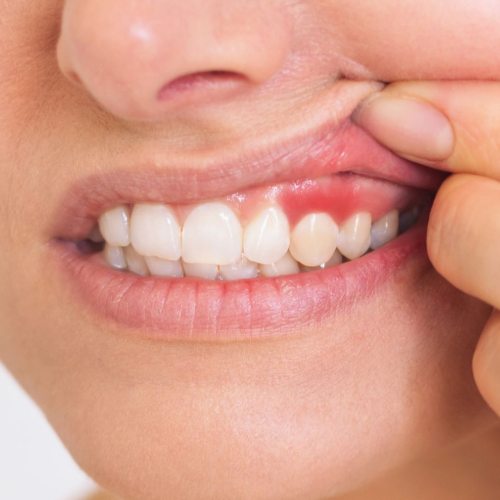
Antibiotics for Gum Disease: What Amoxicillin Can and Can't Do
Can amoxicillin cure gum disease? Learn how antibiotics treat gum infections and what they can't fix. Schedule an exam with Bellflower Dental Group today!
Read More
Antibiotics play a supporting role in gum disease treatment, but they rarely work alone — especially for deeper infections. Amoxicillin is commonly prescribed, but periodontists often combine it with other medications or use targeted delivery methods to reach bacteria that pills can't. Understanding these distinctions helps patients in Bellflower and Downey avoid a common trap: feeling better while the disease quietly continues.
This surprises a lot of patients. You get a prescription for amoxicillin, the swelling goes down in a day or two, and you assume the infection is handled. But that symptom relief can be dangerously misleading.
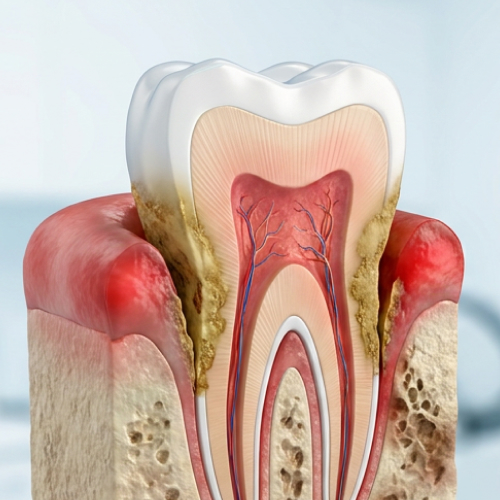
According to the NIDCR, gum disease is driven by bacterial plaque and hardened tartar that no antibiotic can dissolve. The soft-tissue inflammation responds quickly to antibiotics — but the subgingival calculus underneath keeps fueling osteoclast activity and irreversible alveolar bone loss even after your gums stop bleeding and the tenderness fades. The clinical timeline matters here: symptom clearance happens within 48–72 hours, while bone destruction quietly continues beneath tissue that feels perfectly normal. Postponing professional mechanical debridement because symptoms disappeared is one of the most common ways gum disease advances without a patient realizing it.
For progressive or rapidly advancing periodontitis, periodontists rarely prescribe amoxicillin as a standalone treatment. The reason is biological: advanced periodontal pockets are dominated by strict anaerobes — bacteria like Porphyromonas gingivalis, Treponema denticola, and Tannerella forsythia (the so-called "red complex"). Standard amoxicillin targets gram-positive aerobic bacteria effectively, but it struggles against these oxygen-intolerant species living deep in pockets.
That's why the evidence-based approach for Grade C or rapidly progressing periodontitis often involves the "Amox-Met" protocol — amoxicillin combined with metronidazole. Sometimes called the Van Winkelhoff cocktail, this dual therapy pairs amoxicillin's coverage of gram-positive organisms with metronidazole's potency against strict anaerobes like P. gingivalis. The combination covers a broader bacterial spectrum than either drug alone. It's reserved for refractory or severe cases precisely because broader antibiotic use carries real resistance risks — not a routine prescription for mild gingivitis.
A Healthline overview confirms that metronidazole is sometimes prescribed alongside penicillin-class antibiotics specifically to cover a larger variety of bacterial species that penicillin alone misses.
Here's something most patients don't know when they're researching antibiotics for gum disease: oral pills achieve surprisingly poor drug concentration inside deep periodontal pockets.
When you swallow amoxicillin, it circulates through your bloodstream and reaches gingival crevicular fluid — but at levels far lower than what's needed to eliminate the dense bacterial biofilm clinging to root surfaces at 5mm+ pocket depths. The entire body absorbs the antibiotic dose, which disrupts the gut microbiome and raises resistance concerns, while the actual site of infection receives a fraction of what a localized delivery system can achieve.
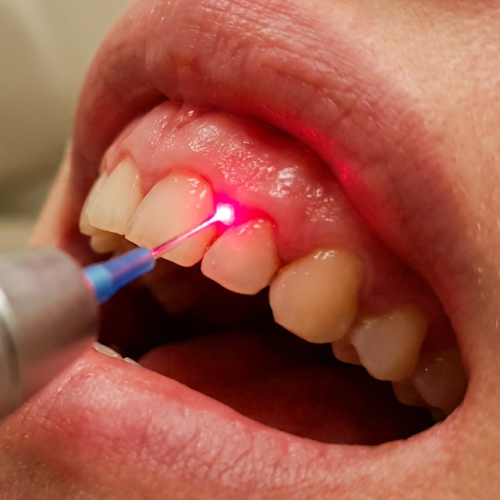
Locally delivered antimicrobials work differently. Products like Arestin (minocycline microspheres) or Atridox (doxycycline gel) are placed directly into periodontal pockets by a clinician after scaling and root planing. The pocket-depth threshold for placement is generally 5mm or greater — pockets shallow enough to be mechanically cleaned don't typically require adjunctive local delivery. Inside those deep pockets, local delivery achieves drug concentrations roughly 100 times higher than systemic pills at the precise location where bacteria are most concentrated. Critically, this approach spares the gut microbiome from broad antibiotic exposure.
This is why the conversation about antibiotics for gum disease shouldn't be framed as "which pill should I take" — it should start with a clinical pocket-depth assessment. A thorough cleaning and exam is often the first step in identifying how far the disease has progressed and whether adjunctive antibiotic therapy is warranted.
The future of periodontal antibiotic therapy may look very different from today's broad-spectrum approach. ADA News reports that ADA Forsyth Institute scientists have identified a narrow-spectrum antibiotic called FP-100 (hygromycin A) that can eradicate Fusobacterium nucleatum — a key pathogen in periodontitis — without harming the oral or gut microbiomes.
"With FP-100, we can eliminate Fusobacterium nucleatum from the oral cavity, reverse tissue destruction and prevent disease progression without harming the beneficial microbiome," said lead researcher Dr. Alpdogan Kantarci.
The implications extend beyond the mouth. Fusobacterium nucleatum has been linked to colorectal cancer, preterm birth, and Alzheimer's disease — conditions that researchers believe may be triggered when the bacterium travels from the oral cavity to other parts of the body. FP-100 is currently in Phase I clinical trials, meaning it isn't available yet, but it signals a meaningful shift away from the broad-spectrum antibiotics that dominate current treatment.
Antibiotics are genuinely useful tools in the right clinical context — but they have hard limits that every patient should understand.
They can reduce acute infection, control bacterial load before or after surgical procedures, and serve as adjuncts to scaling and root planing in severe cases. MedlinePlus notes that completing the full course of amoxicillin is essential — stopping early allows surviving bacteria to become resistant, making future infections harder to treat. In cases where infection has spread beyond the gums, a dental emergency evaluation may be necessary to determine whether more urgent intervention — such as an endodontic root canal or tooth extraction — is required alongside antibiotic therapy.
What antibiotics cannot do: remove calculus from root surfaces, regenerate lost bone, or replace the mechanical debridement that forms the foundation of periodontal therapy. They also carry real side effect profiles. Medical News Today notes that amoxicillin can cause hypersensitivity reactions, liver effects in rare cases, and serious skin reactions — reasons why any antibiotic course should be supervised by a clinician who knows your full medical history.
The bottom line for patients in Bellflower and Downey: antibiotics are an adjunct, not a cure. They work best when combined with professional treatment, not used as a substitute for it.
If you're dealing with swollen gums, bleeding, or deep pocket readings, the first step isn't researching which antibiotic to take — it's a clinical evaluation. Bellflower Dental Group provides comprehensive periodontal assessments for patients throughout Bellflower and the surrounding Southeast Los Angeles area. Our team can determine whether antibiotics are appropriate, which delivery method makes sense for your pocket depths, and what mechanical treatment is needed to actually stop the disease from progressing. Contact us to schedule your evaluation.
Medical disclaimer: This article is for informational purposes only and does not constitute medical or dental advice. Always consult a licensed dentist or periodontist for diagnosis and treatment recommendations specific to your condition.
Fresh news from the dental world...



Mon - Fri 9AM - 6PM
Saturday 9AM - 3PM
Sunday Closed
Check out what our patients are saying in Bellflower, CA...


“Great customer service!”
Great customer service and attentive staff! My 3 year old enjoyed his visit! Yes, I said he enjoyed it! He had to have X-rays done, and I was so worried that he wasn't gonna be a happy camper but the X-ray tech, Dominique, is so good with kids! The X-rays were fast and painless! Overall a great experience!

“Surpasses my expectations!”
Amazing staff! My experience at Bellflower Dental Group was outstanding. I highly recommend this dental group. I come to them for my braces, their ortho is incredible, the highlight of this dental group. The staff is amazing, their employees are so kind and take the time to perfect your braces.

“I love this dental office!”
I have been coming here for years. It is a one-stop-shop! You can get your x-rays, cleaning, braces, labs, dentures, toothbrushes, and more all right here. The staff is great, and they try to work with you if you need a payment plan. Never had any issues with any of the work done here!
“Great customer service!”
Great customer service and attentive staff! My 3 year old enjoyed his visit! Yes, I said he enjoyed it! He had to have X-rays done, and I was so worried that he wasn't gonna be a happy camper but the X-ray tech, Dominique, is so good with kids! The X-rays were fast and painless! Overall a great experience!
“Surpasses my expectations!”
Amazing staff! My experience at Bellflower Dental Group was outstanding. I highly recommend this dental group. I come to them for my braces, their ortho is incredible, the highlight of this dental group. The staff is amazing, their employees are so kind and take the time to perfect your braces.
Check out our accreditations, sources, and relationships in the wide world of dentistry...


Check us out and follow our Bellflower, CA practice on social media...


