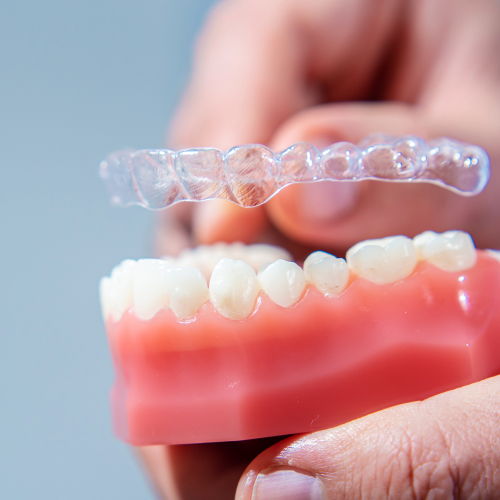
Why Your Invisalign Trays Aren't Fitting Right — and What to Do About It
Struggling with Invisalign gaps or tracking issues in Bellflower? Learn what's normal, what's not, and when refinements may help. Call us today.
Read More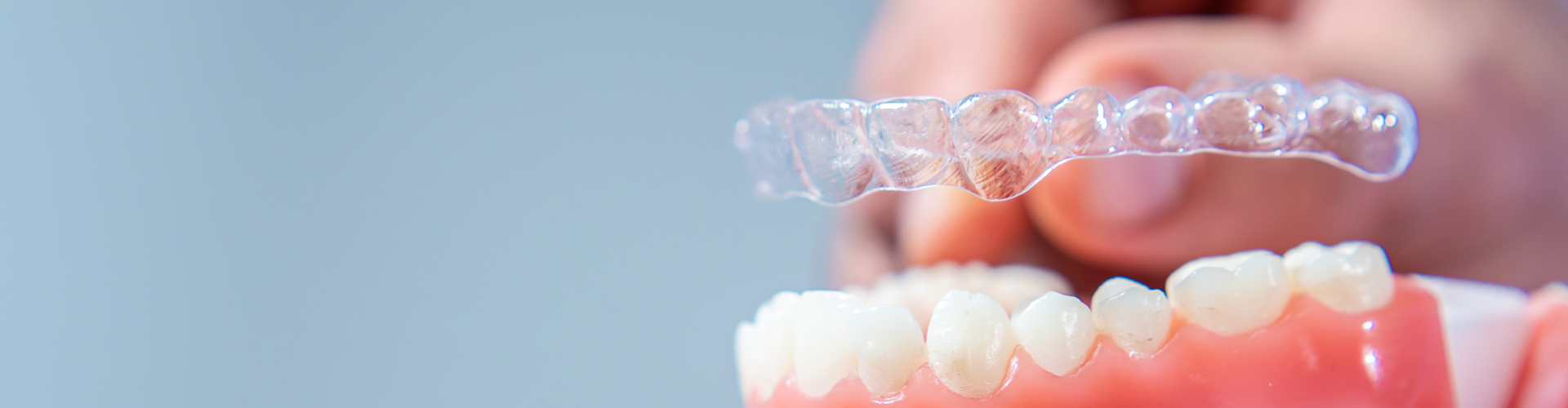
Written by Dr. Arkady Tsibel, DDS | Chief of Staff
Medically Reviewed by Dr. Hooman Adamous, DMD | Oral Surgeon
If you've been wearing Invisalign and noticed a gap at the bottom of your tray, you're not alone. I hear this from patients in Bellflower and the surrounding Southeast Los Angeles area — Downey, Paramount, you name it — more often than you'd think. And honestly, it can feel alarming when you're doing everything right and still see that little gap.
Here's the thing: a poor fit doesn't automatically mean your treatment is failing. But it does mean something needs attention. Whether you're dealing with a seating issue, tracking problems, or wondering if refinements are in your future, I want to walk you through what's actually going on — in plain language, not dental jargon. Let's get into it.
A gap between your tray and your teeth — usually visible at the gumline or bottom edge — is one of the most common concerns I see. Not always a crisis. But it's worth understanding.
The most likely culprit? Your teeth haven't moved quite as far as the tray expects them to. Each Invisalign tray is designed based on where your teeth should be at that point in treatment. If your teeth haven't fully caught up, the tray sits slightly lifted — especially near the back molars or along the lower arch.
I had a patient last month who came in frustrated because her tray felt "floaty" on one side. She'd been wearing it the full 22 hours a day, cleaning it properly — doing everything right. But she'd skipped using her aligner chewies, which are those small foam cylinders you bite down on to help fully seat the tray. That was the whole issue.
Other causes include:
And here's my slightly controversial opinion: the Invisalign Progress Assessment tool can overestimate how much movement has occurred. So even if the app says you're on track, a clinical exam might tell a different story.
Bottom line? If you're seeing a gap that doesn't close even after using chewies, don't just move on to the next tray. Come in. Moving forward with a poorly fitting tray can delay your entire treatment — or worse, move teeth in the wrong direction.
"Tracking" is essentially how well your actual tooth movement matches the movement your Invisalign plan predicted. Think of it like following a GPS route — tracking means you're staying on the path. Poor tracking means you've veered off, and the aligners are no longer engaging your teeth the way they're supposed to.
Here's why this matters so much. Invisalign works through a digital simulation called ClinCheck, which maps out every millimeter of planned movement. When your teeth aren't where they're supposed to be at a given tray, the subsequent trays can't do their job effectively. The whole system is sequential — each tray builds on the last.
How do you know if you're off-track? Honestly, it's not always obvious to the patient. But some signs include:
I'm not 100% sure why, but my theory is that patients underestimate how much small compliance gaps compound over time. Missing an hour here, leaving trays out during a long lunch — it adds up faster than people expect.
The accuracy of Invisalign tooth movement actually varies quite a bit depending on the type of movement. Studies report accuracy ranging from around 41% for certain anterior movements to about 72% for arch expansion. That's a wide range, according to a peer-reviewed study. And it's exactly why regular monitoring — here in our Bellflower office or through digital tracking tools — is so important.
Actually, scratch that — it depends on your specific case complexity too. Mild cases track much more reliably than complex ones.
Look, if you're worried about tracking, the answer is simple: come in before moving to your next tray rather than hoping it resolves itself. If you're also weighing your options, our blog post on Braces or Invisalign In Bellflower, CA breaks down how the two approaches compare.
Refinements are additional sets of aligners made after your initial Invisalign series ends — or sometimes mid-treatment — to address teeth that didn't move fully as planned. They're not a sign of failure. They're actually built into how Invisalign treatment works for most people.
Here's the thing most patients don't hear upfront: only about 6% of Invisalign patients complete treatment with zero refinements. The average patient needs around 2 to 3 refinement scans. And treatment ends up running roughly 5 months longer than initially estimated, bringing the average total to about 22.8 months.
Does that sound like a lot? Fair enough. But consider that refinements are how we get from "pretty good" to "actually finished." After a new digital scan, Invisalign fabricates a fresh series of trays targeting whatever's still off — maybe a stubborn rotation, a gap that didn't fully close, or bite contacts that need more work.
The good news is that the first refinement makes a meaningful difference for most patients. Studies show improvement rates of 64% to 78% after just the first refinement, depending on case complexity. And beyond 4 refinements, additional rounds are unlikely to move the needle much — which is when we'd have a conversation about whether braces or other options make more sense.
More complex cases — severe spacing, significant rotations, Class II corrections — are more likely to need refinements. Severe spacing cases, for example, have been shown to have a dramatically higher likelihood of requiring additional aligner sets.
I've seen patients in the Southeast Los Angeles area come in after finishing their "final" tray elsewhere and still have noticeable gaps or bite issues. Refinements would have caught those. The lesson? Stay connected with your provider through the whole process, not just at the start. For a deeper dive into how this technology works, see our blog post on Exploring Invisalign and Aligner Technology n Bellflower, CA.
If your trays aren't fitting right, you're seeing gaps, or you've finished your initial series and something still feels off, don't wait. At Bellflower Dental Group, we evaluate your fit, tracking, and overall progress — and we'll give you an honest answer about whether refinements make sense for your case.
We serve patients throughout Bellflower, Downey, and the surrounding Southeast Los Angeles communities. Schedule a consultation with our team today and let's make sure your Invisalign treatment is actually working the way it should.
This content is for informational purposes only and does not replace professional medical advice, diagnosis, or treatment. Always consult with a qualified healthcare provider.
Fresh news from the dental world...





Mon - Fri 9AM - 6PM
Saturday 9AM - 3PM
Sunday Closed
Check out what our patients are saying in Bellflower, CA...


“Great customer service!”
Great customer service and attentive staff! My 3 year old enjoyed his visit! Yes, I said he enjoyed it! He had to have X-rays done, and I was so worried that he wasn't gonna be a happy camper but the X-ray tech, Dominique, is so good with kids! The X-rays were fast and painless! Overall a great experience!

“Surpasses my expectations!”
Amazing staff! My experience at Bellflower Dental Group was outstanding. I highly recommend this dental group. I come to them for my braces, their ortho is incredible, the highlight of this dental group. The staff is amazing, their employees are so kind and take the time to perfect your braces.

“I love this dental office!”
I have been coming here for years. It is a one-stop-shop! You can get your x-rays, cleaning, braces, labs, dentures, toothbrushes, and more all right here. The staff is great, and they try to work with you if you need a payment plan. Never had any issues with any of the work done here!
“Great customer service!”
Great customer service and attentive staff! My 3 year old enjoyed his visit! Yes, I said he enjoyed it! He had to have X-rays done, and I was so worried that he wasn't gonna be a happy camper but the X-ray tech, Dominique, is so good with kids! The X-rays were fast and painless! Overall a great experience!
“Surpasses my expectations!”
Amazing staff! My experience at Bellflower Dental Group was outstanding. I highly recommend this dental group. I come to them for my braces, their ortho is incredible, the highlight of this dental group. The staff is amazing, their employees are so kind and take the time to perfect your braces.
Check out our accreditations, sources, and relationships in the wide world of dentistry...


Check us out and follow our Bellflower, CA practice on social media...


