
How Long Does a Smile Makeover Last — And What Actually Wears Out First?
Wondering how long a smile makeover lasts and what wears out first? Discover lifespan expectations, stain resistance, and care. Book your consultation today!
Read More
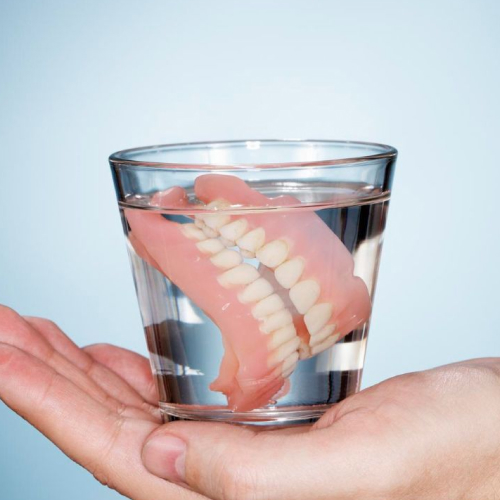
Traditional dentures rely on suction and gum contact — not roots — making slippage during meals a common frustration. Understanding the mechanics behind why dentures move can help you eat more comfortably and protect your gum tissue from unnecessary trauma.
Most people are told to chew on both sides of the mouth with dentures. Few are told why — and without understanding the mechanics, the advice is easy to ignore.
Traditional dentures have no roots anchoring them to bone. They rest on a mucosal ridge, held by suction, saliva, and soft tissue contact. When you bite into a firm food using only one side of your mouth, you create a lever system. The chewing side acts as the force point, and the opposite side of the denture lifts — breaking its seal, tilting, and slipping. Dentists sometimes call this the "seesaw effect."
The fix isn't complicated, but it does require intention. Before biting down, use your tongue to divide your food into two roughly equal portions. Place one portion over the left molars and one over the right simultaneously, then chew. This distributes force evenly across the denture base, preventing the tilt that breaks the suction seal.
Research published in PMC confirms that denture stability depends on minimizing off-vertical and lateral forces — precisely the kind generated by one-sided chewing. Bilateral loading keeps forces vertical, which supporting tissues tolerate far better.
This technique takes practice. Soft foods are forgiving while you build the habit. Firm foods — think cooked chicken or steamed vegetables — become manageable once bilateral chewing becomes instinctive.
Saliva does more than aid digestion. For upper denture wearers, it creates the liquid seal — a thin film of surface tension — that holds the plate against the palate. Disrupt that film, and the denture detaches mid-meal.
Many adults in Bellflower and the broader Southeast Los Angeles area take medications — beta-blockers, diuretics, antihistamines — that list dry mouth as a common side effect. According to WebMD, saliva plays a direct role in denture retention, and when salivary flow drops, even moderately firm foods can cause immediate slippage and painful rubbing against dry, fragile gum tissue.
Practical workarounds that help:
The ADA notes that denture adhesives can provide added retention for patients experiencing dry mouth — though they emphasize that adhesives supplement a well-fitting denture rather than compensate for a poorly fitting one. If dry mouth is medication-related, discussing it with both your physician and dentist opens more targeted solutions. Patients dealing with persistent gum irritation alongside dry mouth should also be aware that gum disease gingivitis can develop when inflamed tissue goes unaddressed.
Standard advice warns against hard foods — nuts, hard candy, raw carrots. The concern is structural: these foods can crack acrylic. That warning is valid. But the more frequent cause of painful meals comes from a category most guides skip entirely: micro-hard foods.
Sesame seeds, strawberry pips, cracked black pepper, poppy seeds, and coarse spice blends are small enough to slip under a denture plate when it shifts even slightly during chewing. Once trapped, they grind against gum tissue with every bite — the dental equivalent of a pebble in a shoe. The vacuum-suction mechanism that normally holds the denture in place briefly creates negative pressure during lateral chewing movement, actively pulling these particles underneath the plate.
The culinary modifications are straightforward:
For macro-hard foods, a Healthline overview on dentures vs. implants notes that chewing ability is one of the primary functional differences between denture types — conventional dentures operate at a fraction of the masticatory force of natural teeth, meaning foods that seem manageable can still stress the appliance and surrounding tissue unexpectedly. For patients who want a more permanent solution, dental implants offer significantly greater stability and chewing force than traditional dentures.
The National Institute on Aging reinforces that maintaining oral health and comfortable eating habits are closely linked — and that what you eat directly affects the health of the tissue supporting your denture.
Denture wearers don't need to surrender food enjoyment — they need a different strategy.
Firm foods like cooked fish, soft-braised meats, ripe fruits, and well-cooked vegetables are realistic with traditional dentures when bilateral chewing technique is applied and oral hydration is maintained. The transition period matters: new wearers typically need several weeks before eating feels natural, and that adjustment period is normal.
Foods to approach carefully — not necessarily avoid forever:
If slippage persists despite good technique and hydration, the fit itself may need attention. Bone and gum tissue change over time, and a denture that fit well at placement may need relining or replacement after several years. Scheduling a routine cleaning and exam gives your dentist the opportunity to assess fit and catch any tissue changes early.
If eating with dentures has become frustrating, you don't have to figure it out alone. Bellflower Dental Group serves patients throughout Bellflower and the Southeast Los Angeles area with denture consultations, fit evaluations, and conversations about whether traditional or implant-supported options are the better fit for your lifestyle. Reach out to schedule a visit — comfortable eating is worth pursuing.
This article is for informational purposes only and does not constitute dental or medical advice. Consult a licensed dental professional for diagnosis and personalized treatment recommendations.
Fresh news from the dental world...


Mon - Fri 9AM - 6PM
Saturday 9AM - 3PM
Sunday Closed
Check out what our patients are saying in Bellflower, CA...


“Great customer service!”
Great customer service and attentive staff! My 3 year old enjoyed his visit! Yes, I said he enjoyed it! He had to have X-rays done, and I was so worried that he wasn't gonna be a happy camper but the X-ray tech, Dominique, is so good with kids! The X-rays were fast and painless! Overall a great experience!

“Surpasses my expectations!”
Amazing staff! My experience at Bellflower Dental Group was outstanding. I highly recommend this dental group. I come to them for my braces, their ortho is incredible, the highlight of this dental group. The staff is amazing, their employees are so kind and take the time to perfect your braces.

“I love this dental office!”
I have been coming here for years. It is a one-stop-shop! You can get your x-rays, cleaning, braces, labs, dentures, toothbrushes, and more all right here. The staff is great, and they try to work with you if you need a payment plan. Never had any issues with any of the work done here!
“Great customer service!”
Great customer service and attentive staff! My 3 year old enjoyed his visit! Yes, I said he enjoyed it! He had to have X-rays done, and I was so worried that he wasn't gonna be a happy camper but the X-ray tech, Dominique, is so good with kids! The X-rays were fast and painless! Overall a great experience!
“Surpasses my expectations!”
Amazing staff! My experience at Bellflower Dental Group was outstanding. I highly recommend this dental group. I come to them for my braces, their ortho is incredible, the highlight of this dental group. The staff is amazing, their employees are so kind and take the time to perfect your braces.
Check out our accreditations, sources, and relationships in the wide world of dentistry...


Check us out and follow our Bellflower, CA practice on social media...


