
Smile Makeover vs. Simple Bonding and Whitening: What Actually Lasts?
Wondering if a smile makeover is better than simple bonding or whitening? Discover what actually lasts and book your consult at Bellflower Dental Group today!
Read More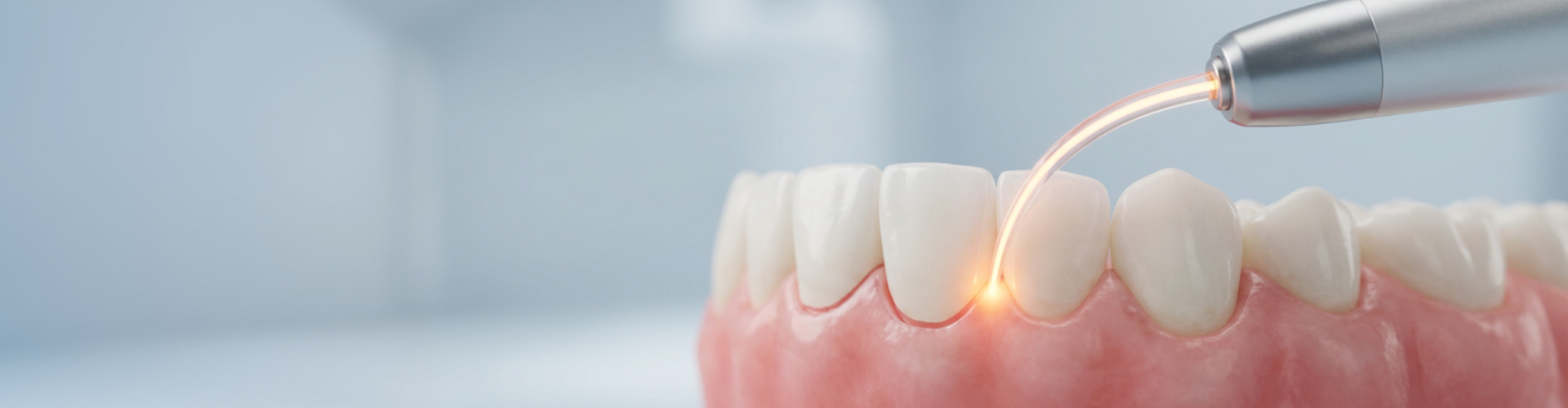
Gum contouring fees vary significantly depending on whether you need simple soft-tissue reshaping or a more complex procedure involving bone reduction — and many patients are surprised by the difference. Dental insurance rarely covers purely cosmetic gum work, but specific billing codes can unlock coverage when the procedure is medically necessary. Here's what you need to understand before your consultation.
For Bellflower-area patients, this is where a lot of patients get blindsided. You research gum contouring, find a per-tooth estimate online, and then receive a clinical quote that is dramatically higher. That gap almost always comes down to one anatomical factor: whether your bone crest is too close to your gum line.
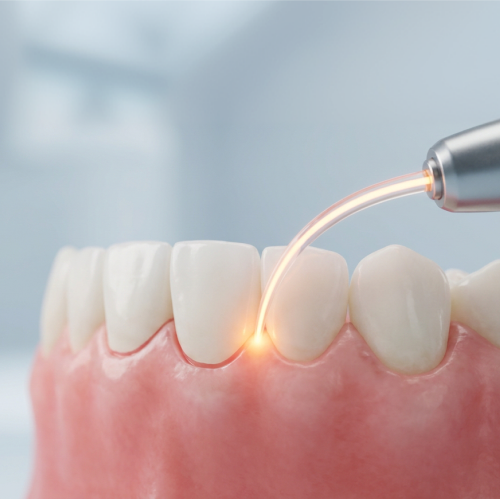
When excess gum tissue sits above a sufficiently deep bone level, a dentist can simply remove that soft tissue with a laser or scalpel — a straightforward gingivectomy. According to Healthline, the procedure typically takes one to two hours and is performed in a single office visit under local anesthesia.
But here's the anatomical reality most online articles skip. Every tooth requires what periodontists call "biological width" — a protected zone of roughly two millimeters between the bone crest and the base of the gum attachment. If your bone sits too high relative to your gum tissue, removing only soft tissue will trigger your body to grow the gum back down to re-establish that protected zone. Your dentist must then also reshape the underlying bone, a procedure called surgical crown lengthening.
Crown lengthening is a more involved surgery with a longer recovery and a higher fee — and it requires a periodontist's skill set. WebMD notes that sometimes bone at the front of the tooth's root must be removed during gum contouring to achieve the best long-term results. That single sentence represents the difference between a minor soft-tissue procedure and a surgical one.
Before accepting any quote, ask your provider directly: Does my bone level require crown lengthening, or is soft-tissue removal sufficient? The answer determines the entire scope of your treatment.
Most articles give a vague answer: insurance doesn't cover cosmetic procedures. That's technically true but practically incomplete. The more useful question is whether your specific situation qualifies as medically necessary — and if it does, the billing code submitted to your insurer matters enormously.
Two CDT codes are central to this conversation:
Cleveland Clinic explains that gum contouring may be medically indicated for patients with gum disease gingivitis, and that dental insurance may cover the cost when the procedure is deemed clinically necessary rather than elective.
Before your procedure, call your insurer — Delta Dental, Cigna, MetLife, or whichever plan you carry — and request a pre-determination of benefits using the specific CDT code your dentist plans to submit. A pre-determination is not a guarantee of payment, but it gives you a written estimate of what your plan will cover before any treatment begins. Bring the code to your consultation and ask your provider which one applies to your case.
The American Academy of Periodontology reinforces that crown lengthening and gum reshaping procedures serve both cosmetic and functional purposes — a distinction that can shift a claim from denied to approved. If your case involves aesthetic dentistry goals alongside functional ones, documenting both aspects thoroughly can strengthen your insurance submission.
There is a scenario patients rarely hear about until it happens to them. If a soft-tissue-only laser contouring is performed on someone who actually needed bone reduction, the gum tissue will migrate back toward its original position within approximately three to six months. The biological width re-establishes itself, and the patient's smile returns to roughly where it started.
This is not a failure of healing. It is the body doing exactly what it is designed to do — protecting the attachment zone around each tooth. The problem is that the original procedure did not address the underlying bone architecture that drives gum position.
The consequence is a second procedure, typically with a periodontist, to perform the crown lengthening that should have been done initially. Healthline's overview of laser gum surgery notes that proper training and diagnosis are essential when lasers are used for gum procedures — precisely because the technology can make soft-tissue removal fast and easy, even when the anatomy calls for something more comprehensive.
To assess your rebound risk before treatment, ask your provider to evaluate your bone levels with dental X-rays during the consultation. Patients who also have concerns about tooth decay should address cavity fillings before proceeding with any cosmetic gum work, as untreated decay can complicate healing. Cleveland Clinic's cosmetic dentistry guidance confirms that gum contouring can deliver permanent results — but permanence depends on correct diagnosis and appropriate procedure selection from the start.
A thorough consultation with a periodontist or experienced cosmetic dentist, one who reviews your bone levels and not just your gum line, is the single best way to avoid paying twice. Maintaining your results long-term also means keeping up with regular cleaning and exam appointments to monitor gum health after the procedure.
If you're in Bellflower or the surrounding Southeast Los Angeles area and want a clear, honest answer about what your gum line actually needs, Bellflower Dental Group is here to help. We'll evaluate your gum-to-bone relationship, explain which procedure applies to your anatomy, and help you understand your insurance options before any treatment begins. Whether you're also exploring porcelain veneers or other smile enhancements alongside gum contouring, our team can walk you through a comprehensive treatment plan. Schedule your consultation today.
This article is for informational purposes only and does not constitute medical or dental advice. Please consult a licensed dental professional for diagnosis and treatment recommendations specific to your situation.
Fresh news from the dental world...


Mon - Fri 9AM - 6PM
Saturday 9AM - 3PM
Sunday Closed
Check out what our patients are saying in Bellflower, CA...


“Great customer service!”
Great customer service and attentive staff! My 3 year old enjoyed his visit! Yes, I said he enjoyed it! He had to have X-rays done, and I was so worried that he wasn't gonna be a happy camper but the X-ray tech, Dominique, is so good with kids! The X-rays were fast and painless! Overall a great experience!

“Surpasses my expectations!”
Amazing staff! My experience at Bellflower Dental Group was outstanding. I highly recommend this dental group. I come to them for my braces, their ortho is incredible, the highlight of this dental group. The staff is amazing, their employees are so kind and take the time to perfect your braces.

“I love this dental office!”
I have been coming here for years. It is a one-stop-shop! You can get your x-rays, cleaning, braces, labs, dentures, toothbrushes, and more all right here. The staff is great, and they try to work with you if you need a payment plan. Never had any issues with any of the work done here!
“Great customer service!”
Great customer service and attentive staff! My 3 year old enjoyed his visit! Yes, I said he enjoyed it! He had to have X-rays done, and I was so worried that he wasn't gonna be a happy camper but the X-ray tech, Dominique, is so good with kids! The X-rays were fast and painless! Overall a great experience!
“Surpasses my expectations!”
Amazing staff! My experience at Bellflower Dental Group was outstanding. I highly recommend this dental group. I come to them for my braces, their ortho is incredible, the highlight of this dental group. The staff is amazing, their employees are so kind and take the time to perfect your braces.
Check out our accreditations, sources, and relationships in the wide world of dentistry...


Check us out and follow our Bellflower, CA practice on social media...


