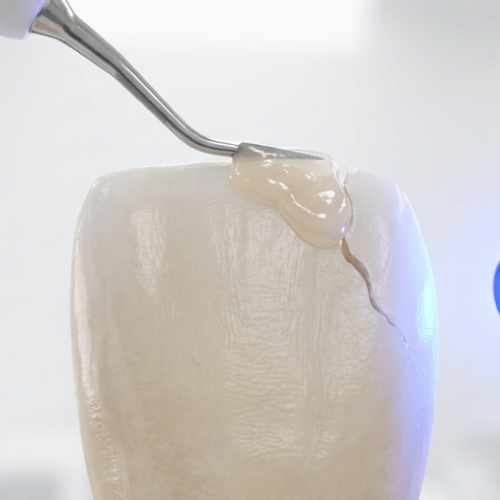
Is Dental Bonding Worth the Cost and What Are the Long Term Risks?
Discover the cost of dental bonding per tooth, its pros and cons, and long-term risks. Read our guide and schedule your consultation with our team today!
Read More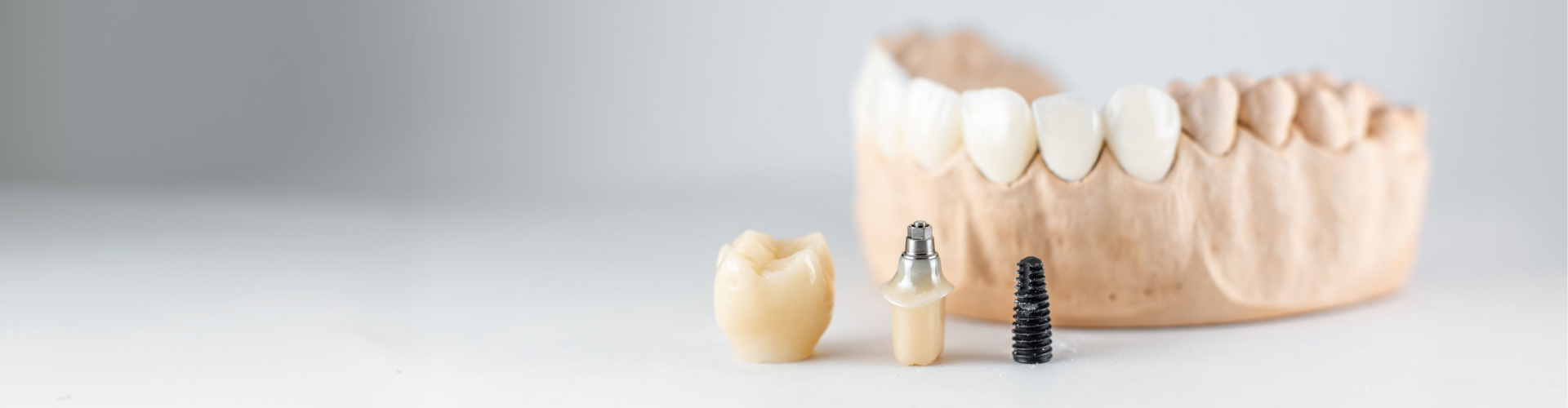
Dental implants are the closest thing to a natural tooth that modern dentistry offers, but "feeling natural" is more complex than most patients expect. Understanding the biological differences — and what implants genuinely do better than bridges or dentures — helps you make a smarter decision.
Most patients are surprised by one specific sensation after getting an implant: the bite feels slightly harder or more rigid than a natural tooth. This isn't a defect. It's biology.
Natural teeth aren't anchored directly to bone. They're suspended by the periodontal ligament (PDL) — a thin band of connective tissue packed with mechanoreceptors that cushion each bite and relay pressure feedback to your brain. That microscopic "give" shapes how you chew without even thinking about it.
Implants work differently. Through a process called osseointegration, the titanium post fuses directly to the jawbone with no ligament in between. Instead of periodontal mechanoreception, implants rely on what researchers call osseoperception — a more diffuse sensory signal transmitted through bone and surrounding tissue. Research published in PMC confirms that while this pathway does restore meaningful sensory feedback, it operates differently than the PDL-based system natural teeth use.
A meta-analysis published on PubMed found that tactile sensibility thresholds for implants are roughly 4 to 20 times higher than those of natural teeth. In plain terms: you need more force applied to an implant before your brain registers it. For most people, this means chewing feels slightly "flatter" at first, and adjusting your rhythm takes a few weeks.
There's also a thermal dimension most patients never hear about. Natural teeth contain a pulp chamber with nerve endings that react to temperature — that cold-drink sensitivity is actually a sensory signal. Implants have no pulp. You won't feel a cold drink in that spot the way you used to. However, titanium conducts temperature differently than dentin and enamel, and some patients report a delayed coolness through the gum or jawbone near the post. This isn't a complication — it's simply the physics of metal conducting heat through bone rather than a nerve firing inside a tooth.
None of this means implants feel bad. It means they feel different, and knowing why makes that difference far less alarming.
When patients ask whether implants are "better" than other replacements, the conversation usually centers on the missing space. What rarely gets discussed is what happens to the healthy teeth next to that space.
A traditional dental bridge solves the gap by anchoring to the adjacent teeth — but doing so requires permanently shaving down those teeth to serve as supports. Two perfectly healthy teeth become structural props, losing enamel they'll never get back. Over time, those abutment teeth face increased risk of decay, endodontic root canal treatment, and eventual failure.
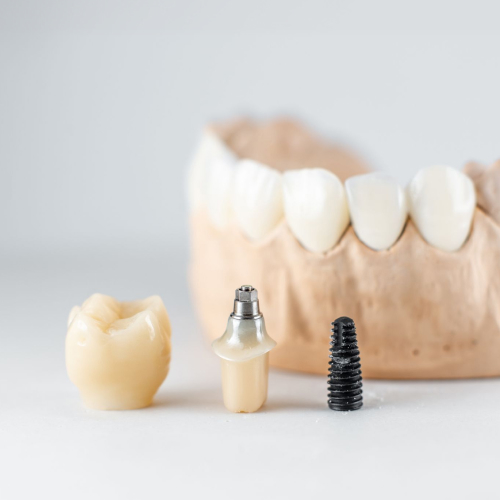
An implant requires none of that. It's a self-contained unit: titanium post into bone, abutment, tooth crown. The teeth on either side remain completely untouched. Healthline's overview of dental implants describes this as one of the most significant advantages — implants don't damage surrounding teeth, whereas bridges create long-term vulnerability in adjacent enamel.
Implants also address something bridges simply cannot: bone preservation. When a tooth root is missing, the jawbone beneath it gradually resorbs because it's no longer receiving stimulation. An implant post mimics the root, applying force to the bone during chewing and signaling the body to maintain density. A bridge spans the gap above the gumline but leaves the bone beneath to deteriorate.
From a longevity standpoint, the numbers favor implants significantly. According to Harvard Health Publishing, implants can last decades with proper care, while bridges typically require replacement every 10 to 15 years — often because the supporting teeth have developed new problems. The higher upfront cost of implants tends to look very different when measured over a 20-year horizon. Cleveland Clinic further reinforces this point, noting that implants consistently outlast other tooth replacement options when patients maintain good oral hygiene.
Implants are made primarily from titanium — a material chosen for its exceptional strength-to-weight ratio and biocompatibility. Once osseointegrated, the post itself is remarkably durable. A Healthline review of implant vs. bridge comparisons cites long-term implant success rates near 97% at 10 years, which is consistent with findings across multiple clinical studies.
That said, strength has limits worth understanding. Patients with bruxism (teeth grinding) place abnormal occlusal loads on implants that the bone-fused post must absorb without a PDL acting as a buffer. This increases fracture risk compared to natural teeth, which flex slightly under extreme force. Uncontrolled gum disease, insufficient bone density, and smoking can all compromise osseointegration and reduce long-term success.
The crown component — the visible tooth — is typically ceramic or porcelain and may need replacement after 10 to 15 years due to normal wear, even if the post beneath it remains intact for life. This distinction matters: the implant itself is built to last; the restoration on top is not immortal.
Compared to dentures, implants aren't a close competition. Dentures rest on gum tissue, shift during eating and speaking, accelerate bone loss, and require replacement every five to eight years. For patients who qualify, implants restore bite force, speech, and confidence in a way removable prosthetics simply cannot match.
For Bellflower-area patients, understanding candidacy early saves time and sets realistic expectations. Not everyone qualifies for implants right away. Good candidates have adequate jawbone density, healthy gum tissue, and no uncontrolled systemic conditions that impair healing. Smokers face a significantly higher failure rate and are generally counseled to quit before surgery.
Patients who've experienced significant bone loss may need grafting before implant placement — an additional step, but one that makes implants accessible to more people than before. Research from PMC on patient motivations and implant satisfaction found that patients who received thorough pre-treatment counseling reported higher satisfaction outcomes — reinforcing how much communication matters before the first incision.
The procedure itself is performed under local anesthesia. Most patients report that discomfort after implant placement is comparable to or less than a tooth extraction, typically resolving within a few days.
If you're weighing tooth replacement options in the Bellflower area, Bellflower Dental Group offers comprehensive implant consultations for patients throughout Southeast Los Angeles, including Downey and the surrounding communities. Our team walks through your bone health, bite, and goals before recommending any treatment — because the right answer isn't the same for every patient.
Reach out to schedule your consultation and get a clear picture of what implants can realistically do for your smile.
Disclaimer: This article is for informational purposes only and does not constitute dental or medical advice. Please consult a licensed dental professional to evaluate your specific oral health needs.
Fresh news from the dental world...



Mon - Fri 9AM - 6PM
Saturday 9AM - 3PM
Sunday Closed
Check out what our patients are saying in Bellflower, CA...


“Great customer service!”
Great customer service and attentive staff! My 3 year old enjoyed his visit! Yes, I said he enjoyed it! He had to have X-rays done, and I was so worried that he wasn't gonna be a happy camper but the X-ray tech, Dominique, is so good with kids! The X-rays were fast and painless! Overall a great experience!

“Surpasses my expectations!”
Amazing staff! My experience at Bellflower Dental Group was outstanding. I highly recommend this dental group. I come to them for my braces, their ortho is incredible, the highlight of this dental group. The staff is amazing, their employees are so kind and take the time to perfect your braces.

“I love this dental office!”
I have been coming here for years. It is a one-stop-shop! You can get your x-rays, cleaning, braces, labs, dentures, toothbrushes, and more all right here. The staff is great, and they try to work with you if you need a payment plan. Never had any issues with any of the work done here!
“Great customer service!”
Great customer service and attentive staff! My 3 year old enjoyed his visit! Yes, I said he enjoyed it! He had to have X-rays done, and I was so worried that he wasn't gonna be a happy camper but the X-ray tech, Dominique, is so good with kids! The X-rays were fast and painless! Overall a great experience!
“Surpasses my expectations!”
Amazing staff! My experience at Bellflower Dental Group was outstanding. I highly recommend this dental group. I come to them for my braces, their ortho is incredible, the highlight of this dental group. The staff is amazing, their employees are so kind and take the time to perfect your braces.
Check out our accreditations, sources, and relationships in the wide world of dentistry...


Check us out and follow our Bellflower, CA practice on social media...


