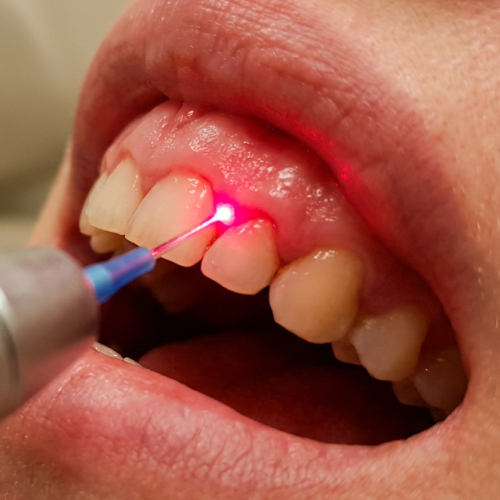
Gum Contouring: What the Procedure Actually Involves (And Who Should Do It)
Wondering how gum contouring works and who can perform it? Learn about the procedure and visit requirements, then schedule your consult with our team today!
Read More
Dentistry has several popular "rules of thumb" — the Rule of 7 for kids, the 3-3-3 rule for tooth pain, and the 2-2-2 rule for daily hygiene — but each one has important limits. Knowing when these rules apply, and when they break down, can protect your teeth and your overall health.
Most parents hear "orthodontic evaluation at age 7" and assume it's a sales pitch for early braces. It isn't. For Bellflower-area patients, the real reason is skeletal — and the window is genuinely narrow.
At age 7, the midpalatal suture (the growth plate running along the roof of the mouth) is still open and highly responsive to gentle orthopedic pressure. This means a narrow jaw can be widened with a palatal expander relatively easily, correcting crossbites and creating room for incoming permanent teeth before crowding becomes severe.
Wait until age 12 or 13, and the picture changes dramatically. The midpalatal suture fuses as adolescence progresses. At that point, achieving the same jaw width that an expander could have created in a week of gradual pressure may require surgical intervention or permanent tooth extractions. The American Academy of Pediatric Dentistry (AAPD) recognizes that children's dentistry encompasses supervision of orofacial growth and development precisely because catching skeletal problems early produces outcomes that are simply unavailable later.
The Rule of 7 isn't about cosmetic tooth alignment. It's about intercepting skeletal problems while the jaw is still growing and malleable. If your child has a noticeably narrow arch, a crossbite, or early crowding, an evaluation at age 7 isn't premature — it's strategically timed.
The "3-3-3 rule" circulates widely online as a DIY approach to severe toothaches: take three 200mg ibuprofen tablets, three times a day, for three days. Ibuprofen does reduce inflammation by blocking prostaglandins, and yes — the pain often subsides. That is exactly where the danger lies.
Ibuprofen does nothing to eliminate a bacterial infection. A necrotic pulp or periapical abscess doesn't resolve because the pain stopped. The infection continues silently, now free from the alarm system that was supposed to drive you to a dentist. Bacteria from an untreated dental abscess can migrate into the jawbone, spread into the deep fascial spaces of the neck (a life-threatening condition called Ludwig's angina), or enter the bloodstream and trigger systemic sepsis.
Cleveland Clinic's oral hygiene guidance reinforces that oral infections are directly linked to systemic health outcomes including cardiovascular disease — a reminder that the mouth is not an isolated system.
Stop using the 3-3-3 rule as a substitute for care if you notice any of these red flags:
Any one of these symptoms means the infection has progressed beyond what pain management can address. Seek dental emergency care — or an emergency room — immediately. The 3-3-3 rule buys time; it does not buy safety.
Brush twice a day, for two minutes each time, and visit the dentist twice a year. According to Mayo Clinic, brushing twice daily with fluoride toothpaste for at least two minutes aligns with American Dental Association recommendations. For most healthy adults, it works well.
But for three specific groups, following the 2-2-2 rule without modification can actively cause harm.
GERD patients: Acid reflux episodes flood the mouth with stomach acid, which softens enamel almost immediately. Brushing within 30 minutes of an acid reflux episode scrubs away that softened enamel rather than protecting it. The correct modification is to rinse with water or a baking soda solution first, then wait at least 30 minutes before brushing. Timing matters more than frequency here.
Dry mouth (xerostomia) patients: Saliva is the mouth's primary defense — it buffers acid, remineralizes enamel, and mechanically clears bacteria. Without adequate saliva flow, twice-daily brushing simply isn't enough protective contact. These patients benefit from a modified protocol: brushing three times daily, using a high-fluoride remineralizing toothpaste, and scheduling cleaning and exam appointments four times per year rather than two.
Patients with active braces: Orthodontic hardware creates dozens of new plaque-trapping surfaces. The ADA's guidance on home oral care notes that patients at elevated caries risk need individualized home care regimens — and bracket-wearing patients are definitionally at elevated risk. Twice daily is a minimum, not a ceiling. Patients considering orthodontic options may also want to explore teeth straightening braces to understand what hygiene demands different appliances create.
NIDCR oral hygiene recommendations also emphasize that cleaning between teeth is non-negotiable regardless of which brushing protocol you follow — because toothbrush bristles simply cannot reach interproximal surfaces where decay commonly starts. Left unaddressed, interproximal decay can progress to gum disease gingivitis and more serious periodontal complications.
Rules of thumb exist because they work for most people most of the time. The Rule of 7 catches skeletal problems before they become surgical ones. The 3-3-3 rule manages short-term pain — but only if you recognize its ceiling and watch for warning signs. The 2-2-2 rule builds a hygiene floor, but patients with GERD, dry mouth, or braces need a customized protocol above that floor.
The common thread: general rules require clinical judgment to apply correctly.
Whether you're a Bellflower parent wondering if your 7-year-old needs an orthodontic screening, or an adult managing tooth pain and wondering what's safe, Bellflower Dental Group is here to give you answers grounded in evidence — not guesswork. Serving Bellflower and the surrounding Southeast Los Angeles communities, our team can help you determine which rules apply to you and exactly when to break them. Contact us to schedule your evaluation.
Disclaimer: This article is intended for general informational purposes only and does not constitute medical or dental advice. Always consult a licensed dental professional for diagnosis and treatment recommendations specific to your situation.
Fresh news from the dental world...


Mon - Fri 9AM - 6PM
Saturday 9AM - 3PM
Sunday Closed
Check out what our patients are saying in Bellflower, CA...


“Great customer service!”
Great customer service and attentive staff! My 3 year old enjoyed his visit! Yes, I said he enjoyed it! He had to have X-rays done, and I was so worried that he wasn't gonna be a happy camper but the X-ray tech, Dominique, is so good with kids! The X-rays were fast and painless! Overall a great experience!

“Surpasses my expectations!”
Amazing staff! My experience at Bellflower Dental Group was outstanding. I highly recommend this dental group. I come to them for my braces, their ortho is incredible, the highlight of this dental group. The staff is amazing, their employees are so kind and take the time to perfect your braces.

“I love this dental office!”
I have been coming here for years. It is a one-stop-shop! You can get your x-rays, cleaning, braces, labs, dentures, toothbrushes, and more all right here. The staff is great, and they try to work with you if you need a payment plan. Never had any issues with any of the work done here!
“Great customer service!”
Great customer service and attentive staff! My 3 year old enjoyed his visit! Yes, I said he enjoyed it! He had to have X-rays done, and I was so worried that he wasn't gonna be a happy camper but the X-ray tech, Dominique, is so good with kids! The X-rays were fast and painless! Overall a great experience!
“Surpasses my expectations!”
Amazing staff! My experience at Bellflower Dental Group was outstanding. I highly recommend this dental group. I come to them for my braces, their ortho is incredible, the highlight of this dental group. The staff is amazing, their employees are so kind and take the time to perfect your braces.
Check out our accreditations, sources, and relationships in the wide world of dentistry...


Check us out and follow our Bellflower, CA practice on social media...


