Can Ozone Replace a Root Canal — Or Make One Work Better?
Discover if ozone therapy can replace a root canal or improve your results. Learn about the safety and benefits of ozone in dentistry. Book your consult today!
Read More
You’re sitting in the dental chair, staring at the ceiling, heart racing a little faster than usual. You’ve been told there’s a problem with your tooth—maybe it’s badly decayed, cracked, or loose. The big question: Can it be saved, or does it need to be pulled?
This is a moment that almost every adult faces at some point in life, and we get it—it’s stressful. At Bellflower Dental Group, we believe in saving natural teeth whenever it’s possible and practical. But the truth is, it’s not always so black and white. Let’s talk about what really goes into that decision and how we help you figure out the best path forward.
It’s not just a hunch or a coin toss—we make this call based on several clinical and personal factors. Here’s what we’re looking at when making the decision:
1. The extent of the damage: If the tooth is decayed, fractured, or infected but still has strong bone support and a healthy root structure, we may recommend root canal therapy, a crown, or even gum treatment before even considering extraction.
2. Your pain level: We take your comfort seriously. If you're in ongoing, severe pain that isn't responding to treatment, that tells us something. But pain alone doesn’t always mean the tooth has to go—some teeth can be saved even when they hurt.
3. Overall dental health: If the tooth in question is affecting neighboring teeth—either by spreading infection or altering your bite—it may tip the scale in favor of extraction.
4. Your goals and preferences: Your priorities matter too. If you’ve been dealing with the same issue over and over again, and you’re ready for a more permanent solution, we’ll talk about options like implants or bridges after extraction.
We don’t believe in rushing into extractions, and we certainly don’t do them “just because.” We work with you to figure out what makes the most sense for your specific situation.
This is one of the most common questions we get, especially after someone bites into a hard piece of food or takes a basketball to the face during a pickup game. The short answer? Sometimes yes—and sometimes no. It depends on the type of crack.
Minor cracks—called craze lines—are just surface level and often don’t need treatment.
A cracked cusp (the pointed part of your tooth) can often be restored with a crown.
A vertical crack running from the chewing surface toward the root is more serious. If the crack hasn’t reached the root, root canal therapy and a crown might do the trick. But once the crack extends below the gumline or into the root, saving the tooth becomes much harder.
Split teeth—where the crack divides the tooth into distinct segments—usually can’t be saved. In these cases, extraction may be your best option, followed by restoration with a dental implant or bridge.
It’s wild how much one little crack can impact your whole smile, but that’s why early diagnosis is so important. The sooner we see it, the more options we have to save the tooth.
We understand—life gets busy, and sometimes tooth pain gets pushed to the back burner. But letting a damaged tooth go untreated can lead to more than just discomfort.
Here’s what can happen if a tooth that could be saved is ignored:
The tooth can become infected, potentially spreading to the jaw or bloodstream.
Adjacent teeth can shift into the gap left by a deteriorating tooth.
You may experience bone loss in your jaw, especially after extraction.
Pain, swelling, or bad breath can become persistent.
A tooth that might’ve been saved could become too damaged to restore.
When a tooth starts causing trouble, it’s not just about that one tooth anymore—it’s about your whole oral ecosystem. The earlier we get a look, the more likely we can fix the issue with less invasive treatment (and often less expense).
While we’re big fans of saving teeth, there are times when extraction makes more sense for your long-term health and comfort.
Here are a few scenarios when pulling the tooth might be the better call:
The tooth is too far gone—decay or trauma has destroyed most of the structure.
It’s causing crowding, impaction, or alignment problems (think wisdom teeth).
You’ve had repeated infections in the same tooth despite root canal treatment.
There’s significant bone loss around the tooth due to advanced gum disease.
In these cases, removing the tooth can actually protect the rest of your mouth and give you a fresh start with options like implants, bridges, or dentures. The key is that we’re not removing it and leaving you hanging—we’re planning your next step before the tooth even comes out.
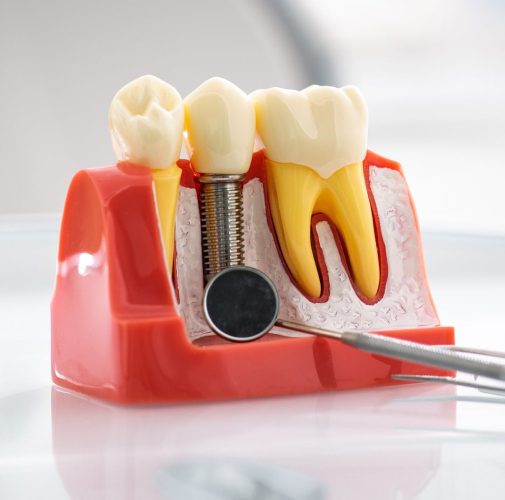
Losing a tooth doesn’t mean you have to live with a gap. At Bellflower Dental Group, we help you plan for what’s next. Whether it’s a dental implant (the gold standard), a bridge, or a removable denture, we make sure your smile stays strong and beautiful.
And if you’re worried about the look, feel, or function of your replacement—we’ve got you covered. Our restorations are designed to look just like your natural teeth and last for years.
Final thoughts: It’s not about saving the tooth. It’s about saving your smile.
At the end of the day, the question isn’t “Can we save this tooth?”—it’s “What’s best for your overall oral health, comfort, and confidence?”
Our job isn’t just to fix teeth. It’s to make sure you can eat, speak, and smile with confidence for years to come. And whether that means saving your tooth with a root canal or removing it and replacing it with something just as strong—we’re with you every step of the way.
If you’re dealing with a painful, cracked, or damaged tooth, don’t wait. Book an appointment with Bellflower Dental Group today, and let’s talk about your options. We’ll walk you through everything with honesty, care, and zero judgment—promise.
Your smile’s future is worth a conversation. Let’s have it.
Fresh news from the dental world...




Mon - Fri 9AM - 6PM
Saturday 9AM - 3PM
Sunday Closed
Check out what our patients are saying in Bellflower, CA...


“Great customer service!”
Great customer service and attentive staff! My 3 year old enjoyed his visit! Yes, I said he enjoyed it! He had to have X-rays done, and I was so worried that he wasn't gonna be a happy camper but the X-ray tech, Dominique, is so good with kids! The X-rays were fast and painless! Overall a great experience!

“Surpasses my expectations!”
Amazing staff! My experience at Bellflower Dental Group was outstanding. I highly recommend this dental group. I come to them for my braces, their ortho is incredible, the highlight of this dental group. The staff is amazing, their employees are so kind and take the time to perfect your braces.

“I love this dental office!”
I have been coming here for years. It is a one-stop-shop! You can get your x-rays, cleaning, braces, labs, dentures, toothbrushes, and more all right here. The staff is great, and they try to work with you if you need a payment plan. Never had any issues with any of the work done here!
“Great customer service!”
Great customer service and attentive staff! My 3 year old enjoyed his visit! Yes, I said he enjoyed it! He had to have X-rays done, and I was so worried that he wasn't gonna be a happy camper but the X-ray tech, Dominique, is so good with kids! The X-rays were fast and painless! Overall a great experience!
“Surpasses my expectations!”
Amazing staff! My experience at Bellflower Dental Group was outstanding. I highly recommend this dental group. I come to them for my braces, their ortho is incredible, the highlight of this dental group. The staff is amazing, their employees are so kind and take the time to perfect your braces.
Check out our accreditations, sources, and relationships in the wide world of dentistry...


Check us out and follow our Bellflower, CA practice on social media...


