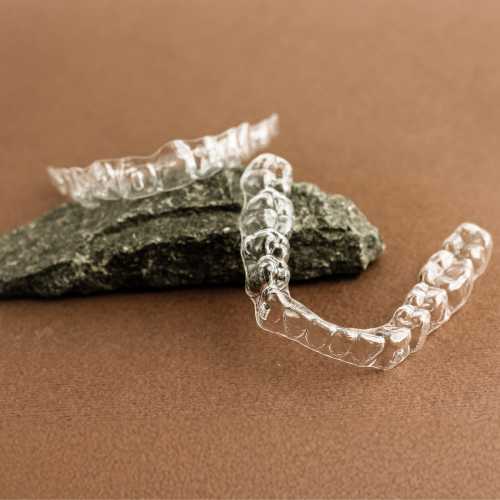
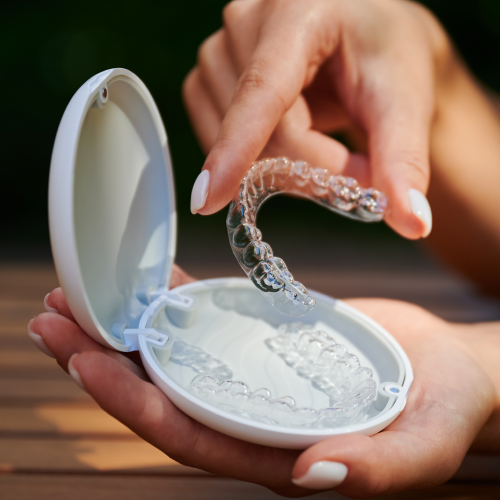
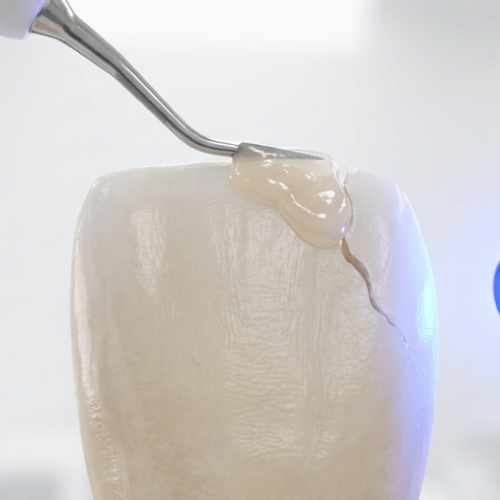
Spark and Invisalign are both premium clear aligner systems, but they differ in materials, trim design, and how providers price them. Understanding those differences helps you ask smarter questions before committing to treatment.
Why Two Patients Pay Wildly Different Amounts for the "Same" Treatment
For Bellflower-area patients exploring clear aligners, costs can vary widely. You've probably heard someone pay significantly less for clear aligners than a friend who chose the same brand. That gap rarely comes down to negotiation skills. It usually comes down to something patients never see: the lab fee tier system.
Invisalign is manufactured by Align Technology. Spark is manufactured by Ormco. Both companies charge the treating doctor a wholesale lab fee per case — but that fee varies based on how many cases that doctor submits annually. Invisalign calls their levels Diamond, Platinum, and Gold, among others. A high-volume Diamond-tier provider pays lower lab fees per case than a doctor who submits only a handful of cases per year.
Here's why that matters to you. A provider who primarily offers Spark — and submits enough volume to qualify for Ormco's lower wholesale tiers — can often pass meaningful savings to patients because their underlying cost per case is lower. A low-volume Invisalign provider, by contrast, pays higher lab fees and typically must charge more to maintain reasonable margins.
This doesn't mean Spark is always less expensive, or that Invisalign is always the pricier option. It means the right question to ask your provider isn't "which brand is cheaper?" It's "which aligner system do you primarily work with, and what does that mean for my treatment plan?" A doctor who primarily works with one system tends to be more experienced with it — and may have better wholesale pricing too.
According to Healthline, Invisalign treatment can range considerably depending on case complexity, location, and the individual provider — reinforcing why identical brands can carry very different price tags at different offices.
TruGEN vs. SmartTrack: The Material Difference That Actually Shows
Both aligners are clear. Both are removable. But the plastic they're made from behaves differently — and that matters over a one-to-two week wear cycle.
Invisalign's aligners are made from SmartTrack, a flexible thermoplastic material described by Healthline as designed for controlled, consistent tooth movement. It's well-studied and has been the industry standard since Invisalign introduced it.
Spark uses TruGEN, a newer material that Ormco engineered with a focus on clarity and stain resistance. TruGEN is chemically less porous than SmartTrack, which means common staining agents — coffee, tea, turmeric — have fewer microscopic surface channels to penetrate. Spark aligners also feature hand-polished edges, which reduces the rough surface texture where plaque and biofilm tend to accumulate.
Over a two-week wear period, this difference becomes visible. Invisalign aligners can take on a slightly yellow or cloudy appearance by the end of a tray cycle, particularly for patients who drink coffee regularly. Spark aligners tend to maintain their clarity longer across that same window.
For patients who feel self-conscious about aligner visibility, this is a practical — not just cosmetic — consideration. Stained aligners can undermine one of the primary reasons patients choose clear aligners over teeth straightening braces in the first place.
Trim Lines, Gum Irritation, and the Attachment Question
One structural difference between Spark and Invisalign that rarely comes up in patient conversations is the trim line — where the aligner edge ends relative to your gumline.
Invisalign uses a scalloped cut that follows the natural contour of each tooth, ending just above the gumline. This design tends to reduce initial soft-tissue irritation, which is why WebMD notes that discomfort during the adjustment period varies by patient and treatment design.
Spark uses a straight-cut trim line that slightly overlaps the gumline. This creates more surface contact between the aligner and tooth, which improves retention — meaning the aligner grips more securely without relying as heavily on attachments (the small tooth-colored "buttons" bonded to teeth to help guide movement). Fewer attachments on front teeth is a meaningful aesthetic win for many patients, particularly those who are also considering porcelain veneers or other cosmetic work.
The tradeoff: Spark's straight-cut edge can cause slightly more gum irritation in the first week or two, particularly for patients with sensitive tissue. Most patients adapt quickly. Healthline reports that 83 percent of aligner users grow accustomed to their trays within the first week, regardless of brand. Patients with existing gum disease gingivitis should discuss this with their provider before beginning aligner treatment.
So Are They the Same Product?
No. Spark and Invisalign are direct competitors using different materials, different trim designs, and different provider networks. A Healthline review of invisible braces identifies Invisalign as the best-known brand with over 20 years of clinical use, while noting that newer entrants use high-quality materials and achieve strong results.
Invisalign's longevity means more published clinical data. Spark's newer material and trim approach address real limitations that Invisalign patients have reported over the years. Neither system is universally superior — the better fit depends on your case complexity, your provider's experience, and which material properties matter most to you.
Both require wearing aligners 20 to 22 hours per day, switching trays approximately every one to two weeks, and maintaining consistent oral hygiene throughout treatment — including regular cleaning and exam appointments to monitor your progress and overall dental health.
Ready to Find Out Which Aligner Is Right for You?
Bellflower Dental Group offers clear aligner consultations for patients throughout Bellflower and the surrounding Southeast Los Angeles area. Our team will evaluate your case, walk you through both options, and recommend the system that fits your teeth — not just your timeline. If you're exploring all your options for a straighter smile, our aesthetic dentistry services can help you achieve the complete look you're after. Reach out to schedule your consultation today.
Medical disclaimer: This article is for informational purposes only and does not constitute dental or medical advice. Please consult a licensed dental professional to determine the treatment plan appropriate for your specific needs.