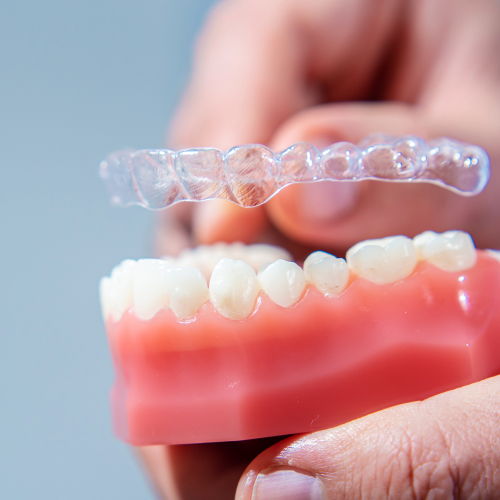
Why Your Invisalign Trays Aren't Fitting Right — and What to Do About It
Struggling with Invisalign gaps or tracking issues in Bellflower? Learn what's normal, what's not, and when refinements may help. Call us today.
Read More
Dental health is about more than just maintaining a great smile—it's the foundation of our overall well-being. When cavities or damaged teeth become part of the picture, understanding the options for dental restorations is key to making the best decision for long-term oral health. At Bellflower Dental Group, we specialize in a range of dental restoration techniques, each tailored to protect, enhance, and restore the structure and strength of your teeth.
To give you a clearer picture of how different restorations work, let’s dive into some of the most common types and when each might be the best choice for your unique needs.
Cavities are one of the most common dental issues, but fortunately, they’re also among the most treatable. Dental restorations for cavities primarily involve fillings, which replace the decayed part of the tooth to prevent further damage.
Composite resin fillings are widely used today for good reasons. Made from a tooth-colored material, they blend in seamlessly, making them ideal for visible areas of the mouth. Composite resin is durable, bonds well to the tooth, and can be shaped to match the natural tooth structure.
When might you choose composite fillings? If you want an aesthetic, natural-looking option for front or visible teeth, composite is a top choice. However, composite fillings can wear down faster on large, heavily used areas, like molars.
Amalgam, also known as silver fillings, has been a tried-and-true option in dentistry for over a century. Composed of a mix of metals, including silver, mercury, and tin, amalgam is incredibly durable, making it suitable for the back teeth that endure heavy chewing.
Who are amalgam fillings best for? They’re a popular choice for patients with significant decay in hard-to-see molars. While less common now, they’re known for strength and longevity, making them a reliable option when durability is a priority over aesthetics.
A unique option, glass ionomer fillings are created from acrylic and a type of glass that releases fluoride, which can help prevent further decay. They’re most commonly used in areas that don't experience heavy chewing pressure, such as near the gum line or in baby teeth.
Is glass ionomer right for you? These fillings work well in areas with minimal stress and are often recommended for children’s teeth or in cases where added fluoride benefits are desired. However, they may not last as long as other options due to their relatively softer composition.
Crowns are full-coverage restorations that encase the entire visible portion of a tooth. They’re typically used when decay or damage is too extensive for fillings, inlays, or onlays to handle alone. Crowns can be crafted from a variety of materials, including porcelain, ceramic, and metals, each offering unique advantages.
When a cavity is large or deep, a crown becomes the preferred solution because it provides comprehensive support and protects the tooth from further breakage. Crowns are particularly effective for teeth that have undergone root canal therapy or where a large portion of the natural tooth is compromised.
At Bellflower Dental Group, we understand that choosing between a filling, inlay, onlay, or crown can feel overwhelming. During your consultation, we examine the tooth’s condition through digital X-rays and thorough assessment to recommend the most suitable and lasting option for your specific needs.
Dental fillings are durable, but they’re not designed to last a lifetime. Over time, fillings can deteriorate, crack, or become loose, especially if you frequently grind your teeth or enjoy hard foods. Here’s how to recognize when it might be time for a replacement:
At Bellflower Dental Group, we prioritize monitoring your fillings and crowns during each checkup. Our team can assess their condition and recommend replacements or repairs as needed to keep your smile strong and healthy.
Maintaining regular dental cleanings and exams is crucial to the longevity of any dental restoration, whether it's a simple filling or a full crown. During these visits, your dentist can identify early signs of wear or detect potential issues before they compromise your restoration. Routine check-ups also give you a chance to discuss any discomfort, ensuring your dental work continues to function optimally.
At Bellflower Dental Group, we’re committed to proactive care, which includes scheduling cleanings and exams every six months as part of our preventive approach to oral health.
Each type of dental restoration has its unique role in preserving oral health, aesthetics, and function. Here’s a quick recap of how each works:
If you’re experiencing symptoms of decay or simply want to ensure your teeth are in optimal condition, taking action early makes a significant difference. At Bellflower Dental Group, we make it easy to find the right solution to fit your needs, offering personalized guidance every step of the way.
Ready to restore your smile? Schedule an appointment with Bellflower Dental Group today to explore your dental restoration options and enjoy long-lasting dental health!
Fresh news from the dental world...







Mon - Fri 9AM - 6PM
Saturday 9AM - 3PM
Sunday Closed
Check out what our patients are saying in Bellflower, CA...


“Great customer service!”
Great customer service and attentive staff! My 3 year old enjoyed his visit! Yes, I said he enjoyed it! He had to have X-rays done, and I was so worried that he wasn't gonna be a happy camper but the X-ray tech, Dominique, is so good with kids! The X-rays were fast and painless! Overall a great experience!

“Surpasses my expectations!”
Amazing staff! My experience at Bellflower Dental Group was outstanding. I highly recommend this dental group. I come to them for my braces, their ortho is incredible, the highlight of this dental group. The staff is amazing, their employees are so kind and take the time to perfect your braces.

“I love this dental office!”
I have been coming here for years. It is a one-stop-shop! You can get your x-rays, cleaning, braces, labs, dentures, toothbrushes, and more all right here. The staff is great, and they try to work with you if you need a payment plan. Never had any issues with any of the work done here!
“Great customer service!”
Great customer service and attentive staff! My 3 year old enjoyed his visit! Yes, I said he enjoyed it! He had to have X-rays done, and I was so worried that he wasn't gonna be a happy camper but the X-ray tech, Dominique, is so good with kids! The X-rays were fast and painless! Overall a great experience!
“Surpasses my expectations!”
Amazing staff! My experience at Bellflower Dental Group was outstanding. I highly recommend this dental group. I come to them for my braces, their ortho is incredible, the highlight of this dental group. The staff is amazing, their employees are so kind and take the time to perfect your braces.
Check out our accreditations, sources, and relationships in the wide world of dentistry...


Check us out and follow our Bellflower, CA practice on social media...


