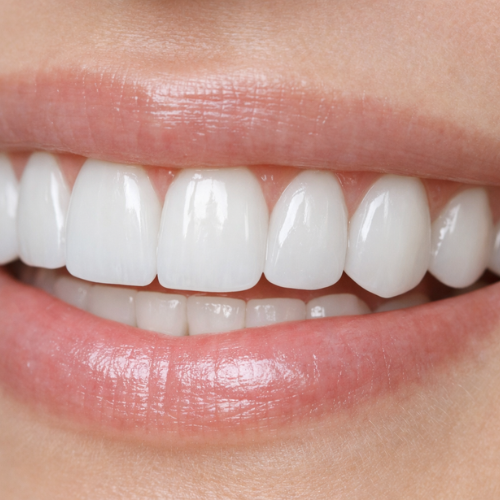
Do Veneers Stain? What Every Patient Should Know Before Getting One
Wondering if veneers stain over time? Bellflower Dental Group explains what causes discoloration and how to keep your smile bright. Call today.
Read More
Written by Dr. Arkady Tsibel, DDS | Chief of Staff
Medically Reviewed by Hooman Adamous, DMD
I get asked about teeth whitening at least five times a week at our Bellflower practice. Everyone wants whiter teeth (fair enough), but most patients aren't sure which route to take—professional in-office treatment or an at-home kit. Here's the thing: both work, but they're actually pretty different in how they deliver results.
Look, I've been doing this for years in the Southeast Los Angeles area, and I've seen every whitening scenario you can imagine. Some patients swear by their custom take-home trays, while others want the fastest possible results and book an in-office session. And honestly? Both groups end up happy, just for different reasons.
The confusion makes sense because the market is flooded with options—drugstore strips, online kits, custom trays from your dentist, professional in-office treatments that promise instant results. I'm going to break down the actual differences so you can decide what fits your schedule, budget, and sensitivity level. Because that last part—sensitivity—is usually what determines which path patients choose.
The main difference boils down to concentration and control. Professional in-office whitening uses high-concentration peroxide gels—we're talking 35% to 40% hydrogen peroxide in most cases, according to recent research. At-home kits? They typically range from 6% to 10% hydrogen peroxide, sometimes as low as 3% in over-the-counter products.
Here's why that matters: higher concentrations mean faster results, but they also require professional supervision. When I perform in-office whitening, I apply a protective barrier to your gums first (gingival protection, if we're being technical). Then I carefully apply the gel to each tooth. Some systems use a light or laser to activate the peroxide, though honestly, the evidence for light activation speeding things up is pretty mixed. The whole appointment takes about 60 to 90 minutes, and you walk out several shades lighter.
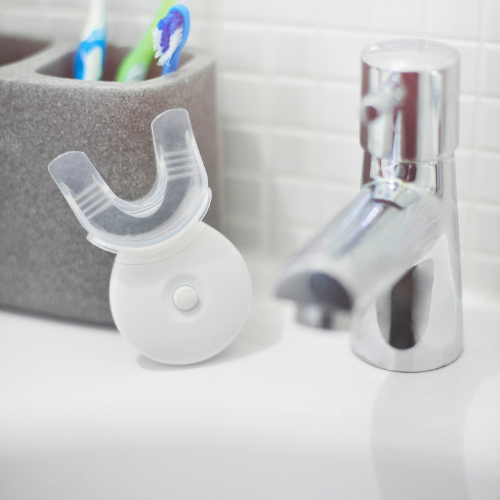
At-home kits work differently. If you get them from us, we make custom trays from impressions of your teeth—these fit perfectly and keep the gel exactly where it needs to be. You wear them 30 to 60 minutes daily for one to two weeks. The lower concentration means it's gentler but slower.
And then there are drugstore kits with generic trays or strips. No custom fit, lower concentrations, and...well, you get what you pay for. I had a patient last month who tried three different drugstore brands over six months and barely noticed a difference. Actually, scratch that—she noticed uneven results because the strips didn't cover all her teeth properly.
The ADA has granted its Seal of Acceptance to some dentist-dispensed products (like 10% carbamide peroxide home kits) and some office-applied products (35% hydrogen peroxide), but very few over-the-counter options make the cut. Bottom line? Professional options—whether in-office or custom take-home—give you controlled, predictable whitening. Drugstore stuff is a gamble.
No contest here: in-office wins on speed. Not even close, actually.
When you come in for professional whitening in Bellflower, you'll see results in one session—usually three to eight shades lighter within that 60 to 90 minutes. We use those high-concentration gels I mentioned, and because I'm controlling the application, we can push the treatment further than you safely could at home. You leave with noticeably whiter teeth the same day.
At-home whitening trays? They take longer. Much longer. You're looking at daily wear for one to two weeks before you hit maximum whitening. Some patients see changes after a few days, but the full effect takes time. A study found that over-the-counter bleaching took 16 days to match what a professional seven-day at-home system achieved—and what an in-office treatment did in one day.
But here's the thing (and I get it, this sounds contradictory): at-home whitening often gives longer-lasting results. I'm not 100% sure why, but my theory is that the gradual whitening process is more stable. Some research shows that combining in-office treatment with follow-up at-home trays gives the best of both worlds—fast initial results plus sustained color stability for up to two years.
So if you need white teeth for a wedding next weekend? In-office is your only real option. If you've got time and want to stretch your budget a bit, custom at-home trays work great. And honestly, about half my patients do a combination: quick in-office boost followed by maintenance with take-home trays.
Which approach fits your timeline better?
This is where I need to bust a myth: in-office whitening isn't necessarily safer if you have sensitive teeth. Actually, the opposite might be true.
Look, both methods can cause temporary tooth sensitivity—that's just how peroxide bleaching works. Studies show about 43% to 80% of patients experience some sensitivity after whitening, regardless of method. The peroxide penetrates your enamel to bleach stains, and during that process, your nerve can get temporarily irritated.
But here's the twist: in-office treatments use higher concentrations, which can mean more intense (though still temporary) sensitivity. I've seen trials where 35% hydrogen peroxide caused sensitivity in every single patient, especially those with existing fillings or crowns. At-home kits with lower concentrations? Generally gentler on sensitive teeth.
The good news: both methods include desensitizing additives now—potassium nitrate and sodium fluoride are the most common. Recent systematic reviews from 2023 and 2024 show no significant difference in sensitivity risk between properly formulated in-office and at-home products when these ingredients are included.
I had a patient a few months back with naturally sensitive teeth who was terrified of whitening. We started with custom at-home trays using 6% hydrogen peroxide with potassium nitrate. She wore them every other day instead of daily. Took three weeks instead of two, but zero sensitivity issues and beautiful results.
Here's my slightly controversial take: if you have sensitive teeth, at-home whitening is probably your safer bet. Slower? Yes. But you control the timing, you can skip days if needed, and the lower concentration is just easier on compromised enamel. In-office gives me more control over protecting your gums, but it doesn't protect your inner tooth structure any better than a well-formulated at-home kit.
And if sensitivity does happen? It usually resolves within a few days. We can recommend desensitizing toothpaste, adjust your treatment schedule, or switch methods entirely.
Ready to brighten your smile? At Bellflower Dental Group, we offer both in-office whitening for fast results and custom at-home kits for gradual, gentle whitening. We serve patients throughout Bellflower, Downey, and the Southeast Los Angeles area.
Every patient is different (different teeth, different sensitivity levels, different timelines), so I always recommend starting with a consultation. We'll examine your teeth, discuss your goals, and recommend the whitening method that'll work best for you. Some patients need in-office treatment; others do better with at-home trays. Many benefit from a combination.
Don't waste time and money on drugstore products that might not work. Let's create a whitening plan backed by professional supervision and proven results. Call Bellflower Dental Group today to schedule your whitening consultation—you could be several shades brighter in just weeks (or even days).
Medical Disclaimer: This content is for informational purposes only and does not replace professional medical advice, diagnosis, or treatment. Always consult with a qualified healthcare provider.
Fresh news from the dental world...


Mon - Fri 9AM - 6PM
Saturday 9AM - 3PM
Sunday Closed
Check out what our patients are saying in Bellflower, CA...


“Great customer service!”
Great customer service and attentive staff! My 3 year old enjoyed his visit! Yes, I said he enjoyed it! He had to have X-rays done, and I was so worried that he wasn't gonna be a happy camper but the X-ray tech, Dominique, is so good with kids! The X-rays were fast and painless! Overall a great experience!

“Surpasses my expectations!”
Amazing staff! My experience at Bellflower Dental Group was outstanding. I highly recommend this dental group. I come to them for my braces, their ortho is incredible, the highlight of this dental group. The staff is amazing, their employees are so kind and take the time to perfect your braces.

“I love this dental office!”
I have been coming here for years. It is a one-stop-shop! You can get your x-rays, cleaning, braces, labs, dentures, toothbrushes, and more all right here. The staff is great, and they try to work with you if you need a payment plan. Never had any issues with any of the work done here!
“Great customer service!”
Great customer service and attentive staff! My 3 year old enjoyed his visit! Yes, I said he enjoyed it! He had to have X-rays done, and I was so worried that he wasn't gonna be a happy camper but the X-ray tech, Dominique, is so good with kids! The X-rays were fast and painless! Overall a great experience!
“Surpasses my expectations!”
Amazing staff! My experience at Bellflower Dental Group was outstanding. I highly recommend this dental group. I come to them for my braces, their ortho is incredible, the highlight of this dental group. The staff is amazing, their employees are so kind and take the time to perfect your braces.
Check out our accreditations, sources, and relationships in the wide world of dentistry...


Check us out and follow our Bellflower, CA practice on social media...


