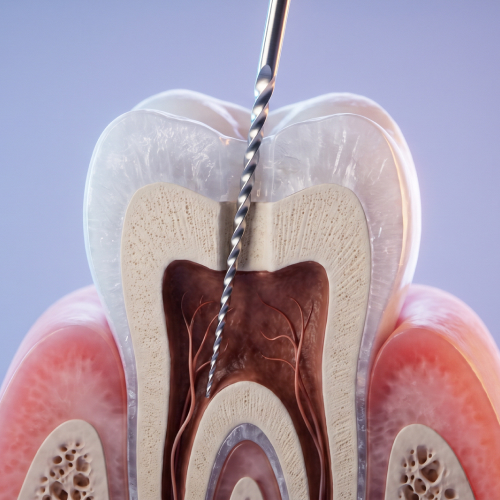
Root Canal vs. Implant vs. Bridge: What Dentists in Bellflower Actually Recommend
Deciding between a root canal vs. implant or a bridge? Learn why our Bellflower dentists recommend specific treatments for your smile. Book your visit today!
Read More
When patients ask me whether gums can grow back after laser treatment, they usually expect a yes or no. For Bellflower-area patients, the honest clinical answer is: it depends on what you mean by "grow back."
Traditional gum surgery — osseous surgery, flap procedures — typically produces what we call a long junctional epithelium. Think of this as a biological band-aid. The gum tissue sits against the root surface rather than reattaching to it at a cellular level. It looks healed. Probing depths improve. But the structural integrity of the original attachment — the periodontal ligament fibers anchoring tooth to bone — is not restored.
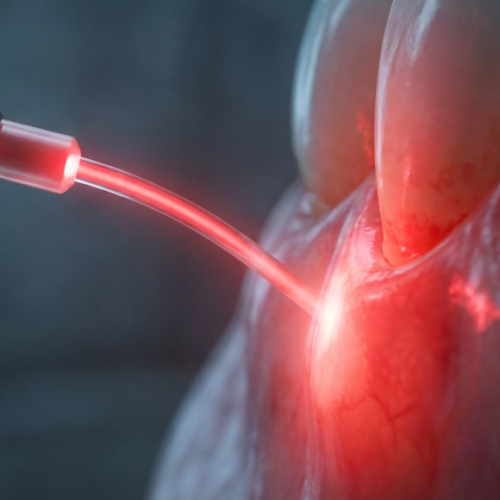
LANAP (Laser-Assisted New Attachment Procedure) was specifically designed to change this. Using a pulsed Nd:YAG laser at 1,064 nm, the protocol removes diseased pocket epithelium while leaving the healthy connective tissue intact. The laser then creates what's called a biological seal — a stable fibrin clot that prevents bacteria from re-entering the pocket and allows the gum to reattach to the root surface through new cementum and connective tissue fibers. Research published in PMC confirms this distinction between repair and true regeneration is clinically significant.
This is the difference between a patch and a rebuild. Not every patient qualifies for LANAP, and not every practice offers it. But if you're evaluating laser treatment for moderate-to-severe gum disease, this is the question worth asking your provider: Are we talking about a long junctional epithelium outcome, or true new attachment?
Most "drawbacks" lists focus on cost or insurance coverage. Those matter, but they're not the most clinically important risks.
1. Thermal Damage from Incorrect Settings: Laser therapy generates heat. A scalpel is predictable — it cuts tissue mechanically. A laser, by contrast, vaporizes tissue using light energy, and the thermal effect extends beyond the visible treatment zone. If the pulse duration, power setting, or waveform is miscalibrated, the result can be root surface damage, delayed healing, or in severe cases, bone necrosis.
This is what I call the operator variable — and it's the drawback patients almost never hear about. The term "laser dentistry" covers an enormous range of devices with different wavelengths, tissue targets, and risk profiles. A diode laser behaves differently from an Nd:YAG. An Er:YAG has different hard-tissue applications entirely. As WebMD notes, no laser system has yet received the ADA Seal of Acceptance, partly because outcomes vary so significantly across device types and operator training levels.
Before consenting to laser gum treatment, ask your provider specifically: What laser are you using? What wavelength? Are you certified in the LANAP protocol if that's what's being proposed?
2. Evidence Gaps for Long-Term Outcomes: The second drawback is less diagnostic but equally real. The American Academy of Periodontology published a best evidence consensus finding that when laser treatment is added to mechanical therapy, outcomes are similar to — or only slightly better than — conventional treatment alone. Long-term data on sustainability remains limited. For patients with early-stage disease, the added cost of laser therapy may not be clinically justified over a well-executed cleaning and exam and scaling and root planing.
Here's where laser therapy earns its premium price for the right patient: black triangle prevention.
Traditional osseous surgery requires resecting diseased gum tissue to reduce pocket depth. This works — but it also means your gums recede. The teeth look longer. Gaps open between teeth at the gumline. These "black triangles" are not just cosmetic. They create food traps, increase sensitivity, and are nearly impossible to reverse without grafting.
Laser therapy is fundamentally tissue-sparing. The laser targets diseased epithelium selectively, leaving healthy tissue volume intact. A Healthline overview of laser gum surgery confirms that the laser is designed to remove only diseased tissue — not healthy gum. For patients who are concerned about the aesthetic consequences of surgery, this tissue-volume preservation is often the deciding factor. Patients exploring aesthetic dentistry options will find that preserving gum tissue is equally important to achieving a natural-looking smile.
In my clinical view, the patients who benefit most from laser treatment are those with moderate-to-severe periodontitis who still have adequate tissue volume to preserve, and who want to avoid the "long-toothed" appearance that traditional flap surgery frequently produces. Cleveland Clinic's overview of gum disease treatment notes that sedation options are also available for patients who are anxious about any surgical approach — something we offer at our practice as well.
Laser treatment for gum disease is not a universal upgrade over conventional therapy. It is a precision tool — and like any precision tool, its value depends entirely on whether it's the right instrument for your specific condition and whether the person using it is properly trained.
For patients with moderate-to-severe periodontitis who want to preserve tissue volume, minimize post-surgical recession, and pursue true regenerative outcomes rather than repair, LANAP and adjunctive laser protocols represent a meaningful clinical advancement. For patients with early-stage disease, a thorough scaling and root planing remains the evidence-based first line of treatment. In cases where disease has progressed significantly, options such as tooth extraction or an endodontic root canal may also need to be considered alongside periodontal therapy.
If you're in Bellflower or the surrounding Southeast Los Angeles area and have been told you need gum treatment, I'd encourage you to come in for a proper evaluation before deciding on any approach. At Bellflower Dental Group, our team combines general care with oral surgery and advanced sedation — so whatever stage your dental emergency or gum disease is at, we can discuss every option available to you, including laser therapy, in plain language.
This article is intended for general informational purposes only and does not constitute medical or dental advice. Individual treatment decisions should be made in consultation with a licensed dental professional based on your specific clinical situation.
Fresh news from the dental world...


Mon - Fri 9AM - 6PM
Saturday 9AM - 3PM
Sunday Closed
Check out what our patients are saying in Bellflower, CA...


“Great customer service!”
Great customer service and attentive staff! My 3 year old enjoyed his visit! Yes, I said he enjoyed it! He had to have X-rays done, and I was so worried that he wasn't gonna be a happy camper but the X-ray tech, Dominique, is so good with kids! The X-rays were fast and painless! Overall a great experience!

“Surpasses my expectations!”
Amazing staff! My experience at Bellflower Dental Group was outstanding. I highly recommend this dental group. I come to them for my braces, their ortho is incredible, the highlight of this dental group. The staff is amazing, their employees are so kind and take the time to perfect your braces.

“I love this dental office!”
I have been coming here for years. It is a one-stop-shop! You can get your x-rays, cleaning, braces, labs, dentures, toothbrushes, and more all right here. The staff is great, and they try to work with you if you need a payment plan. Never had any issues with any of the work done here!
“Great customer service!”
Great customer service and attentive staff! My 3 year old enjoyed his visit! Yes, I said he enjoyed it! He had to have X-rays done, and I was so worried that he wasn't gonna be a happy camper but the X-ray tech, Dominique, is so good with kids! The X-rays were fast and painless! Overall a great experience!
“Surpasses my expectations!”
Amazing staff! My experience at Bellflower Dental Group was outstanding. I highly recommend this dental group. I come to them for my braces, their ortho is incredible, the highlight of this dental group. The staff is amazing, their employees are so kind and take the time to perfect your braces.
Check out our accreditations, sources, and relationships in the wide world of dentistry...


Check us out and follow our Bellflower, CA practice on social media...


