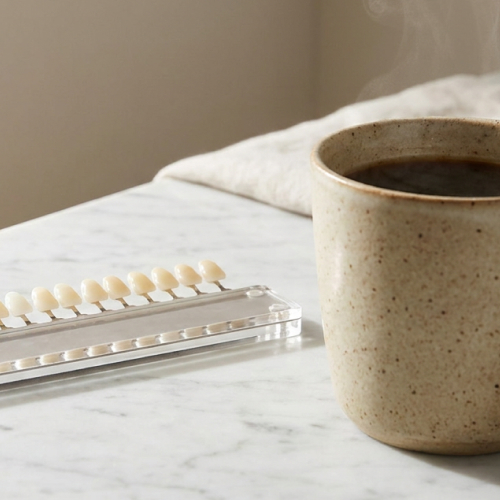
Do Veneers Stain From Coffee? What Bellflower Patients Need to Know
Wondering if veneers stain from coffee? Learn how to protect your smile and keep your veneers pearly white. Contact Bellflower Dental Group today!
Read More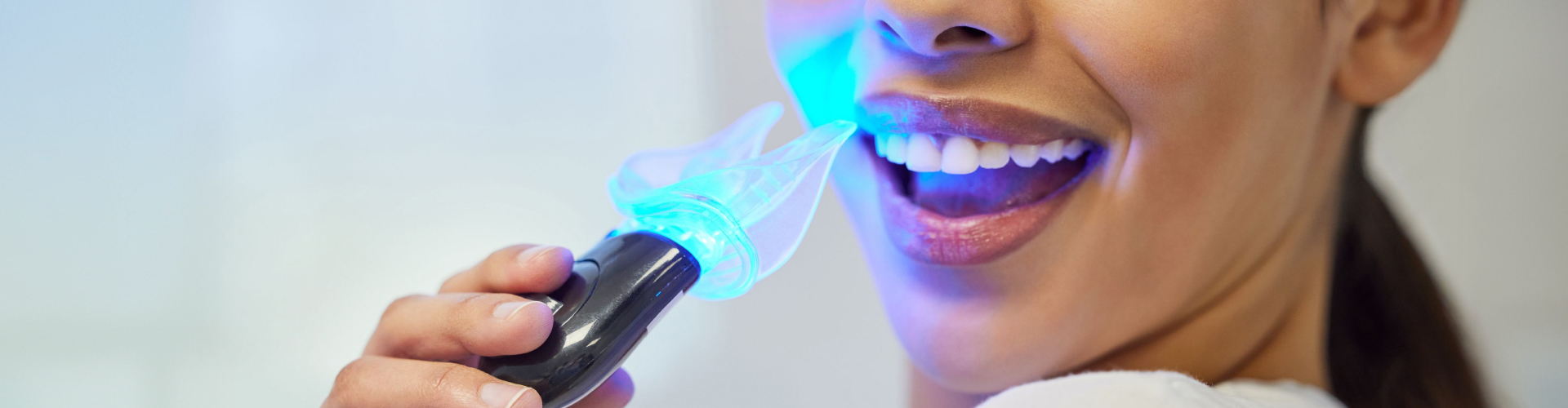
Not all whitening methods carry the same risks — and "safer" depends on your gum health, enamel thickness, and biology, not just the product label. Professional whitening offers precision that store-bought kits simply can't replicate. Here's what Bellflower patients should know before reaching for that drugstore strip. For a full picture of your oral health before whitening, a cleaning and exam is always a smart first step.
Most whitening safety conversations focus on enamel. For Bellflower-area patients, that's the wrong place to start for roughly half of adults who have some degree of gum recession.
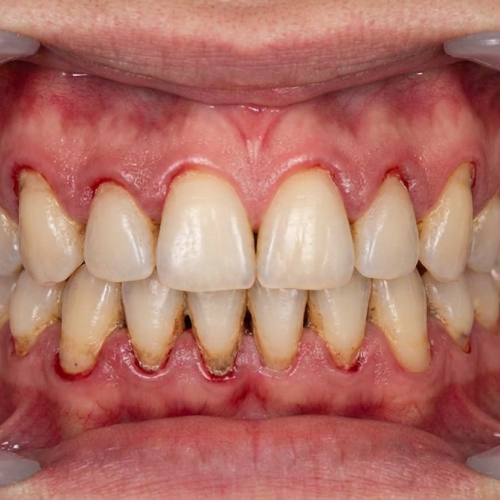
When gum tissue pulls back, it exposes the tooth root — a surface covered by cementum, not enamel. Cementum is porous and has no protective barrier. When a one-size-fits-all whitening strip or boil-and-bite tray sits against exposed cementum, high-concentration bleach soaks directly into the root surface. The result can be acute pulpal inflammation and sensitivity that doesn't fade after treatment ends.
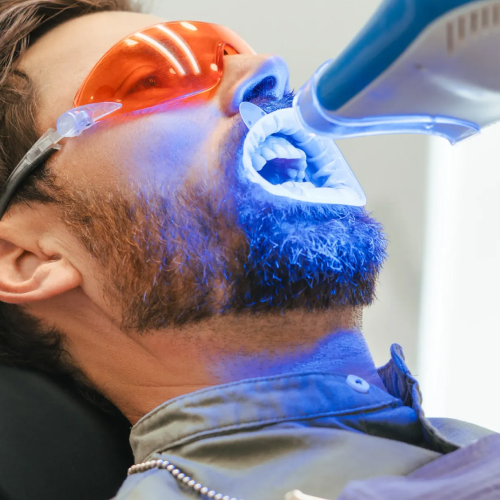
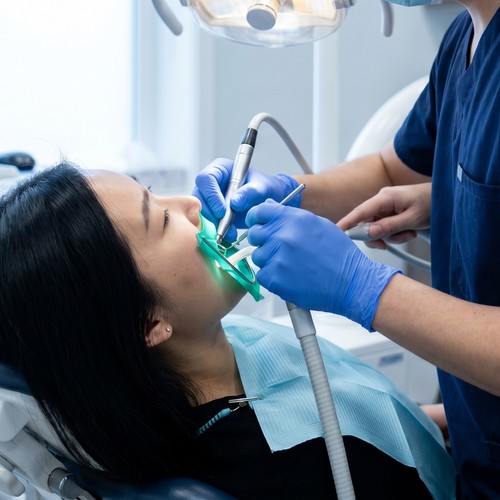
Professional whitening addresses this with a gingival barrier — typically a light-cured resin dam applied along the gum line before any bleaching agent touches the teeth. This "seals" the margin, protecting exposed roots that DIY products would otherwise flood with peroxide. According to the ADA, professionally administered whitening allows clinicians to monitor for soft-tissue damage and adjust protocols in real time — something a strip cannot do.
This is the single biggest safety gap between professional and DIY whitening, and it rarely appears on product packaging.
Many patients assume whitening toothpaste is the conservative, low-risk choice. The chemistry tells a different story.
Most whitening toothpastes work mechanically — they use abrasives like silica or dicalcium phosphate to scour surface stains away. Every toothbrush stroke with a high-abrasivity formula removes a microscopic layer of enamel. Over months and years, this thins the enamel, making the darker dentin beneath more visible. The irony: daily whitening toothpaste use can gradually make teeth look more yellow, not less.
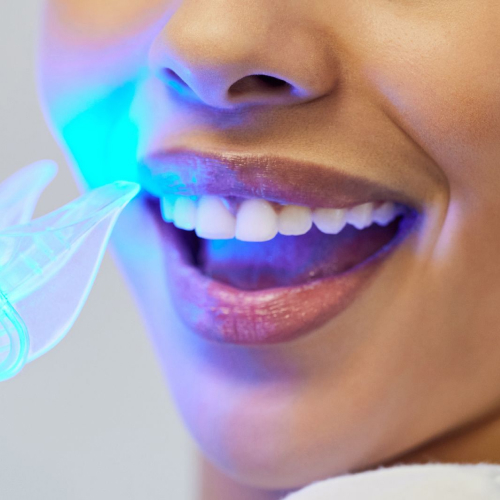
Professional chemical whitening works differently. Carbamide peroxide or hydrogen peroxide penetrates the enamel and breaks down chromogen molecules — the color compounds — through oxidation. As Healthline explains, this targets the internal color of the tooth rather than abrading the surface. Changing the internal color molecule is, for long-term enamel volume, a safer approach than physically scouring enamel away every morning. Patients interested in pro teeth whitening can avoid this enamel-depleting cycle entirely by choosing a professionally supervised approach.
The distinction matters: mechanical removal depletes enamel permanently. Chemical whitening, when properly supervised, does not reduce enamel thickness.
A common frustration: "I've whitened for weeks and my teeth still look yellow." Most blogs blame coffee or smoking. The real answer is often biological.
Every person has a genetic whitening limit determined by their dentin density and natural tooth opacity. When someone hits that ceiling — the point of maximum color saturation — additional bleaching doesn't make teeth whiter. Instead, it over-oxidizes the internal tooth structure, causing enamel to become translucent. Teeth start looking grey or blue at the incisal edges. This "ghostly" appearance is a known consequence of excessive bleaching that DIY users are especially prone to because there's no professional stopping them at the right point.
A dentist's role isn't just to apply bleach. It's to identify when a patient has reached their individual maximum and stop there. Research published in PMC confirms that in-office protocols allow for closer monitoring of shade changes and sensitivity responses compared to unsupervised at-home use.
Custom-fitted professional trays also ensure the bleaching gel contacts teeth evenly and consistently — something prefabricated OTC trays cannot guarantee. Patients who want to complement their whitening results with additional smile enhancements may also want to explore porcelain veneers or other aesthetic dentistry options.
In-office whitening uses hydrogen peroxide concentrations of 25–40%, producing visible results in a single appointment. Take-home kits prescribed by a dentist use lower concentrations — typically 10–22% carbamide peroxide — worn over one to two weeks.
Both approaches are effective. A Harvard Health overview notes that in-office bleaching can achieve results faster, while dentist-prescribed home kits offer a more gradual process with generally lower sensitivity during treatment. Over-the-counter strips sit at the bottom of the efficacy ladder — lower concentrations, no custom fit, and no clinical oversight.
Sensitivity is a real side effect of any peroxide-based whitening. The key difference is management. When sensitivity occurs in a clinical setting, protocols can be adjusted immediately. When it occurs at 11 p.m. while someone is wearing a drugstore tray, there's no adjustment available. In cases where sensitivity signals an underlying issue, a dental emergency evaluation can help rule out more serious concerns before continuing any whitening treatment.
For patients in Bellflower and the surrounding Southeast Los Angeles area, the right choice depends on your baseline gum health, existing restorations, and sensitivity history — all factors a dentist evaluates before recommending any whitening protocol. Patients with signs of gum disease gingivitis should have that addressed before beginning any bleaching treatment.
Bellflower Dental Group offers professional whitening consultations for patients throughout Bellflower and the greater Southeast Los Angeles area. Before starting any whitening treatment, our team evaluates your gum health, enamel condition, and natural shade range — so you get real results without compromising your teeth. Contact us to schedule your consultation.
This article is for informational purposes only and does not constitute dental or medical advice. Consult a licensed dental professional before beginning any whitening treatment.
Fresh news from the dental world...


Mon - Fri 9AM - 6PM
Saturday 9AM - 3PM
Sunday Closed
Check out what our patients are saying in Bellflower, CA...


“Great customer service!”
Great customer service and attentive staff! My 3 year old enjoyed his visit! Yes, I said he enjoyed it! He had to have X-rays done, and I was so worried that he wasn't gonna be a happy camper but the X-ray tech, Dominique, is so good with kids! The X-rays were fast and painless! Overall a great experience!

“Surpasses my expectations!”
Amazing staff! My experience at Bellflower Dental Group was outstanding. I highly recommend this dental group. I come to them for my braces, their ortho is incredible, the highlight of this dental group. The staff is amazing, their employees are so kind and take the time to perfect your braces.

“I love this dental office!”
I have been coming here for years. It is a one-stop-shop! You can get your x-rays, cleaning, braces, labs, dentures, toothbrushes, and more all right here. The staff is great, and they try to work with you if you need a payment plan. Never had any issues with any of the work done here!
“Great customer service!”
Great customer service and attentive staff! My 3 year old enjoyed his visit! Yes, I said he enjoyed it! He had to have X-rays done, and I was so worried that he wasn't gonna be a happy camper but the X-ray tech, Dominique, is so good with kids! The X-rays were fast and painless! Overall a great experience!
“Surpasses my expectations!”
Amazing staff! My experience at Bellflower Dental Group was outstanding. I highly recommend this dental group. I come to them for my braces, their ortho is incredible, the highlight of this dental group. The staff is amazing, their employees are so kind and take the time to perfect your braces.
Check out our accreditations, sources, and relationships in the wide world of dentistry...


Check us out and follow our Bellflower, CA practice on social media...


