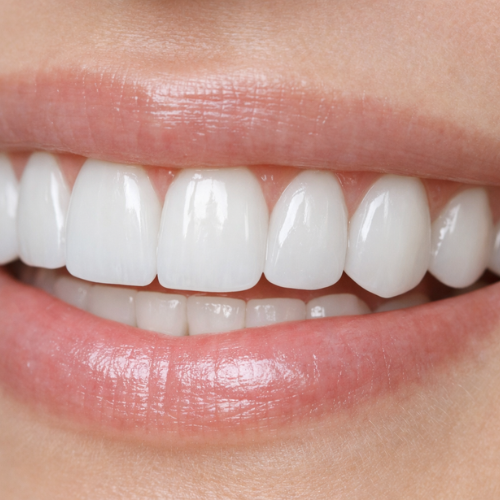
Do Veneers Stain? What Every Patient Should Know Before Getting One
Wondering if veneers stain over time? Bellflower Dental Group explains what causes discoloration and how to keep your smile bright. Call today.
Read More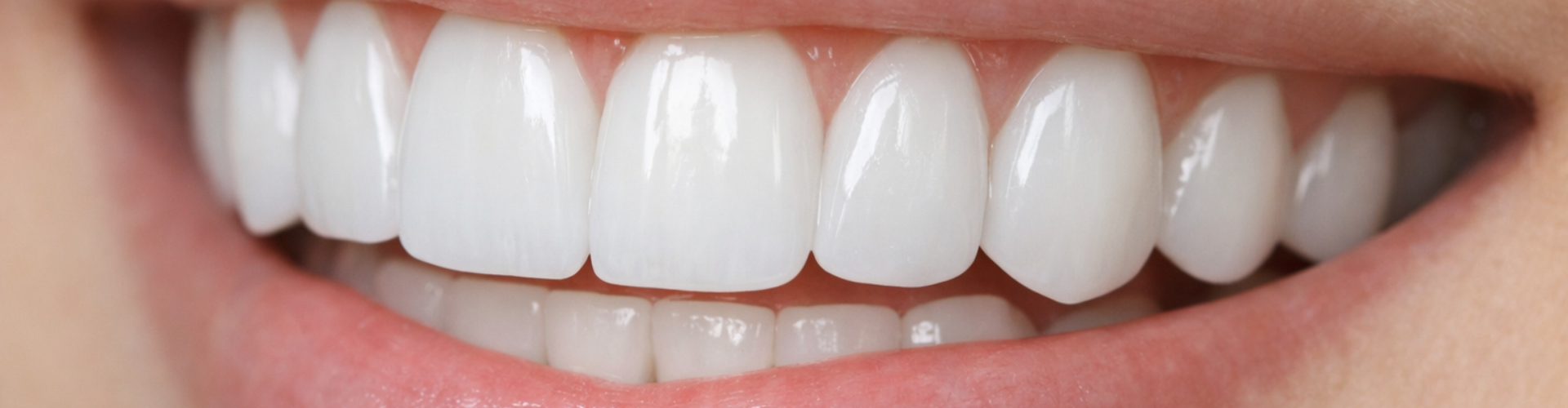
Written by Dr. Arkady Tsibel, DDS | Chief of Staff
Medically Reviewed by Dr. Hooman Adamous, DMD | Oral Surgeon
If you're considering veneers, you've probably asked this question. I hear it constantly from patients here in Bellflower — "Will my veneers turn yellow like my old teeth did?" It's a fair concern, and honestly, the answer is more nuanced than a simple yes or no.
Veneers are thin, custom-made shells — usually porcelain or composite resin — bonded to the front of your teeth to mask discoloration, chips, and minor misalignments. They're designed to resist staining better than natural enamel. But "resistant" doesn't mean immune, as Cleveland Clinic notes.
Here's the thing: what you eat, how you care for your teeth, and even what type of veneer you choose all play a role. And sometimes, veneers can look darker for reasons that have nothing to do with staining at all.
Let's break it down.
Short answer? Yes — but not the way your natural teeth do.
Veneers, especially porcelain ones, are far more resistant to staining than natural enamel. The surface is smooth and non-porous, which means coffee, tea, and red wine don't absorb into the material the same way. But that doesn't mean they stay pristine forever without any effort on your part.
Look, I've seen it happen. I had a patient last month who came in frustrated because her veneers looked slightly dull after about four years. She drank black coffee every morning — no straw, no rinsing afterward — and she'd been smoking on and off. Not a judgment, just context. The marginal areas around her veneers had picked up some discoloration, which is actually pretty consistent with what the research shows: marginal staining tends to appear around the three-to-four-year mark in many cases.
The veneer itself wasn't stained. The edges were.
And that's a distinction worth making. The bonding cement and the natural tooth structure at the margins can discolor over time, especially with repeated exposure to staining agents. The veneer material — particularly porcelain — holds up remarkably well. About 89% of porcelain veneers show no significant staining or chipping even after five years, which, fair enough, is a pretty solid track record.
Composite veneers are a different story. They're made from resin, which is more porous, and they do absorb pigments more readily. They're also less durable overall — lasting roughly five to seven years versus ten to twenty for porcelain.
What can you do? Honestly, the basics matter: brush twice a day, avoid prolonged contact with dark beverages, and don't skip your cleanings. Using a non-abrasive toothpaste helps too, since abrasive formulas can dull the glaze on porcelain over time.
Bottom line? Veneers don't stain easily, but habits catch up with any restoration eventually.
Yes. Significantly less, at least in my experience.
Porcelain has a smooth, glass-like surface that doesn't absorb pigments the way composite resin does. That's not just a marketing claim — it's backed by clinical data. Studies consistently show porcelain veneers outperform composite ones in color stability, durability, and long-term aesthetics.
Composite veneers, while useful in certain situations, are more prone to discoloration, wear, and marginal fractures over time. The resin matrix in composite is inherently more porous. Staining agents — coffee, tea, red wine, tobacco — penetrate more easily and more deeply. And once that discoloration is embedded in the material, polishing only goes so far.
Here's why this matters practically: if you're a daily coffee drinker in Downey or Bellflower and you're choosing between composite and porcelain, the long-term stain resistance of porcelain is a real advantage worth considering.
That said, composite veneers aren't without merit. They're less invasive — requiring minimal enamel removal — more affordable, and easier to repair if something chips. For younger patients, or those who want a reversible or temporary option, composite can make sense.
But for long-term stain resistance? Porcelain wins. Actually, scratch that — it's not even close, assuming proper care and maintenance.
The survival data supports this too. Porcelain veneers have reported survival rates up to 91% over twenty years. Composite veneers, while easier to place, don't come close to that longevity. And staining is one of the main reasons patients with composite veneers end up needing replacement sooner.
One slightly controversial opinion I'll share: I think composite veneers are sometimes oversold as a "starter" option when patients would genuinely be better served by porcelain from the beginning — especially when stain resistance and durability are priorities.
This one surprises patients. A lot.
You can have a veneer that hasn't stained at all — the porcelain is clean, the surface is intact — and yet it still looks darker than expected. How?
The answer comes down to optics. Veneers are thin, often between 0.3 and 1.0 mm, and the underlying tooth color shows through — especially with thinner veneers under 0.5 mm. If your natural tooth is deeply discolored or has a grayish hue, that darkness can transmit right through the veneer material and affect the final color you see.
I'm not 100% sure why patients find this so counterintuitive, but my theory is that most people assume veneers work like paint — completely covering whatever's underneath. They don't. They work more like frosted glass. The substrate matters.
And there's another factor: the resin cement used to bond the veneer. Over time, that cement can discolor, and because it sits directly behind the veneer, any darkening becomes visible — particularly through thinner, more translucent veneers. This is a well-documented phenomenon, and it's one reason cement selection during placement is so important.
Glazing during fabrication can also shift color slightly, sometimes darkening certain ceramic types like lithium disilicate. Not dramatically, but enough to affect the final result in sensitive cases.
What does this mean for you? If you have darker underlying teeth — whether from old trauma, tetracycline staining, etc. — your dentist needs to account for that during treatment planning. Ceramic shade selection, veneer thickness, and cement color all work together to achieve the final result you're aiming for. Skipping that conversation leads to surprises nobody wants.
Here's the thing: a darker-looking veneer isn't always a failure. Sometimes it's a communication gap between what the patient expected and what the material can realistically deliver given the underlying tooth.
If you're in the Bellflower or Downey area and thinking about veneers, I'd love to walk you through your options — porcelain, composite, what fits your goals, your habits, your budget. These aren't one-size-fits-all decisions, and the stain resistance and longevity of your veneers depend a lot on getting the details right from the start.
At Bellflower Dental Group, we take the time to do that planning properly. Reach out to our Bellflower office and schedule a consultation — we're here to help you make a confident, informed choice.
This content is for informational purposes only and does not replace professional medical advice, diagnosis, or treatment. Always consult with a qualified healthcare provider.
Fresh news from the dental world...





Mon - Fri 9AM - 6PM
Saturday 9AM - 3PM
Sunday Closed
Check out what our patients are saying in Bellflower, CA...


“Great customer service!”
Great customer service and attentive staff! My 3 year old enjoyed his visit! Yes, I said he enjoyed it! He had to have X-rays done, and I was so worried that he wasn't gonna be a happy camper but the X-ray tech, Dominique, is so good with kids! The X-rays were fast and painless! Overall a great experience!

“Surpasses my expectations!”
Amazing staff! My experience at Bellflower Dental Group was outstanding. I highly recommend this dental group. I come to them for my braces, their ortho is incredible, the highlight of this dental group. The staff is amazing, their employees are so kind and take the time to perfect your braces.

“I love this dental office!”
I have been coming here for years. It is a one-stop-shop! You can get your x-rays, cleaning, braces, labs, dentures, toothbrushes, and more all right here. The staff is great, and they try to work with you if you need a payment plan. Never had any issues with any of the work done here!
“Great customer service!”
Great customer service and attentive staff! My 3 year old enjoyed his visit! Yes, I said he enjoyed it! He had to have X-rays done, and I was so worried that he wasn't gonna be a happy camper but the X-ray tech, Dominique, is so good with kids! The X-rays were fast and painless! Overall a great experience!
“Surpasses my expectations!”
Amazing staff! My experience at Bellflower Dental Group was outstanding. I highly recommend this dental group. I come to them for my braces, their ortho is incredible, the highlight of this dental group. The staff is amazing, their employees are so kind and take the time to perfect your braces.
Check out our accreditations, sources, and relationships in the wide world of dentistry...


Check us out and follow our Bellflower, CA practice on social media...


