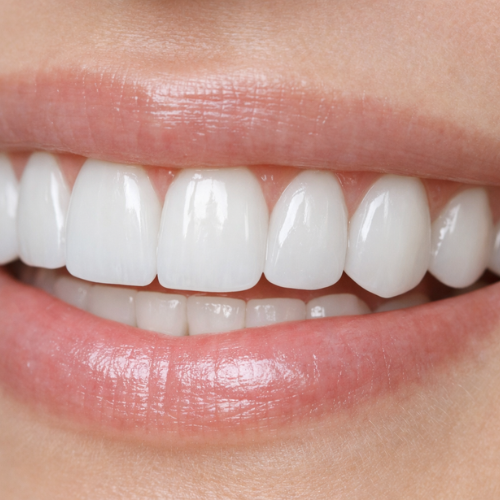
Do Veneers Stain? What Every Patient Should Know Before Getting One
Wondering if veneers stain over time? Bellflower Dental Group explains what causes discoloration and how to keep your smile bright. Call today.
Read More
Written by Dr. Arkady Tsibel, DDS | Chief of Staff
Medically Reviewed by Dr. Hooman Adamous, DMD | Oral Surgeon
Look, I've been treating TMJ disorders in Bellflower for years, and the most surprising cases are patients who grind their teeth all night without realizing it. They wake up feeling fine—or so they think. No jaw pain. No headache. Just another Tuesday in Southeast Los Angeles.
But here's the thing: your jaw joint doesn't need to scream at you to be under serious strain. I see this constantly. A patient comes in for a routine cleaning, and I notice wear patterns on their molars that tell a different story. Their temporomandibular joint has been working overtime while they sleep, absorbing forces that can exceed normal bite pressure by three or four times. The damage? It's happening in tiny increments—microtrauma that builds up before symptoms finally break through.
Your body's remarkable at compensating for stress. Until it isn't. That's when patients from Downey and surrounding areas end up in my chair, wondering why their jaw suddenly "gave out" when it's been struggling quietly for years.
Sleep bruxism is sneaky. You're unconscious while your jaw muscles contract rhythmically, clenching and grinding with surprising force. Research shows this affects about 8–10% of adults, according to the Cleveland Clinic, though I suspect the real number's higher—most people just don't know they're doing it.
While you're asleep, your masticatory muscles fire repeatedly, pressing your teeth together or sliding them back and forth. We're talking hundreds of micro-contractions throughout the night. Each one loads stress onto your temporomandibular joint and the disc of cartilage that cushions it. Think of it like doing bicep curls for eight hours straight—even if you don't feel sore immediately, you've caused muscle fatigue and microscopic tissue damage.
And I get it—if there's no pain when you wake up, why worry? Actually, scratch that—pain isn't always the first sign of trouble. Your jaw joint can undergo significant strain through what we call subclinical muscle fatigue. Muscles get tired and develop tiny areas of inflammation that your brain doesn't interpret as pain...yet. The joint itself experiences microtrauma—small injuries to ligaments, cartilage, and surrounding tissues that accumulate over time.
I had a patient who came in for cosmetic work with no jaw complaints. Yet, I found severe tooth wear, hypertrophied jaw muscles (from overuse), and tenderness she didn't realize was there until I palpated the joint. Her body had adapted so gradually that she'd normalized the slight morning stiffness and occasional clicking. She thought everyone's jaw did that.
But the strain is real. The temporomandibular joint is one of your body's most complex joints—it rotates and slides simultaneously. When grinding forces it into awkward positions repeatedly, the protective disc can shift, ligaments stretch, and inflammation develops without crossing your pain threshold. In my experience, by the time patients feel actual pain, they've been grinding for months or years.
Absolutely. This catches people off guard constantly. They come to our Bellflower office complaining about headaches or ear pressure, convinced they need an ENT or neurologist. Then we examine their jaw, and suddenly everything clicks into place—no pun intended.
Here's why: your jaw muscles don't exist in isolation. Your temporalis muscle (side of your head) is a primary mastication muscle. When you clench or grind, it contracts forcefully and repeatedly. Overworked temporalis muscles refer pain directly to your temples and forehead. That tension headache you've been treating with ibuprofen? It might be from your jaw.
The ear thing is even more interesting. Your TMJ sits millimeters from your ear canal. The joint shares nerve pathways with structures in your ear, and inflammation can create sensations of fullness, pressure, or even ringing (tinnitus). I'm not 100% sure why some patients get ear symptoms more than others, but my theory relates to how their anatomy positions the joint to auditory structures.
Neck pain follows a similar pattern. Your jaw muscles connect to neck muscles through fascia and muscle groups. Chronic clenching creates tension that radiates downward. Your sternocleidomastoid and upper trapezius muscles compensate for jaw dysfunction, leading to neck stiffness and pain. I see this progression all the time—patient grinds teeth, jaw muscles fatigue, head posture shifts forward, neck muscles tighten. It's a cascade.
Over 70% of dentists report increased grinding signs, and over 60% note TMJ problems including headaches in patients, according to research published by the National Institutes of Health. These aren't random statistics. The connection between grinding and these "referred" symptoms is well-established. When we fit a patient with a custom splint to protect their teeth and reposition their jaw during sleep, we often see improvement not just in jaw comfort but in headaches and neck tension too.
Honestly, the tricky part is getting patients to believe their ear pressure or headache could be dental. But when conservative TMJ treatment resolves symptoms that hadn't responded to other approaches, people become believers quickly.
Here's the thing: stress doesn't just live in your mind. It manifests physically, and your jaw is often ground zero—again, no pun intended. When life gets stressful, most of us unconsciously clench our teeth. During the day. During meetings, traffic, difficult conversations. We're not even aware we're doing it.
That habitual clenching creates constant, low-level tension in your jaw muscles. They never fully relax. When you finally go to sleep, stress-related sleep bruxism kicks in, doubling down on the strain. Your nervous system stays slightly amped up, muscle tension persists, and your jaw joint gets pounded night after night.
Why does this make flare-ups worse during stressful periods? Muscles are already fatigued and inflamed from daytime clenching. When nighttime grinding adds more mechanical stress, you cross a threshold. The temporomandibular joint and surrounding tissues can't keep up with repair demands. Inflammation increases. Pain signals that were barely noticeable suddenly become impossible to ignore.
I had a patient—a teacher from Downey—who came in last spring after dealing with budget cuts and layoffs. She'd had mild TMJ issues before, but suddenly couldn't open her mouth wide enough to eat a sandwich. She was clenching so hard during the day that her masseter muscles were rock solid. At night, her husband heard grinding sounds. Her stress had turned manageable TMJ dysfunction into a full-blown flare-up.
Research backs this up. Studies from Johns Hopkins Medicine show psychological factors and nervous system activation are significant risk factors for chronic TMD. Interestingly, some antidepressants—particularly SSRIs—can worsen bruxism, complicating treatment for patients managing both anxiety and jaw pain.
But there's good news. When we address both the mechanical and psychological components, outcomes improve dramatically. Custom night guards protect teeth and reduce joint strain. Stress management—deep breathing, meditation, whatever works for you—decreases muscle tension and clenching frequency. Physical therapy helps retrain jaw muscles and improve mobility.
Bottom line? Stress fuels grinding, grinding overloads your TMJ, and the combination creates a vicious cycle. Breaking that cycle requires treating both the mechanical stress on your jaw and the life stress driving the behavior. Which, fair enough, is easier said than done. But it's the most effective approach we have.
If you're dealing with jaw pain, unexplained headaches, or suspect you're grinding your teeth at night, we're here to help. At Bellflower Dental Group, Dr. Hooman Adamous and I take a comprehensive approach to TMJ disorders and bruxism—starting with conservative, evidence-based treatments that protect your teeth and reduce strain on your jaw joint.
We'll evaluate your specific situation, discuss your symptoms, and develop a personalized treatment plan. That might include a custom-fitted night guard, physical therapy recommendations, stress management strategies, or other interventions tailored to your needs. Our goal is to get you comfortable and prevent long-term damage to your teeth and jaw.
You don't have to live with jaw discomfort or wake up with headaches. Call our Bellflower office today to schedule a consultation. We'll figure out what's going on and create a plan that works for your life.
Medical Disclaimer: This content is for informational purposes only and does not replace professional medical advice, diagnosis, or treatment. Always consult with a qualified healthcare provider.
Fresh news from the dental world...


Mon - Fri 9AM - 6PM
Saturday 9AM - 3PM
Sunday Closed
Check out what our patients are saying in Bellflower, CA...


“Great customer service!”
Great customer service and attentive staff! My 3 year old enjoyed his visit! Yes, I said he enjoyed it! He had to have X-rays done, and I was so worried that he wasn't gonna be a happy camper but the X-ray tech, Dominique, is so good with kids! The X-rays were fast and painless! Overall a great experience!

“Surpasses my expectations!”
Amazing staff! My experience at Bellflower Dental Group was outstanding. I highly recommend this dental group. I come to them for my braces, their ortho is incredible, the highlight of this dental group. The staff is amazing, their employees are so kind and take the time to perfect your braces.

“I love this dental office!”
I have been coming here for years. It is a one-stop-shop! You can get your x-rays, cleaning, braces, labs, dentures, toothbrushes, and more all right here. The staff is great, and they try to work with you if you need a payment plan. Never had any issues with any of the work done here!
“Great customer service!”
Great customer service and attentive staff! My 3 year old enjoyed his visit! Yes, I said he enjoyed it! He had to have X-rays done, and I was so worried that he wasn't gonna be a happy camper but the X-ray tech, Dominique, is so good with kids! The X-rays were fast and painless! Overall a great experience!
“Surpasses my expectations!”
Amazing staff! My experience at Bellflower Dental Group was outstanding. I highly recommend this dental group. I come to them for my braces, their ortho is incredible, the highlight of this dental group. The staff is amazing, their employees are so kind and take the time to perfect your braces.
Check out our accreditations, sources, and relationships in the wide world of dentistry...


Check us out and follow our Bellflower, CA practice on social media...


