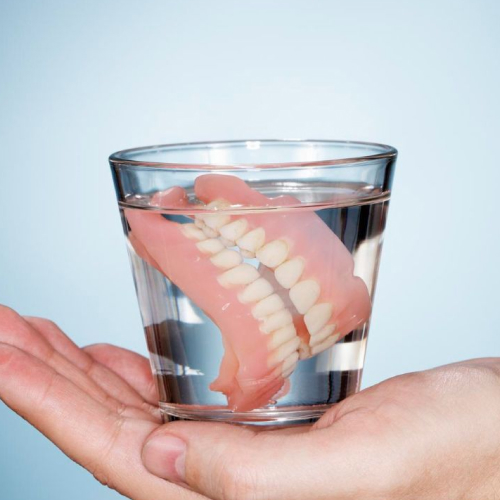
Why Dentures Shift When You Eat — And What You Can Actually Do About It
Tired of slipping dentures when you eat? Discover why your dentures shift and learn effective ways to restore your smile's stability. Contact us today!
Read More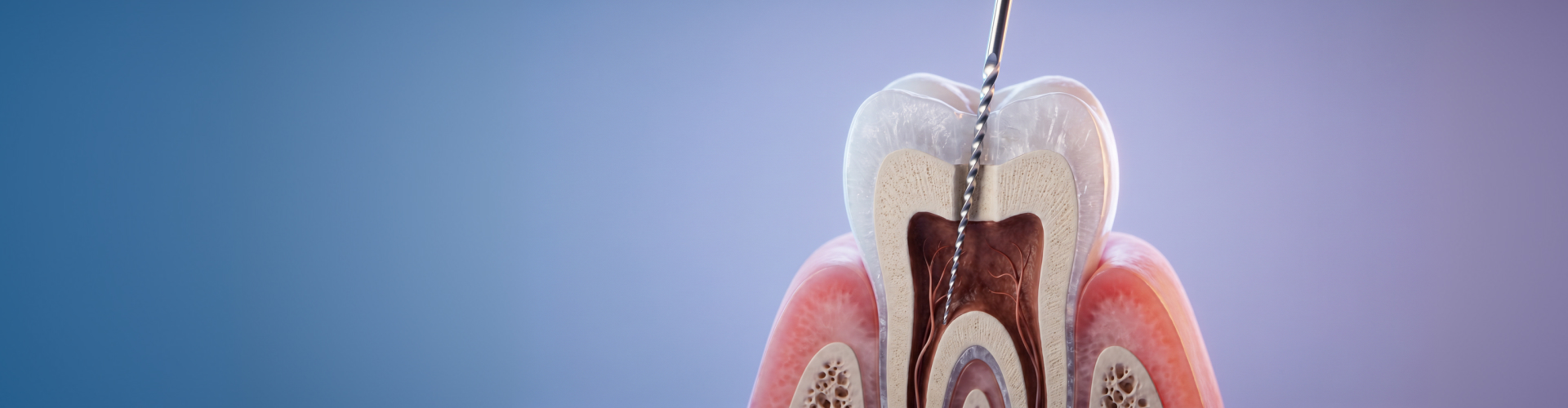
There's no universal "better" option — the right choice depends on how much tooth structure remains, bone volume, and your long-term oral health strategy. This guide breaks down what most comparisons miss, including sensory differences, hidden risks to neighboring teeth, and the bone-loss clock that starts ticking when a decision gets delayed.
Most patients assume a dental implant is the superior replacement because it's permanent and looks natural. That's partially true — but there's a sensory dimension almost no one discusses before treatment. For Bellflower-area patients, understanding this tactile feedback is essential for long-term satisfaction.
A natural tooth, even one that's had a root canal, is anchored by the periodontal ligament (PDL) — a thin layer of connective tissue packed with nerve endings. Those nerves give your brain real-time feedback about bite force. They tell you when you're chewing too hard, when food texture changes, and help coordinate the micro-adjustments your jaw makes thousands of times per meal.
A dental implant fuses directly to the jawbone through osseointegration. There is no PDL. That means no proprioceptive feedback loop. Many implant patients describe a slightly "dead" sensation when biting — not painful, just different. For most people, it's a minor adjustment. But it can occasionally lead to accidentally biting the cheek or tongue, or applying excessive force without realizing it.
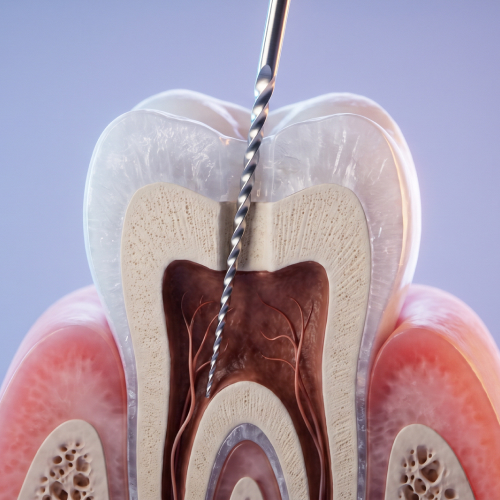
A root-canaled tooth retains that tactile sensitivity. The nerve inside the tooth is removed, yes — but the PDL surrounding the root remains intact. This is one of the reasons Healthline's overview of root canals vs. implants notes that saving a tooth is often preferable when the structure can support it.
For patients in Bellflower and Downey weighing these options, this sensory difference is worth a real conversation — not a footnote.
Bridges are often presented as the middle-ground option — less invasive than an implant, less intensive than a root canal. But that framing skips a critical detail: a traditional dental bridge requires grinding down the healthy teeth on both sides of the gap to serve as anchors (abutments).
This isn't a minor cosmetic adjustment. Preparing abutment teeth for a bridge involves removing significant enamel — enamel that never grows back. Once those teeth are crowned, they're permanently altered and carry a measurably higher risk of future decay, pulp damage, and yes, eventual root canals of their own. You may end up needing three procedures where you originally needed one. A tooth crown placed on an abutment tooth is a permanent alteration that carries its own long-term risks.
According to Healthline's dental bridge overview, bridges also need replacement roughly every 5–15 years, and the preparation process can accelerate decay in surrounding teeth.
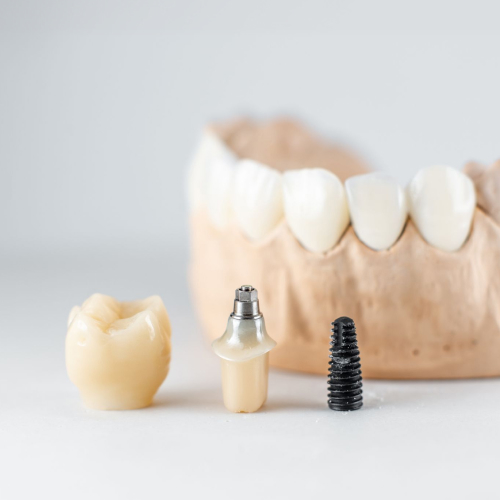
The calculus changes when the tooth in question is still savable. If a root canal can preserve the original tooth, you avoid altering neighbors entirely. The implant route, while more invasive upfront, at least leaves adjacent teeth untouched — which is one reason dentists often prefer it over a bridge when extraction is unavoidable.
Before choosing a bridge, ask your dentist directly: How much enamel will be removed from my neighboring teeth, and what's the 10-year outlook for those abutments?
Here's a scenario that doesn't get discussed enough. A dentist recommends a root canal to save a tooth. The procedure goes well. But five years later, a slow, often painless infection develops at the root tip — what's called periapical periodontitis. The infection quietly erodes the surrounding jawbone.
By the time the patient notices something is wrong, the bone loss may be significant. And that lost bone is precisely what a future implant needs to anchor into. Without sufficient bone volume, an implant requires a bone graft — an additional surgical procedure that adds cost, healing time, and complexity.
This is the "bone volume clock" — and it starts ticking silently when a failing root canal goes undetected.
Research published in PMC found that while both root canal-treated teeth and implants show similar failure rates around 6%, periapical periodontitis was the most prevalent complication following endodontic treatment. The concern isn't that root canals fail often — they're highly successful. The concern is what happens to the surrounding bone if they do fail without prompt intervention.
This is also a key reason why some dentists don't recommend implants in the first place: medical factors. According to WebMD's overview of implant risks, conditions like uncontrolled diabetes, active gum disease, bisphosphonate use, and smoking all significantly raise implant failure risk. For these patients, preserving the natural tooth — even imperfectly — may be the more strategically sound decision.
The takeaway: if you've had a root canal, follow-up imaging every few years isn't optional. Catching bone changes early preserves your options.
No ethical dentist recommends extraction over preservation without a clinical reason. A review published in PMC found that no unbiased evidence-based study has demonstrated that extraction and implant placement is superior to root canal therapy for endodontically treatable teeth — and that commercial pressure has sometimes pushed dentists toward implants prematurely.
The factors that genuinely tip the decision include:
Harvard Health's guide to dental implants notes that smokers, patients with certain cardiovascular conditions, and those with immune deficiencies may not be good implant candidates at all — making an endodontic root canal the default recommendation regardless of preference.
When a tooth is genuinely unrestorable, a tooth extraction followed by implant placement is typically the best long-term path. When it can be saved, saving it — and monitoring it carefully — is usually the smarter move.
If you're weighing a root canal, implant, or bridge and want a straightforward second opinion, Bellflower Dental Group is here to help. We serve patients throughout Bellflower, Downey, and the surrounding Southeast Los Angeles communities. Our goal is to give you a clear, honest picture of your options — not to push a procedure. Schedule a cleaning and exam consultation and let's look at what your specific situation actually calls for.
This article is for informational purposes only and does not constitute professional dental or medical advice. Always consult a licensed dental provider for diagnosis and treatment recommendations specific to your situation.
Fresh news from the dental world...



Mon - Fri 9AM - 6PM
Saturday 9AM - 3PM
Sunday Closed
Check out what our patients are saying in Bellflower, CA...


“Great customer service!”
Great customer service and attentive staff! My 3 year old enjoyed his visit! Yes, I said he enjoyed it! He had to have X-rays done, and I was so worried that he wasn't gonna be a happy camper but the X-ray tech, Dominique, is so good with kids! The X-rays were fast and painless! Overall a great experience!

“Surpasses my expectations!”
Amazing staff! My experience at Bellflower Dental Group was outstanding. I highly recommend this dental group. I come to them for my braces, their ortho is incredible, the highlight of this dental group. The staff is amazing, their employees are so kind and take the time to perfect your braces.

“I love this dental office!”
I have been coming here for years. It is a one-stop-shop! You can get your x-rays, cleaning, braces, labs, dentures, toothbrushes, and more all right here. The staff is great, and they try to work with you if you need a payment plan. Never had any issues with any of the work done here!
“Great customer service!”
Great customer service and attentive staff! My 3 year old enjoyed his visit! Yes, I said he enjoyed it! He had to have X-rays done, and I was so worried that he wasn't gonna be a happy camper but the X-ray tech, Dominique, is so good with kids! The X-rays were fast and painless! Overall a great experience!
“Surpasses my expectations!”
Amazing staff! My experience at Bellflower Dental Group was outstanding. I highly recommend this dental group. I come to them for my braces, their ortho is incredible, the highlight of this dental group. The staff is amazing, their employees are so kind and take the time to perfect your braces.
Check out our accreditations, sources, and relationships in the wide world of dentistry...


Check us out and follow our Bellflower, CA practice on social media...


