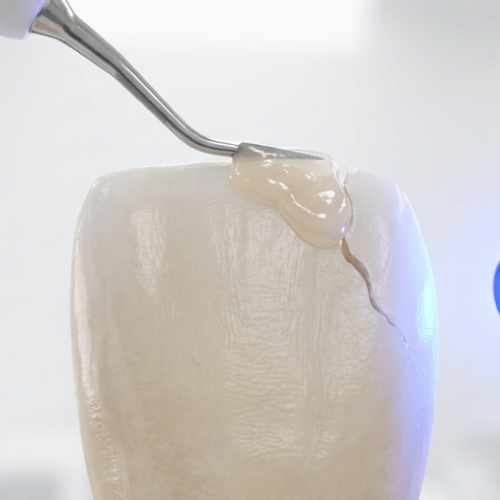
Is Dental Bonding Worth the Cost and What Are the Long Term Risks?
Discover the cost of dental bonding per tooth, its pros and cons, and long-term risks. Read our guide and schedule your consultation with our team today!
Read More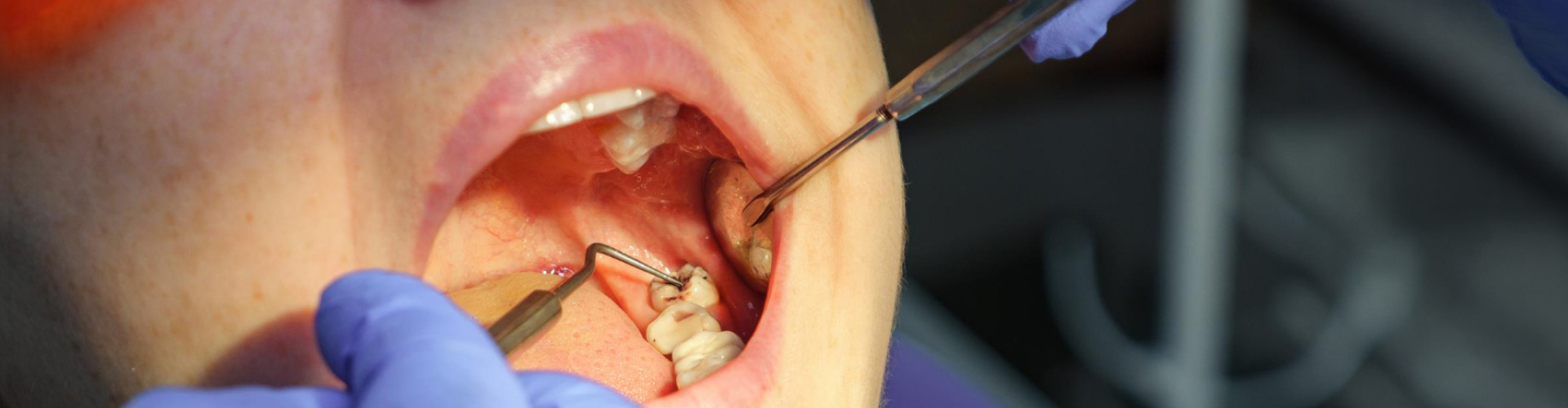
Composite fillings average 7–10 years, while ceramic and porcelain restorations can last 15 years or significantly longer under the right conditions. The material is only part of the story — how the filling is placed, and the physics of how it cures, often determines whether it survives 5 years or 30.
Most patients assume composite fillings wear out from chewing pressure. That's part of it. But the more important reason — one rarely explained at the chair — is polymerization shrinkage.
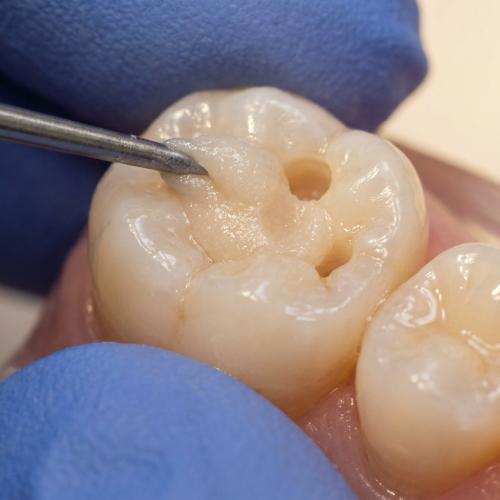
When composite resin cures, it contracts. In a shallow front-tooth repair, that shrinkage is minor. In a deep, multi-surface molar cavity, the composite pulls away from the cavity walls as it hardens. Dentists call this the C-Factor (Configuration Factor): the ratio of bonded surfaces to unbonded surfaces. The deeper and more complex the cavity, the higher the C-Factor, and the greater the internal stress created during curing.
That stress creates microscopic gaps at the margins. Bacteria enter. Decay forms underneath the filling — called secondary caries — and the restoration fails. Research published in PMC identifies secondary caries as one of the primary reasons composite restorations fail in posterior teeth.
Ceramic and porcelain inlays solve this problem entirely. They are fabricated outside the mouth — in a lab or milling machine — and bonded after they've already cured. There is no shrinkage stress at the tooth interface. That single physics difference is why ceramic restorations routinely outlast cavity fillings on molars by a decade or more.
According to Healthline, ceramic fillings last an average of 15 years, while composite averages just 7. In favorable conditions, porcelain restorations can reach or exceed 20–30 years.
Here's a financial reality most patients don't learn until it's too late. Dental PPO insurance plans carry frequency limitations — clauses that define how long they will wait before paying to replace a restoration on the same tooth surface. For composite fillings, that window is typically 5 to 10 years depending on the plan.
If your composite filling fails at year 3 — which happens, especially on high-load molars — your insurance will not cover the replacement. You pay 100% out-of-pocket.
Now consider ceramic. Yes, it requires more preparation time and often a lab fee. But if it lasts 15–20 years while a composite on the same tooth might require two replacements in that span, the ceramic restoration may represent significantly better long-term value, even before factoring in the insurance clock.
WebMD notes that the type of filling material, along with insurance coverage and dentist recommendation, all factor into the best choice for a given cavity. Understanding your plan's frequency limitations before choosing a material is a conversation worth having at your next cleaning and exam appointment.
The material matters. The physics matters. But the single biggest predictor of whether any tooth-colored filling lasts 5 years or 20 may be something the patient never sees: moisture control during placement.
Both composite and ceramic bond using adhesive systems that are hydrophobic — they repel water. A single microscopic droplet of saliva or exhaled humidity during bonding can compromise the seal at the margin, leading to premature failure within 2–3 years.
There are two main isolation approaches:
Patients can advocate for themselves. Before a composite or ceramic restoration on a back tooth, it's reasonable to ask your dentist which isolation method they use and why. Proper isolation isn't a luxury — it's the foundation on which filling longevity is built.
The American Dental Association notes that composite fillings require the tooth to be kept clean and dry during placement, which directly influences their long-term durability.
The short answer: yes, under the right conditions. A systematic review on ceramic onlays published in PMC found survival rates of 91–100% at medium-term follow-up and 71–98.5% in long-term studies exceeding five years. The wide range reflects patient factors like bruxism, cavity size, and tooth vitality.
For porcelain to reach 20–30 years, several variables need to align:
Composite fillings, by comparison, average 7 years per NIDCR, with many posterior restorations requiring earlier replacement due to the C-Factor issues described above. In cases where decay has progressed significantly, a tooth crown may be recommended over a filling to fully protect the remaining tooth structure.
Neither material is permanent. But ceramic and porcelain veneers and restorations, when placed with proper isolation and technique, give patients in Bellflower and the surrounding Southeast Los Angeles area the best available odds of a restoration that lasts decades rather than years.
At Bellflower Dental Group, our team helps patients in Bellflower, Downey, and the surrounding Southeast Los Angeles area understand their restoration options — including when ceramic or porcelain makes more sense than composite. If you have an existing filling that's due for evaluation, or you're facing a new cavity and want to make an informed choice about aesthetic dentistry solutions that restore both function and appearance, contact us to schedule a consultation.
This article is for informational purposes only and does not constitute dental or medical advice. Please consult a licensed dental professional for diagnosis and treatment recommendations specific to your situation.
Fresh news from the dental world...


Mon - Fri 9AM - 6PM
Saturday 9AM - 3PM
Sunday Closed
Check out what our patients are saying in Bellflower, CA...


“Great customer service!”
Great customer service and attentive staff! My 3 year old enjoyed his visit! Yes, I said he enjoyed it! He had to have X-rays done, and I was so worried that he wasn't gonna be a happy camper but the X-ray tech, Dominique, is so good with kids! The X-rays were fast and painless! Overall a great experience!

“Surpasses my expectations!”
Amazing staff! My experience at Bellflower Dental Group was outstanding. I highly recommend this dental group. I come to them for my braces, their ortho is incredible, the highlight of this dental group. The staff is amazing, their employees are so kind and take the time to perfect your braces.

“I love this dental office!”
I have been coming here for years. It is a one-stop-shop! You can get your x-rays, cleaning, braces, labs, dentures, toothbrushes, and more all right here. The staff is great, and they try to work with you if you need a payment plan. Never had any issues with any of the work done here!
“Great customer service!”
Great customer service and attentive staff! My 3 year old enjoyed his visit! Yes, I said he enjoyed it! He had to have X-rays done, and I was so worried that he wasn't gonna be a happy camper but the X-ray tech, Dominique, is so good with kids! The X-rays were fast and painless! Overall a great experience!
“Surpasses my expectations!”
Amazing staff! My experience at Bellflower Dental Group was outstanding. I highly recommend this dental group. I come to them for my braces, their ortho is incredible, the highlight of this dental group. The staff is amazing, their employees are so kind and take the time to perfect your braces.
Check out our accreditations, sources, and relationships in the wide world of dentistry...


Check us out and follow our Bellflower, CA practice on social media...


