Bonding, composite veneers, porcelain veneers, and Lumineers each solve different problems at different price points — and the wrong choice now can quietly limit your options later. Here's how I think through this decision with patients in my Bellflower practice every week.
The 3-Year Forecast Nobody Talks About
Before comparing costs, I want you to understand something that rarely comes up in these comparisons: materials age at completely different rates. For Bellflower-area patients considering these options, understanding durability is essential.
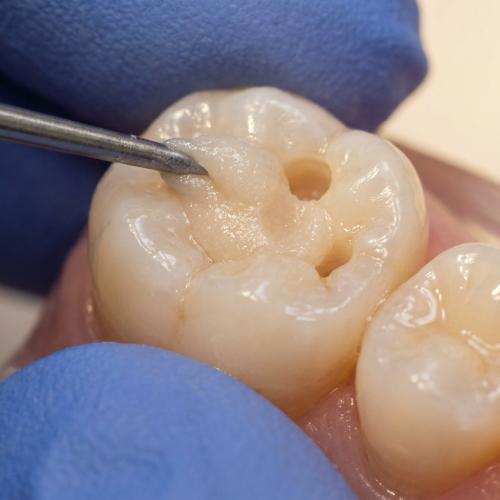
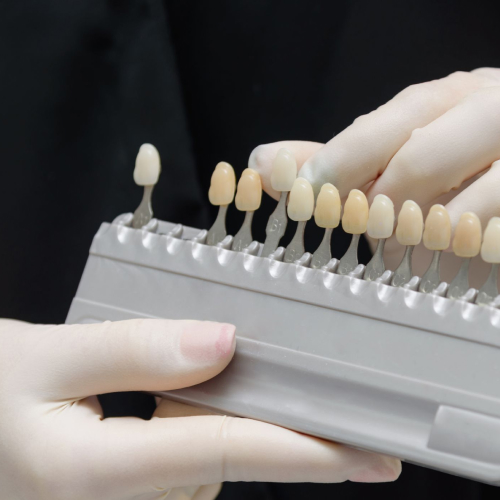
Composite resin — the material used in dental bonding — is porous. Porcelain is not. That difference matters enormously over time. A single bonded front tooth will absorb pigment from coffee, tea, and red wine at a faster rate than the natural teeth surrounding it. By the three-year mark, a color match that looked perfect on day one can start to drift visibly. The bonded tooth may look slightly darker or more yellow than its neighbors, even if you're diligent about hygiene.
A porcelain veneer on the same tooth behaves the opposite way. According to Cleveland Clinic, bonding material is "somewhat stain-resistant" but doesn't resist stains as well as porcelain restorations. Porcelain's non-porous surface holds its shade while your natural enamel slowly yellows with age — which means a single porcelain veneer can eventually look too bright compared to adjacent teeth without periodic whitening of the surrounding dentition.
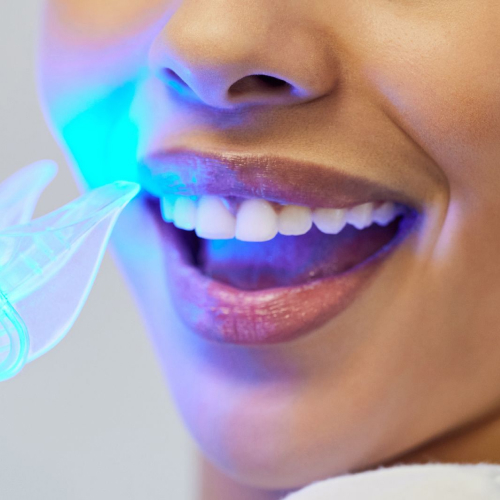
This isn't an argument against bonding. It's an argument for planning. If you're treating one central incisor, I want you to know upfront that bonding may require polishing appointments every 12–18 months and occasional pro teeth whitening of surrounding teeth to keep the match. That ongoing maintenance cost is rarely factored into the initial price comparison.
As WebMD notes, bonding typically lasts three to ten years before touch-up or replacement is needed, depending on your habits. For a chip on a lower lateral incisor that sees minimal bite pressure, that's often perfectly acceptable. For a high-visibility front tooth in someone who drinks coffee daily, I tend to steer toward porcelain.
The Bonding-to-Veneer Pipeline: Your Future Options Depend on What You Do Today
Here's a question patients almost never think to ask: If I start with bonding, can I upgrade to no-prep veneers later?
The honest answer is: probably not.
Dental bonding requires light acid-etching of the enamel surface to create micro-retention for the resin. This etching is far shallower than traditional veneer preparation — we're talking about surface roughening, not significant enamel removal. When the bonding is eventually replaced, the underlying enamel is generally intact. So far, so good.
The problem is the resin itself. No-prep veneers (including Lumineers) are designed to bond directly to pristine, unrestored enamel. Once a tooth has had resin bonding placed and removed — even once — the surface texture is altered. Residual resin tags can remain in the enamel microstructure. The "no-prep" premise depends on clean enamel as the bonding substrate. Research published in PMC confirms that no-prep and minimally invasive veneers achieve their superior retention specifically because they bond to intact enamel, which provides the strongest adhesive interface.
In practice, this means a tooth with prior bonding history is more likely to need light preparation before a veneer can be placed reliably — effectively routing you toward conventional veneers rather than no-prep options. If preserving the no-prep pathway matters to you, that changes the calculus on starting with bonding at all.
The "Tongue Test": How Lumineers and No-Prep Veneers Affect Speech and Bite
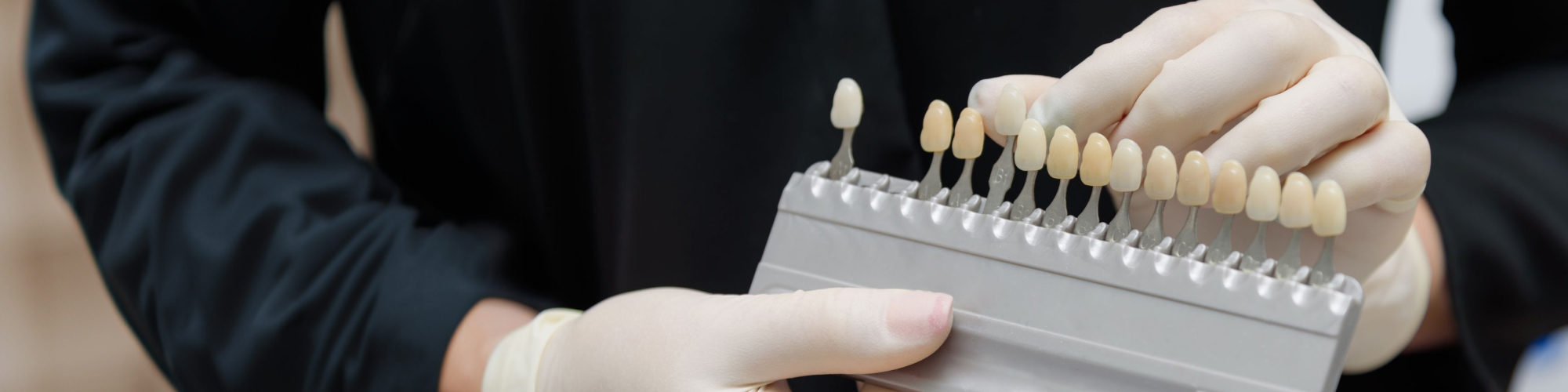
No-prep veneers solve the enamel removal problem by adding material on top of the existing tooth rather than replacing shaved-down enamel. Lumineers, for example, are typically 0.2–0.3 mm thick. That sounds negligible — but your tongue and lips are extraordinarily sensitive to changes at that scale.
When no-prep veneers are placed on teeth that weren't already undersized or slightly recessed, you're effectively increasing the facial profile of those teeth. This can alter the "overjet" — the horizontal distance between your upper and lower front teeth. For some patients, the adjustment is seamless within a few days. For others, it produces a temporary sensation of speaking with a "thick-tongued" quality, or a mild lisp on sibilant sounds like "s" and "z."
Traditional porcelain veneers avoid this issue because the enamel reduction (typically 0.5 mm) creates space for the veneer shell, preserving the tooth's original profile. The restoration replaces volume rather than adding to it. A Healthline overview of veneers vs. Lumineers notes that Lumineers are thinner and faster to apply but are less effective at hiding severely stained or damaged teeth — partly because their minimal thickness limits their ability to mask underlying color without appearing opaque and bulky.
Dental bonding sits in a different category entirely. Because composite is sculpted directly onto the tooth in my hands, I can control the final contour with precision. For minor chips or small gaps, bonding adds almost no bulk. The tradeoff is the staining issue described above and the skill-dependent nature of the result. According to a clinical review on PMC, direct composites are "aesthetic, conservative and reliable, but demand technical and artistic skills, and have limited longevity" compared to bonded porcelain.
If you grind your teeth, I generally steer you away from no-prep options entirely. Mouthhealthy.org from the ADA and the clinical literature both flag bruxism as an unfavorable condition for veneers — and the thinner the veneer, the more vulnerable it is to fracture under parafunctional forces. Patients with significant grinding habits may also want to explore whether a tooth crown is a more appropriate restoration for heavily worn or damaged teeth.
So Which One Is Right for You?
Here's how I actually frame this decision in my chair:
Bonding works well for single-tooth chips, small gaps, and patients who want a fast, reversible, lower-cost fix — as long as they understand the maintenance commitment and the staining trajectory. It's also the right call for younger patients whose teeth are still developing, or anyone who wants to "test drive" a shape change before committing to something permanent.
Composite veneers occupy the middle ground: more coverage than bonding, less cost than porcelain, but still subject to the same porosity and color-shift limitations over time.
Porcelain veneers are my recommendation when the goal is a durable, stain-resistant, long-term transformation — especially for multiple front teeth where color consistency across the smile matters. The 10–20 year survival data for porcelain veneers bonded to enamel is compelling. Patients interested in a broader smile makeover may also want to explore our aesthetic dentistry options.
Lumineers and no-prep options make sense for patients with naturally small or slightly recessed teeth, mild discoloration, or those who are firmly committed to avoiding enamel removal. They are not a universal upgrade over traditional veneers — they're a specific tool for specific anatomy.
The decision is never one-size-fits-all. It depends on your enamel thickness, your bite, your staining habits, and — critically — what you might want to do with those teeth ten years from now.
Ready to Find Out Which Option Fits Your Smile?
At Bellflower Dental Group, I work alongside an in-house oral surgery team to evaluate every cosmetic case with both aesthetics and long-term oral health in mind. Whether you're in Bellflower, Downey, or anywhere in Southeast Los Angeles, we'll give you a straightforward assessment — no upselling, no one-size-fits-all treatment plans. We also recommend scheduling a routine cleaning and exam before any cosmetic work to ensure your teeth and gums are in optimal condition.
Schedule a cosmetic consultation and we'll map out exactly which path makes sense for your teeth, your timeline, and your budget.
Medical disclaimer: This article is for informational purposes only and does not constitute individualized dental or medical advice. Consult a licensed dentist to determine the appropriate treatment for your specific oral health needs.