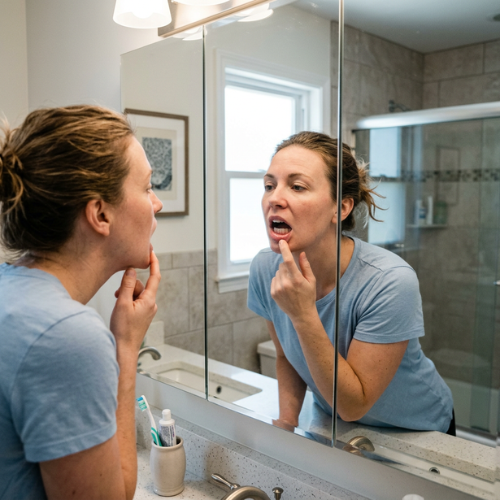
Canker sores are ulcerations in the mouth that cause tissue swelling and damage. Canker sores often appear on the soft tissues inside the cheeks or lips but can affect any part of your mouth.
Causes
There are no exact known causes for most canker sores, but they aren't contagious and cannot be spread through saliva. It may be caused by an injury, such as biting your cheek or catching the inside of your braces on your cheek and lips. However, most often, they seemingly appear out of nowhere.
Canker sores may be triggered by things, like:
- a weak immune system
- dehydration
- allergies
- stress
- medication
Symptoms
You may experience one or more of the following:
- pain
- a tingling sensation
- pus-filled sores that can be white, gray, or yellow
- swollen gums around the sore
- an unpleasant metallic taste
Stages of a canker sore
Most canker sores develop as a tender spot into an ulcer that takes anything from 1 to 3 days to progress. The ulcer then grows in size over the next three to four days, reaching its final form before healing begins. Canker sores generally go away after 7-14 days. The length of a canker sore is determined by its kind.
What you can do:
- Ice- Ice can numb the pain and soothe irritation and inflammation caused by the sore. It is especially helpful for lips that are infected with canker sores. Other parts of the mouth may be more challenging to reach with an ice cube.
- Baking soda- It is believed that baking soda restores pH balance and reduces inflammation, which may help heal canker sores. In a half cup of water, dissolve one teaspoon of baking soda. Spit out the solution after swishing it in your mouth for 15 to 30 seconds. Do this three times a day.
- Aloe vera gel or juice- You may also apply aloe vera gel on inflamed gums around the sores for relief from discomfort and pain associated with canker sores. Although there's limited evidence, the National Center for Complementary and Integrative Health considers aloe vera safe for canker sores.
- Garlic- Garlic has antimicrobial and anti-inflammatory effects, reducing the pain associated with canker sores. Allicin, a powerful compound in garlic, is effective in alleviating pain and reducing the size of mouth ulcers. Apply a small piece of garlic to your skin ( the affected area) for about 3 to 5 minutes, and then rinse the mouth after 20 minutes.
Diagnosis
Canker sores can be diagnosed without tests, and they can be identified visually by doctors or dentists. It may be necessary to take tests and check for other health problems, especially if your canker sores are severe and persistent.
Complications
A set of more severe complications can arise if the sore does not heal within a few weeks, these include:
- A feeling of discomfort or pain when speaking, brushing your teeth, or eating
- Feeling fatigued
- Start developing sores on the outside of your mouth
- Having fever
- Having cellulitis
Home tips
Healthline recommends applying ice or a tiny amount of milk of magnesia to your sores to relieve pain and promote healing. A solution with baking soda and warm water can also be used for pain relief and recovery. Use one teaspoon per half cup of water while rinsing. Honey can also be used to treat canker sores.
Types of canker sores
Canker sores usually fall into three types:
- Minor canker sore: You may develop these three to four times a year. This usually happens between the ages of 10 and 20. They heal in about a week without leaving a scar. They're less than a centimeter across.
- Major canker sore: This is less common. This type of ulcer is larger and lasts for more than two weeks. It usually heals with scarring.
- Herpetiform canker sore: These sores are not common and are seen as clusters of tiny ulcers. Healing usually takes about a week.
Treatment
One or two weeks is usually enough time for canker sores to heal. In addition to rinsing your mouth with salt water or baking soda, you should avoid spicy, acidic, or abrasive foods, which can irritate the sore.
Additionally, there are gels, creams, pastes, and liquids.
- Benzocaine: You can find it in Anbesol, Orabase, Zilactin-B, and Kank-A
- Hydrogen peroxide: You can find it in Peroxyl and Orajel Antiseptic Mouth Sore Rinse
- Fluocinonide: You can find it in Vanso and Lidex
Q & A
What is inside a canker sore?
The small blisters contain fluid that eventually becomes cloudy and filled with pus. Once the blisters burst, they reveal bright red areas that dry up, crust, and ultimately heal within 7 to 10 days. The sores can also make eating uncomfortable.
Can stress cause canker sores?
The cause of canker sores has been linked to allergies and hormonal changes, but many people who suffer from outbreaks report that stress is to blame. An emotional tension combined with fatigue may significantly contribute to the development of mouth ulcers.
Do canker sores scar?
In comparison to minor canker sores, major sores can hurt more, last longer (up to four weeks), and often leave a scar on the mucous membrane. It is also possible for small herpetiform canker sores to merge to form larger areas, resulting in scarring.
_Is a canker sore different from a cold sore? _
Canker sores are restricted to the mouth's soft tissues, such as the gums and inside the cheeks. A variety of factors can cause them, including injuries to the inside of the mouth and vitamin deficiencies. Cold sores can form on your lips and your gums, as well as inside your mouth in some instances.
Are canker sores contagious?
Canker sores aren't contagious and don't appear on the lips like cold sores. However, they can be painful, making eating and talking difficult.
Does putting salt on your canker sore help?
Putting salt on a canker sore or mouth ulcer helps because it raises your mouth's pH to make it more alkaline. This is effective because it makes it much harder for bacteria to survive at the site of the canker sore since they survive better in more acidic environments.