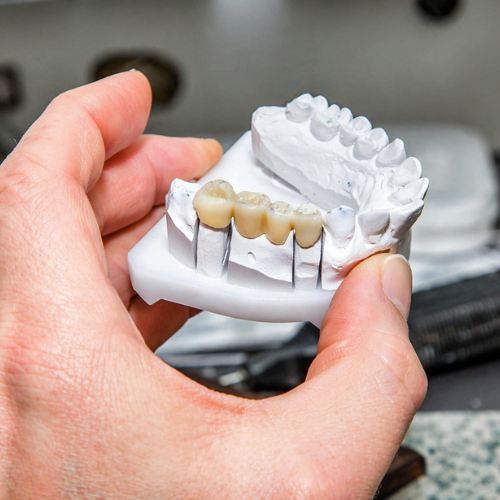
When One Missing Tooth Starts Causing More Trouble Than You Expected
Learn how a dental bridge replaces a missing tooth, who it helps, and how long it can last at Bellflower Dental Group.
Read More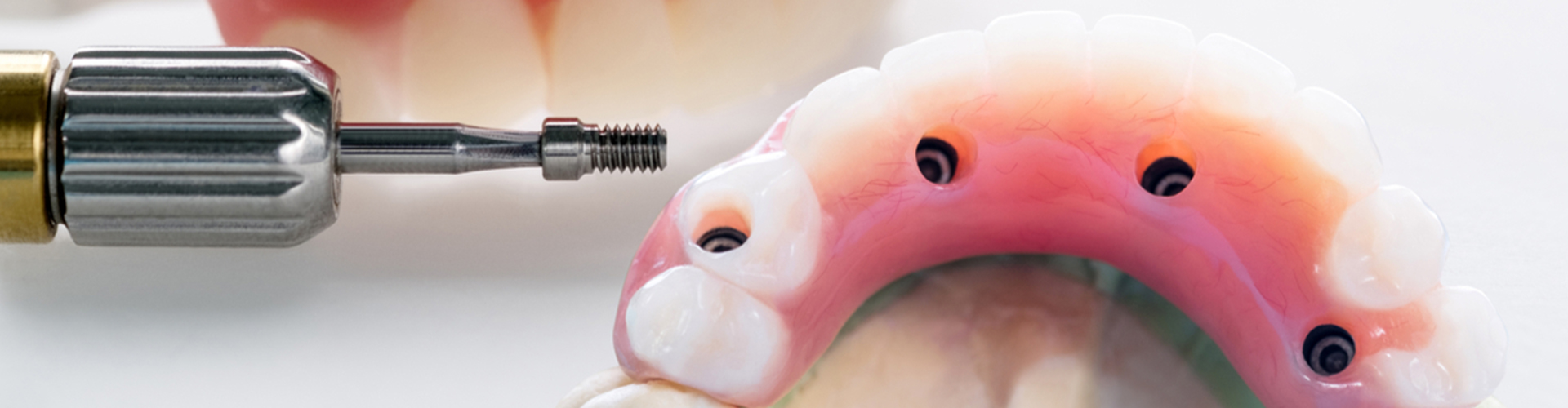
Many individuals are concerned about their oral health, ranging from severe dental problems to tooth rot. While many dental disorders have little impact on a person's quality of life, others may considerably impact a person's ability to eat and speak.
All-on-4 is a relatively recent method of using implant retained dentures to restore complete arches of lost teeth. Compared to conventional dentures, the key advantages are the elimination of the need for denture adhesives and greater comfort and functionality. The replacement teeth also seem natural, which may enhance your smile and prevent your lips from curling inward owing to a lack of teeth.
Let's look deeper at the all-on-4 implants to see whether they're a good alternative.
What Are All-On-4 Implants? The all-on-4 system is a mix of many dental procedures and technologies that offer a firm and secure connection for the replacement teeth that is far more durable and trustworthy than conventional ways of affixing dentures, such as denture adhesives.
With this procedure, patients will only need four dental implants to replace an entire arch worth of teeth that have been lost. The implants are held in place by a fixed bridge or denture that is linked to the patient's existing natural teeth.
Consequently, all-on-4 is also often referred to as "implant-supported dentures." Because of this, it is now feasible for the patient to have their teeth replaced by a method that is both efficient and dependable, therefore avoiding more time-consuming surgeries and conventional dentures.
The following are the three components that make up an all-on-4 dental implant:
Implants — artificial tooth roots that are secured to the jawbone by a special screw
Abutment — a component of dental work that attaches the prosthesis to the implant
Denture — also known as the artificial teeth that are visible in the mouth, they may also be termed prosthetic teeth
The Benefits Of All-On-4 -Considers the whole dental arch, whether in the upper or lower jaw, resulting in enhanced cosmetic qualities and enhanced functional capabilities of the teeth -An outpatient operation that, in most cases, may be completed in a dentist's office in less than four hours and dramatically improves the quality of life -Compared to conventional methods, this approach eliminates the need for more extensive bone grafting and bone regenerating operations, resulting in a less invasive, more comfortable process, and a shorter recovery period -It offers you a level of stability that is superior to that of detachable dentures -Compared to replacing lost teeth with individual implants, this option is more cost-effective -It improves nutrition and health, patients with dentures or many decayed or missing teeth may eat items they couldn't before
What Are All-On-4 Implants Appropriate For? All-on-4 is appropriate for the people as follows: -Those who have lost several teeth as a result of an accident -Those who have lost several teeth owing to dental decay -Those who have extensive gum disease -Those who do not get substantial advantages from tooth restoration or who cannot have their teeth fixed
All-on-4 criteria vary from dentures or single/multiple implants. Candidacy is decided individually according to the analysis of the dentist.
What Is The All-On-Four Treatment? After extracting any remaining teeth that are damaged or diseased, a series of dental implants, typically between four and six per arch, are anchored into the jawbone in the areas vacated by the teeth. After the implants have been secured to the jaw bone, a dental bridge consisting of 12-14 teeth is linked to the implants. This provides the patient with the ability to enhance the aesthetic look as well as the functioning of their natural teeth. A provisional or temporary bridge is what we refer to as this particular structure.
After the treatment, a permanent dental bridge will be fabricated three months later, after it has been determined that the implants have completely healed from the procedure. The permanent dental prosthesis surpasses its temporary counterpart in both cosmetic quality and practical use.
Is All On 4 Implants Painful? The majority of individuals who have had the All-on-4 procedure report experiencing only mild to moderate levels of discomfort after the procedure. Patients will need to take anti-inflammatory medications (such as ibuprofen) three to four times per day to ensure that they can stay one step ahead of the pain for the next three to five days. It can be accomplished by taking the medication three to four times daily.
Which Is Better All-On-4 Or All-On-6 Dental Implants? All On 4 & All On 6 dental implants are permanent remedies for tooth loss. The adjustment and healing phase is minimal, and you'll forget the implants shortly.
The number of implants put in the mouth is the most obvious parallel between all-on-4 and all-on-6 dental implants. Some dentists feel that the all-on-6 dental surgery creates a stronger, more robust foundation for the prosthetic dental arch, leading to a more pleasant, long-lasting smile. When you eat, the pressure is primarily applied to your back teeth, and an all-on-six implant operation would support your molars more than an all-on-four procedure.
Your oral surgeon & dentist can advise on the best solution for you. Discuss your daily routines and lifestyle with them so that they can assist you in making an educated selection.
How Long Do All-On-Four Implants Last? All-on-4 implants have shown to be long-lasting. They have a high success rate and have endured for years. With proper maintenance, they may endure up to 20 years. However, your denture will endure everyday wear and tear. Studies reveal a 98.2% success rate for all-on-4 implants on the lower arch and 97–98% on the upper arch. Both the titanium screws and dentures have a high long-term success rate with all on 4.
Only two failures were documented in ten-year research, including 242 patients having all-on-four implants. There were no failures in a second 5-year trial. In general, an implant will likely fail within the first 3 to 4 months if it’s going to. It is vital to highlight that in all of these trials, adopting proper oral hygiene was critical in prolonging the longevity of all-on-4 dental implants.
Conclusion People often suffer from different dental disorders and conditions that cause them to lose teeth or fight tooth decay. It is critical for patients who are missing teeth to realize that the longer they wait, the more likely they are to develop problems such as gum recession and bone loss, as well as other major oral health issues. All on 4 is the better answer rather than waiting. By taking action early to replace missing teeth, you are investing in your health and well-being and avoiding future difficulties.
Fresh news from the dental world...





Mon - Fri 9AM - 6PM
Saturday 9AM - 3PM
Sunday Closed
Check out what our patients are saying in Bellflower, CA...


“Great customer service!”
Great customer service and attentive staff! My 3 year old enjoyed his visit! Yes, I said he enjoyed it! He had to have X-rays done, and I was so worried that he wasn't gonna be a happy camper but the X-ray tech, Dominique, is so good with kids! The X-rays were fast and painless! Overall a great experience!

“Surpasses my expectations!”
Amazing staff! My experience at Bellflower Dental Group was outstanding. I highly recommend this dental group. I come to them for my braces, their ortho is incredible, the highlight of this dental group. The staff is amazing, their employees are so kind and take the time to perfect your braces.

“I love this dental office!”
I have been coming here for years. It is a one-stop-shop! You can get your x-rays, cleaning, braces, labs, dentures, toothbrushes, and more all right here. The staff is great, and they try to work with you if you need a payment plan. Never had any issues with any of the work done here!
“Great customer service!”
Great customer service and attentive staff! My 3 year old enjoyed his visit! Yes, I said he enjoyed it! He had to have X-rays done, and I was so worried that he wasn't gonna be a happy camper but the X-ray tech, Dominique, is so good with kids! The X-rays were fast and painless! Overall a great experience!
“Surpasses my expectations!”
Amazing staff! My experience at Bellflower Dental Group was outstanding. I highly recommend this dental group. I come to them for my braces, their ortho is incredible, the highlight of this dental group. The staff is amazing, their employees are so kind and take the time to perfect your braces.
Check out our accreditations, sources, and relationships in the wide world of dentistry...


Check us out and follow our Bellflower, CA practice on social media...


